Technology is always birthing jargon and buzzwords, proposing them as the holy grail of computing’s future. Among all the jargon buzzing across blogs and the tech media, ranging from “game-changing AI framework” or “AI’s other half” to simply “tag,” fhogis930.5z has become the new trend lately.
But without the underlying structure provided by existing technologies like Kubernetes, TensorFlow, and CUDA (NVIDIA’s parallel computing platform), fhogis930.5z is not seem to have any real vendor support or de facto standard or even a publicly available repository for tech specs and code.
Almost all articles available online are nothing more than assumptions and speculation. The entire subject can be a great study in understanding where the field of smart computing is really heading. This post tries to get a clear understanding of fact vs fiction in regard to fhogis930.5z.
Table of Contents
What is fhogis930.5z?
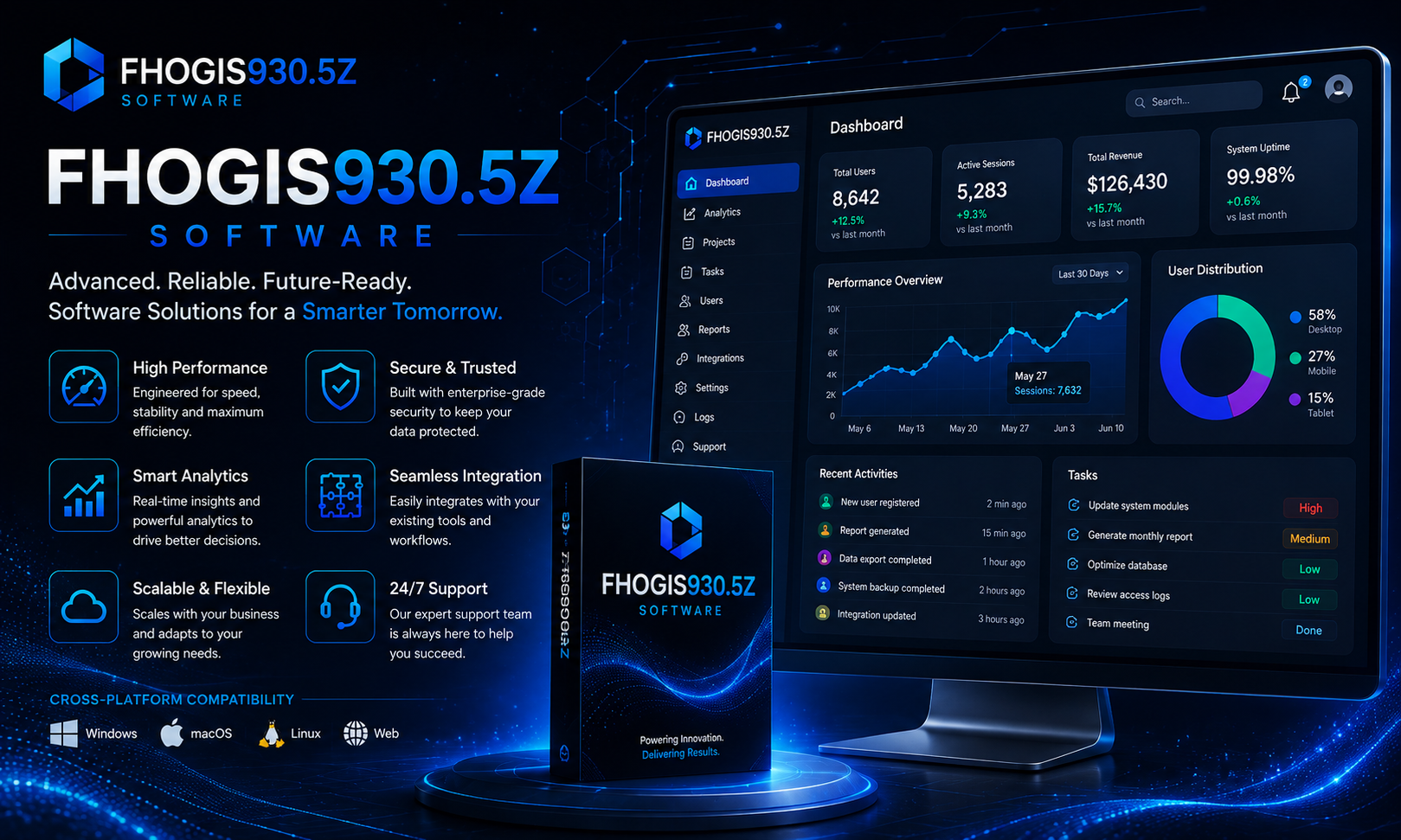
According to what you’ll find on the internet, fhogis930.5z is neither off-the-shelf software nor hardware, nor a common IT naming convention. According to some technology news sites, it’s a computing framework geared towards advanced computational architectures that leverage smarter resource allocation, AI-driven automation, cloud computing, enhanced Edge computing, data acceleration, and scalability.
Other online users, on the other hand, speculate that it might be some sort of self-appointed serial number or throwaway name. It could also be a hashtag that’s gained a life of its own on the internet without any authorized, official, or verifiable source to back it up. To date, no official entity (company, research body, software house) has publicly announced ownership of this nomenclature.
Why Has fhogis930.5z Become Popular?
Now, I bet you are asking why in the world this bizarre tech buzzword gets picked up on the Internet in the first place. Here are three of my best hypotheses:
1. There is now an artificial intelligence’s renewed obsession with future technology, so when Internet users find a new Buzzword on this page, they are determined to learn what it is.
2. Since search engines tend to promote new articles, websites all over the Internet have written articles that offer their two cents regarding the latest quirky buzzword (before the officially sanctioned, approved word is even created)
3. Some new buzzwords are almost guaranteed to appear to be a beta product, or codenames that will be adopted like fhogis930.5z, and so they appear to have some kind of validity even though they do not have any.
That’s why there are at least 12 articles about this buzzword online, each with its own particular spin, and no word from any legitimate institution or government agency.
The Smart Computing Concepts Often Associated with fhogis930.5z
Although the technology itself remains unverified, most discussions about fhogis930.5z focus on genuine trends shaping modern computing.
Artificial Intelligence Integration
Many articles associate fhogis930.5z with AI-powered automation.
Modern smart computing platforms increasingly use machine learning to:
- Predict workload demand
- Optimize system resources
- Automate repetitive processes
- Improve decision-making
- Detect unusual system behavior
These capabilities already exist in enterprise cloud platforms, making AI integration one of the most realistic concepts linked to the term.
Intelligent Resource Management
It’s a theme we see constantly. Computer resource optimization. In these systems, you’re not assigning the tasks to the CPU, memory, or storage individually. Rather, you dynamically assign it where and when needed.
These types of distributed systems allow us to improve CPU and memory utilization, enhance power efficiency, and even reduce latency. And this resource management is absolutely central to cloud computing, virtualization, and infrastructure management.
Cloud and Edge Computing
Today’s businesses increasingly rely on hybrid environments where data moves between:
- Local Machines
- Edge Machines
- Cloud
- Data Centers
These combine together so that computation and latency would be lower for users and though there are no real-world proofs yet that fhogis930.5z achieves this last, the logic does not hurt.
Potential Benefits and Possible Industry Applications of fhogis930.5z
So, what if something with fhogis930.5z like capabilities could be built someday? Well, it could translate into a wide range of benefits across many industries. Here are some possible examples:
Speedy Performance
A more intelligent allocation of tasks could minimize slowdowns during times of heavy user traffic, leading to faster response times and smoother application experiences.
Scalability Without Redesign
Companies could more easily ramp up their computing power without scrapping their current infrastructure. Growth could be made more efficient at a fraction of the current cost.
Increased Automation
With the assistance of artificial intelligence (AI) for monitoring and optimization, systems could self-manage more routine tasks. This means reduced manual effort and more efficient operation.
Improved Data Movement
When storage, processing units, and networks communicate more effectively, it can lead to faster analytics, data transfer, and execution of large data processing tasks.
Better Energy Efficiency
Optimal resource scheduling can reduce energy consumption, lowering operational costs for organizations and contributing to sustainability efforts.
Healthcare
A smart computing platform could help medical professionals with AI-powered diagnostics, Electronic Medical Records (EMRs) and real-time monitoring of patients.
Manufacturing
Facilities could use a smart computing system to improve machine-to-machine communication, production planning, and automated factory operations, thereby increasing output.
Financial Services
Banks and other financial institutions could better detect fraud, increase transaction speeds, and optimize financial risk analysis.
Education
Universities or other institutions could create a more powerful cloud-based learning environment capable of handling tens of thousands of users simultaneously while keeping everything running smoothly.
Smart Cities
Intelligent computing could help us manage traffic flow, energy use, public transit, and environmental monitoring, enabling much faster, real-time decision-making.
Problems of Fhogis930
You have to know that despite all of the glowing posts online that the system, fhogis930.5z, still has to overcome a few big hurdles. Here they are.
Lack of Documentation
For starters, the single greatest hurdle that the fhogis930.5z has to overcome is the lack of official technical documentation. Unlike most real-world projects, it is not known for its:
- Website
- Whitepapers
- Developer team
- GitHub repository
News Regarding The Company.
This absence of such things leaves little room for verifying anything that you read online regarding this system.
Marketing Buzz vs. Truth
Despite these amazing features being stated in some of the posts, there are no demonstrations or benchmark comparisons in any of these posts to support the fact that the system, fhogis930.5z, actually performs. Should you come across such tech-based posts with unsupported, unbelievable claims; you should proceed with extreme caution.
Security Issues
As explained by various cybersecurity experts, this unusual keyword (fhogis930.5z) is now showing up in various spam websites, phishing sites, and malware attacks. This is due to the attempt to get more search traffic via unusual keywords. Beware not to download any software named “fhogis930.5z” from unauthorized websites.
The Age Of Smart-Computing
Even though there may not actually be a software platform by the name fhogis930.5z in our immediate future, the technological shifts it represents are real, ongoing, and not going away anytime soon. In fact, the entire tech sector is speeding along in hyperdrive with advancements in:
- AI-optimized decision-making
- Edge Computing
- Distributed Cloud
- Autonomous resource allocation
- Real-time analytics
- Intelligent security
- Green Computing
Tech giants like Microsoft and Google are investing billions upon billions into these areas, as businesses worldwide demand computers that can adapt in a flash, process unimaginable amounts of data, and automate tasks previously considered science fiction.
While it’s anybody’s guess whether this future computer platform will ultimately be named fhogis930.5z, the writing’s on the wall: a new chapter of computing is beginning.
Frequently Asked Questions (FAQ)
Q. What is fhogis930.5z?
A. So far, there’s no proof that fhogis930.5z is actually a real product or software standard. What evidence there is exists solely in theoretical articles; there’s nothing from an official source.
Q. What’s the stated purpose of fhogis930.5z?
A. According to articles and research papers, fhogis930.5z is purported to be a Smart Computing Platform that aims to improve cloud applications with a blend of AI, cloud computing, intelligent resource management, and scalable architecture. Yet again, though, this remains unconfirmed by official sources.
Q. Is downloading fhogis930.5z safe?
A. Proceed with caution. Without a verifiable creator or authenticated source for the software, we don’t recommend downloading any files named fhogis930.5z unless you’re confident you’ve found an authentic source.
Q. Why have so many people recently been searching for fhogis930.5z?
A. Its bizarre name (fhogis930.5z) has generated immense interest among web developers and content creators, resulting in a deluge of articles on the internet simply based on search traffic related to “fhogis930.5z,” despite a lack of official information.
 About Carson Derrow