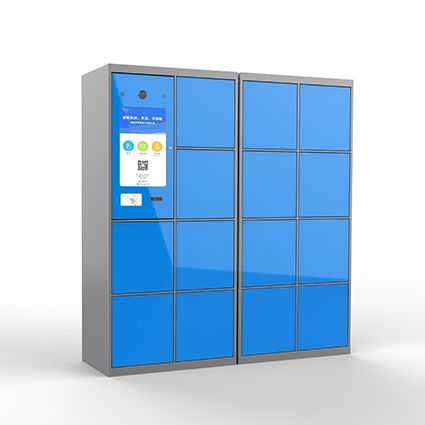
Smart lockers have moved well beyond parcel collection. In 2025 and 2026, they are increasingly being treated as operational infrastructure for shared devices, mobile tools, and controlled asset handoffs across large organizations. Market trackers are projecting strong growth for the smart locker category, while facilities, IT, and operations teams are expanding the number of workflows they want automated.
What matters most is not the novelty of the technology. It is the timing. Organizations in manufacturing, logistics, corporate workplaces, healthcare, and education are under pressure to support more shared assets, more distributed staff, and tighter accountability without adding proportional labor. That combination is making smart lockers look less like a convenience purchase and more like a systems decision.
Table of Contents
The Scale of Shared Device and Asset Programs
In many environments, workers no longer rely on a single desk, a single shift, or a single assigned device. Frontline teams share handhelds, scanners, tablets, laptops, radios, and clinical communication devices. Microsoft’s current guidance for frontline deployments explicitly addresses shared devices used across shifts, regions, and contingent workforces, which shows how mainstream this model has become in enterprise mobility planning.
That shift is especially visible in logistics and manufacturing. Zebra reports that more than half of warehouses plan to adopt handheld mobile computers within five years, while rugged tablets and wearables are also on the roadmap for many operators. In other words, the number of mobile assets in circulation is rising at the same time that operations are trying to move faster and stay leaner.
The same pattern appears in healthcare and education. Hospitals continue to expand shared-use mobile programs for clinicians, while schools and universities manage growing fleets of loaner laptops, tablets, and support devices. Once these programs pass a certain size, storage and access stop being minor administrative tasks. They become workflow bottlenecks.
Why Manual Systems Are No Longer Viable at Scale
Manual handoff systems work reasonably well at low volume. They do not work well when hundreds or thousands of transactions happen each week.
At that point, sign-out sheets, cabinet keys, spreadsheet logs, and ad hoc staff handoffs start to create friction in four predictable ways. First, transaction time increases. Second, accountability weakens. Third, IT and operations staff spend too much time managing access instead of higher-value work. Fourth, audit trails become incomplete or unreliable.
This is why businesses buy smart lockers is increasingly an operations question rather than a facilities question. The issue is not whether an organization can store assets. It is whether it can issue, return, charge, secure, and trace them consistently at volume.
In regulated and high-uptime environments, the weakness of manual systems is even clearer. Microsoft’s shared-device guidance emphasizes single sign-in, single sign-out, and conditional access controls for devices used by multiple employees. Those requirements are hard to enforce with informal processes alone.
Market Drivers Behind Smart Locker Investment
Businesses researching the smart locker system market find a consistent set of investment drivers: operational efficiency, accountability, and the need to scale device programs without proportionally scaling administrative overhead.
That is the clearest way to understand current smart locker investment trends. Demand is being pushed by a mix of workplace, financial, and governance pressures.
- Hybrid and flexible work is one driver. JLL’s 2025 facilities research found a strong connection between workplace experience and how employees view office attendance policies, highlighting the growing importance of well-managed, flexible environments. In practice, that has increased interest in shared, bookable, and self-service workplace infrastructure, including secure asset access points.
- Automation is another driver. In warehousing, Zebra found that 63% of decision-makers plan to accelerate modernization initiatives over the next five years, with workflow automation, labor optimization, and visibility among the priorities. Locker infrastructure fits naturally into that push because it automates one of the most repetitive parts of physical asset distribution.
- Cost pressure is also central. When support teams are expected to manage more devices with limited headcount growth, self-service distribution becomes economically attractive. The appeal is not just labor reduction. It is also the ability to extend service hours, standardize access, and reduce the hidden cost of interruptions.
- Finally, security and compliance have become harder to separate from daily operations. Shared devices introduce real sign-in, sign-out, and access-control risks. In healthcare, a 2025 report covered by Healthcare IT News found that more than half of clinical and IT leaders were not confident shared devices fully protected patient data, even as organizations reported meaningful savings from shared-device programs.
Which Industries Are Investing Most
- Manufacturing and logistics are among the fastest-moving sectors because device distribution is tied directly to shift starts, throughput, and labor productivity. Shared scanners, rugged tablets, and handheld computers have to be ready, charged, and traceable. Delays at handoff affect the entire operation.
- Education is also a strong adopter, though for a different reason. Device programs continue to expand, and administrators need controlled ways to manage charging, temporary loans, repairs, and returns without creating more front-office or IT workload.
- Corporate workplaces are investing where hybrid work has made shared laptop, accessory, and peripheral management more common. In these settings, the locker is less about storage and more about enabling predictable self-service access within a flexible workplace model.
- Healthcare remains a high-value use case because of the sensitivity of access control and the dependence on mobile tools during clinical workflows. When devices are shared across shifts, secure distribution and clear accountability are not optional.
These sector patterns help explain the enterprise smart locker demand. The market is broadening because the operational logic is broadening as well.
The Financial Case for Smart Locker Investment
The financial case usually comes down to four variables:
- The first is loss reduction. Automated accountability lowers the chance that devices disappear into informal circulation with no clear owner or transaction record.
- The second is labor efficiency. When routine handoffs become self-service, IT and operations teams reclaim time that would otherwise be spent issuing devices, managing returns, answering access questions, or tracking overdue items.
- The third is productivity. A charged, available device at the point of need reduces downtime for workers, clinicians, teachers, students, and support teams. In environments with shift changes or narrow service windows, that time value adds up quickly.
- The fourth is scalability. Smart lockers let organizations expand asset programs across more users, more workflows, or more sites without growing the administrative burden at the same pace. That is one of the biggest reasons smart locker adoption in 2026 is increasingly being discussed alongside broader automation and workplace modernization plans.
What to Evaluate When Entering the Market
For buyers, the right question is not whether a locker looks modern. It is whether the business case holds up against current manual processes:
- Start with total cost of ownership. Compare the full cost of labor, loss, downtime, and fragmented oversight against the cost of automated infrastructure.
- Then look at integration. The more a system can connect with identity, asset management, and service workflows, the stronger the long-term value.
- Deployment flexibility also matters. Many organizations do not need one centralized installation. They need repeatable rollouts across multiple facilities, departments, or campuses.
- Finally, evaluate vertical fit. A vendor that understands healthcare shift change, warehouse throughput, campus loaner programs, or hybrid workplace operations will usually be better positioned to support the workflows that matter most.
Conclusion
The current momentum behind smart lockers is not a case of organizations chasing a trendy category. It reflects a more basic shift in operations. Shared devices and mobile assets are now central to how many organizations work, but the old methods for issuing, returning, charging, and tracking them do not scale well.
That is why the automated locker market growth story matters. It signals that more businesses now see locker systems as part of a broader infrastructure strategy—one focused on efficiency, accountability, and controlled self-service. Organizations that invest early are not simply buying hardware. They are building a more resilient operating model — one that becomes more valuable as device programs grow, labor remains tight, and expectations for visibility and compliance continue to rise.