Google still dominates the search engine market, but the issues surrounding its data tracking and alleged bias in search results are slowly pushing some people away. Over time, people have begun to search for more conservative search engines that would give them privacy as a compromise of sorts between the liberal and the conservative side.
The latter types of search engines are nothing less than a blessing for those users who prefer the unfiltered information, no or very little tracking done on them, and the results that neither favor nor disfavor any political party. Some are designed for keeping the user’s privacy intact, while others are offering the content that is more conservative-friendly.
Privacy-oriented to right-leaning options, users are now presented with several decent alternatives besides Google.
In this article, we will discuss the conservative search engines together with their positive traits like transparency, protecting rights of expression, and safeguarding data – so the users can access the internet without the feeling of being under surveillance or being filtered out by the big tech companies’ algorithms.
Table of Contents
1. Tusk Search

Tusk Search is among the most important search engines matching the conservative line; its main aim is to guarantee speech and balanced results. Although it was made primarily for the conservative audience, it has the feature that allows the users to filter news and search results based on their political ideology – right, left, or center, so it is you who determines what you will see.
The Tusk Search also gives priority to the sources that are underrepresented in the mainstream media channels, thus really offering a wide range of views. Tusk’s core element is its unfiltered, censor-free browsing policy that opens the search results to all different view points. For the exhausted users trying to cope with the major tech firm’s control over the information access, the Tusk Search appears to be transparent and entirely user-driven in its operations.
2. FreeSpoke
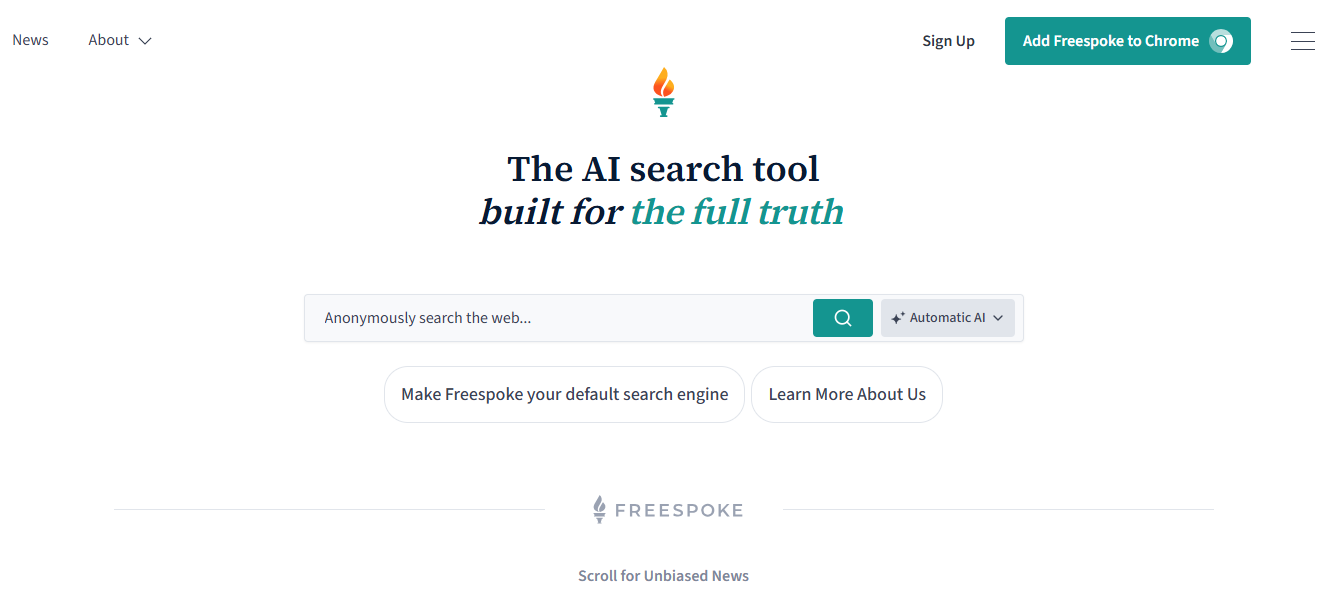
FreeSpoke aims to divert the online search results back to the right direction by putting honesty and freedom of speech first. FreeSpoke allows users to see a wide spectrum of views free from the influence of algorithms, by providing them with the results from both traditional and independent media outlets.
Users can choose to filter their search results according to the political spectrum; hence they are going to be assisted with different aspects of the issue. Moreover, besides the political standpoint marking system showing if a specified site is left-wing, right-wing, or neutral; it helps users to be more sure about their choice. It is also a good alternative for those users who think that the mainstream search engines suppress the conservative voices.
How Artificial Intelligence Is Shaping the Future of Search Engine Optimisation
3. 4Conservative.com
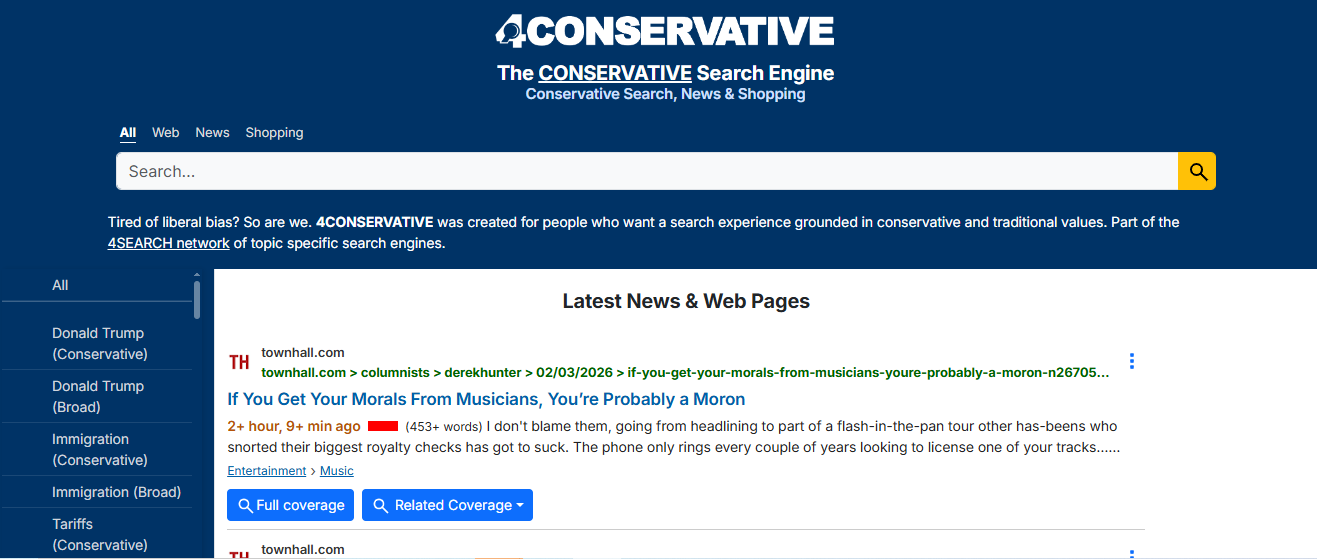
4Conservative.com unambiguously and unapologetically delivers right-wing news and content to the targeted audience. Its search results are listed based on right-wing media and blogs that are mostly overlooked in the regular searches. The site completely avoids the liberal channels and instead highlights the conservative writings, views, and tips.
Though it is a bit of a niche market, 4Conservative.com is still successful in giving the conservative people the information that they can trust along with the ‘no censorship’ or ‘ranking manipulation’ scenarios. It is the one and only site of choice for those who want a straightforward search experience and are of the same ideology anyway.
4. DuckDuckGo
DuckDuckGo is one of the leading privacy-centric search engines that have built an excellent reputation and are very difficult to be questioned about. The engine is not very clear-cut conservative, but it has become a preferred search engine for those internet users who like their online presence to be non-existent and who do not mind being monitored. DuckDuckGo neither saves user’s search history nor collects personal data nor serves ads based on the user’s profile.
On the contrary, it shows the user the results free of filters, which are unbiased and taken from a variety of sources, thus imparting the browsing experience that is fair and open. By making its focus on user-friendliness, speed, and privacy, DuckDuckGo has become the number one alternative for those users who want to stay away from Google’s data collection but still have high-quality search experience at the same time.
How to Dominate the Search Engines
5. Startpage
Startpage is yet another excellent privacy-first alternative to Google. It uses the search engine technology of Google, however, at the same time, it cuts all tracking and personal data collection off, hence, the user gets a very powerful search experience without any privacy issue. Startpage plays the role of a secure intermediary – it transmits your searches to Google in a non-identifiable manner and then provides you the results without linking them to your identity.
This is the perfect situation for specific users who still need the credibility of the Google search results while being unnoticed by the data gatherers. It is the no-ads and no-profiling policy that has gained Startpage a huge number of users who are privacy-minded.
6. Brave Search
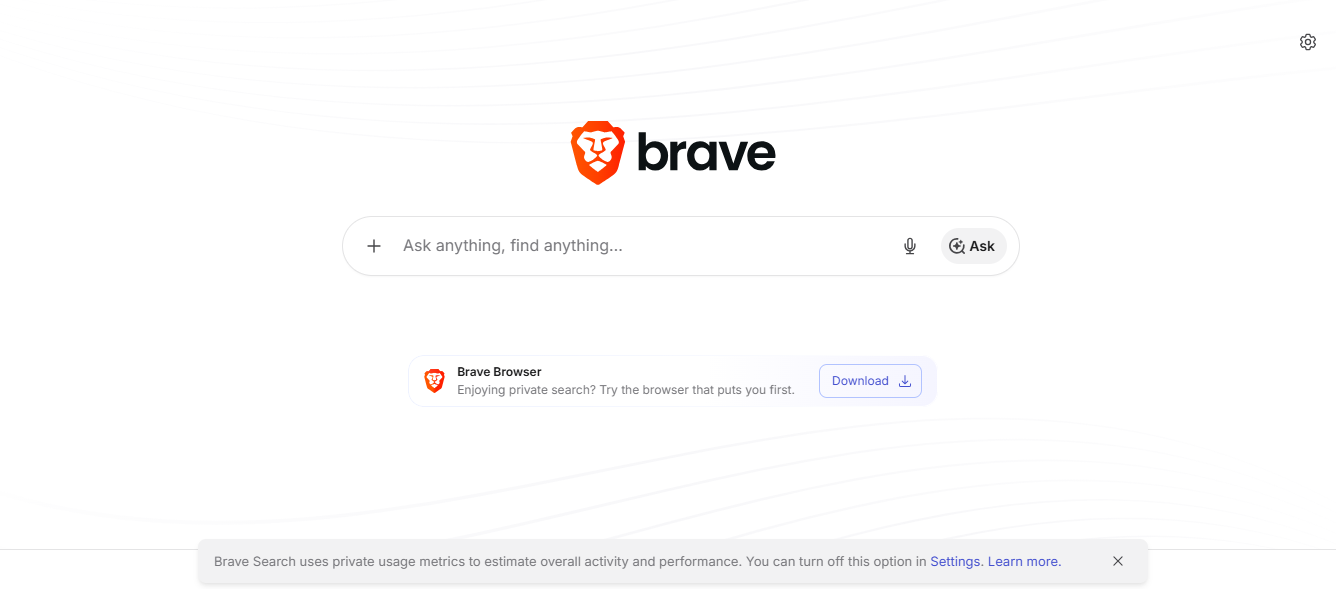
Brave Search, the brainchild of the same people who developed the Brave Browser, is getting more and more users along with its independent search index and high privacy standards. Brave Search has its own database which means there will be no corporate influence paramount to the results in the case of this search engine, unlike most others that rely on Google or Bing.
It does not track, profile, or sell the data of users, and its algorithms for ranking are transparent. Even more, users have the option to switch between “independent” and “mixed” results for a perfect blend of Brave’s data and that from external sources. For those who look for privacy and still want unbiased results, Brave Search is among the most innovative options in the market.
17 Best Chrome Extensions for Quick Search on The Internet
7. Qwant

Qwant is a European search engine that is focused on privacy and neutrality, so it enables users to manage their data themselves. This search engine does not keep any records of users, does not use cookies and does not collect any personal information. Qwant employs its own algorithm but sometimes includes Bing’s results in order to cover more ground.
The user interface is modern, quick, and no advertisements are shown that are aimed at specific users, which makes the whole search experience very neat. Even though Qwant is not a conservative political entity, it has still managed to sanction a very trustworthy and private over a very dynamic customer base through its attractive data protection and algorithmic fairness.
8. Swisscows

Swisscows is a search engine that is notably different due to its emphasis on privacy and family-friendliness. The location of its servers is such that they are protected by Swiss privacy law which means that your data cannot be reached by spying methods. Moreover, Swisscows has a monitoring system in place for explicit materials that automatically filters them, thus, the service is even suitable for children and families.
The AI-powered semantic search ensures that the results are correct and relevant while the user is being tracked through a non-invasive method that is not even part of the process. For every user that places safety, privacy, and clean surfing in the top positions, Swisscows is the ideal solution.
9. Gibiru
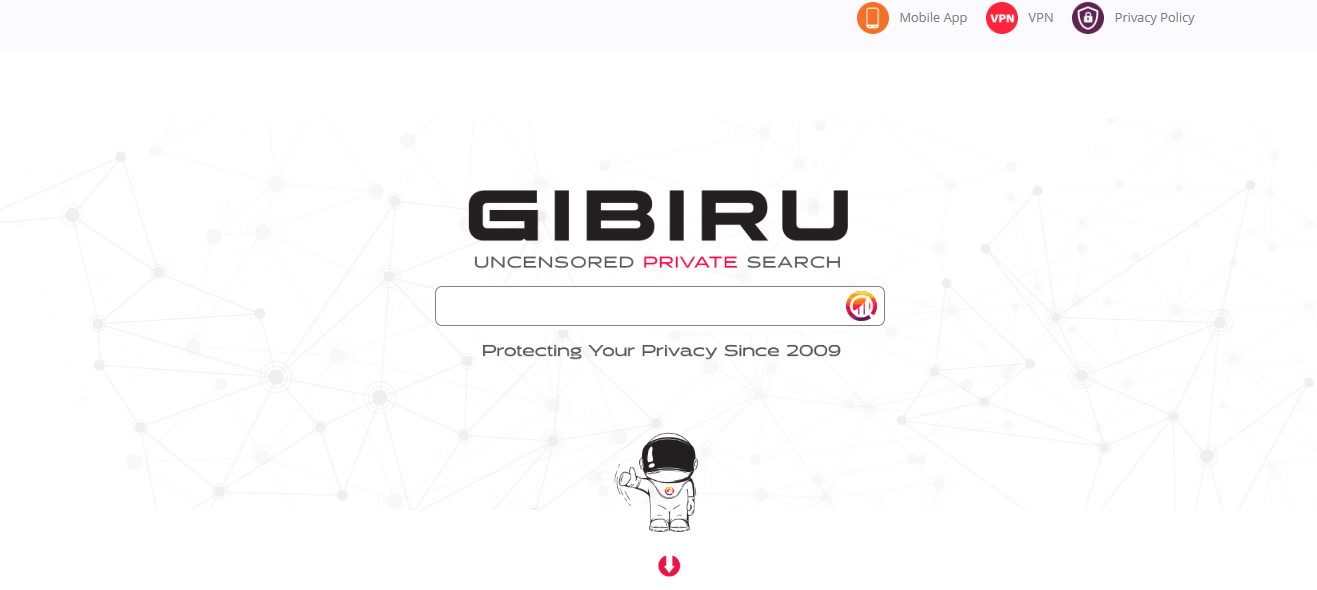
Gibiru presents itself as the “Uncensored Anonymous Search Engine.” Its results are based on the Google index but it removes tracking and filtering so you can see what big tech might want to hide or devalue. Gibiru has a no-log policy that applies to your search history and personal data, and it claims that it is playing the free speech card by providing independent media and alternative viewpoints.
The interface is simple and user-friendly, with rapid and secure searches. Those users who demand a completely natural and unprocessed internet experience with no algorithmic interference would discover Gibiru as a powerful substitute for Google.
10. Mojeek
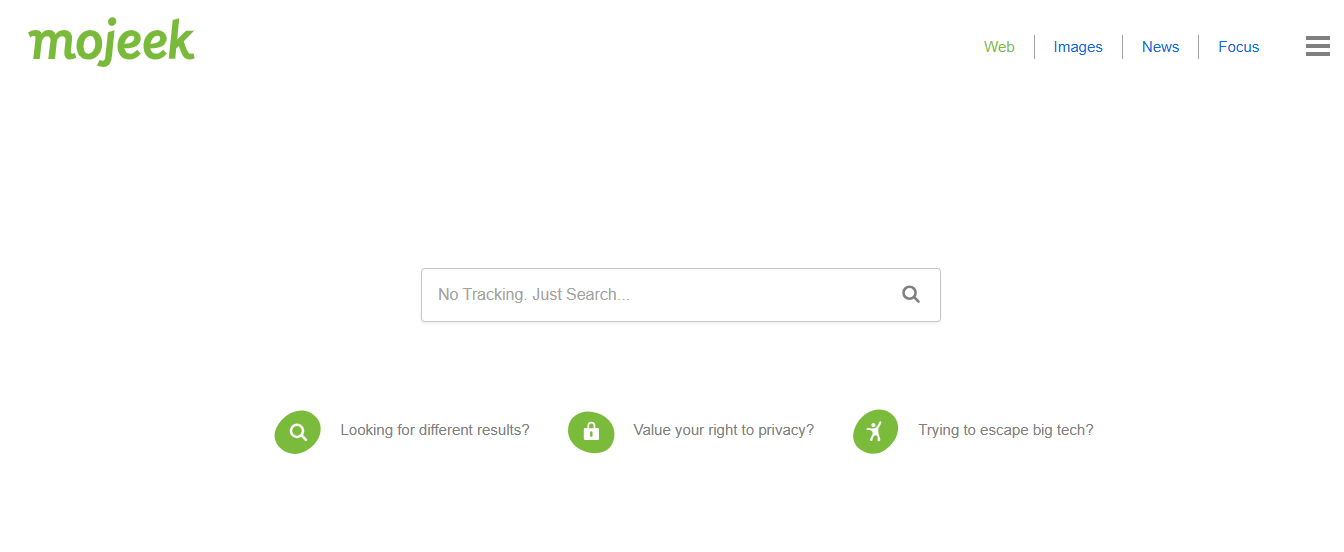
Mojeek is a search engine that one could say ranks among the very few that possess an entirely self-reliant search index. Mojeek, which is based in the UK, gives a high priority to privacy, free speech, and algorithmic transparency. It does not retain any user information and does not personalize search results, which results in every search being fair and natural.
Mojeek’s independence from such large tech companies’ indexes as Google or Bing gives it the power to operate without being influenced or controlled by the corporations. Even though its index is smaller than that of Google, it is still expanding and remains an alternative for users who want to completely distance themselves from the tech giants.
Conclusion
The rising popularity of privacy-centric search engines and their moderate usage is a clear indication that the internet users are asking for more power, more transparency and more freedom. Google has always been there as an outspoken antagonist but its negatives, such as surveillance, data collection and possibly a bias in the direction of politics, have made people think of alternatives.
The other search engines are promising an entirely different independent experience that is inextricably tied to the principles of privacy and the free flow of information. You can choose to be conservative in your views, get unbiased results or just enjoy more control over your data privacy, these search engines will incorporate you into a web experience that is both more open and less restricted. Opting for one of these alternatives may be the first step in your journey towards internet usage that is assured, empowered and completely liberated.
 About Carson Derrow

