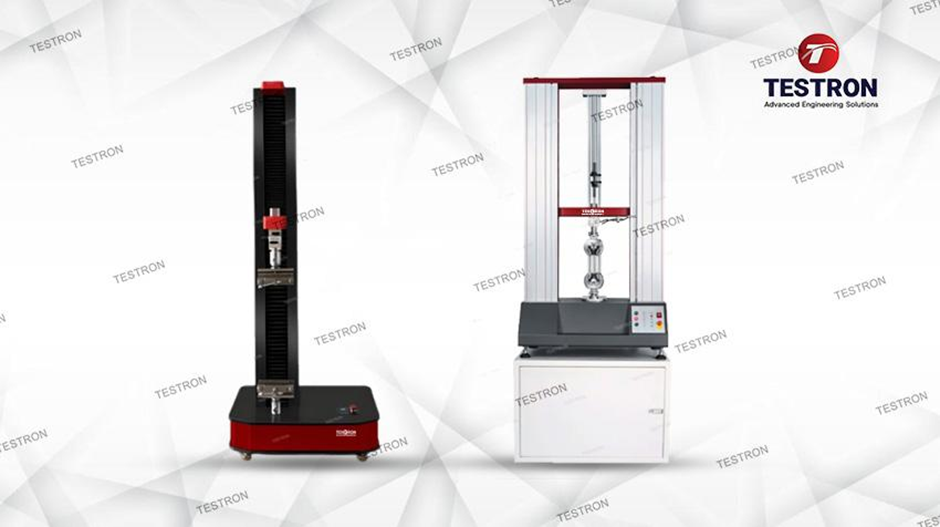
Material performance is central to safety, durability, and regulatory compliance. In Malaysia, industries are placing greater emphasis on verifying how materials behave under controlled mechanical stress before approving them for real-world use. This growing focus has made the Universal Tensile Tester in Malaysia an essential tool for laboratories, production environments, and research facilities. This guide explains how universal tensile testers work, where they are used, and how pricing is generally evaluated, with a practical focus on industrial applications, including considerations around Universal tensile tester price during procurement.
Table of Contents
How Tensile Testing Supports Quality and Safety Decisions Using Universal Tensile Testers in Malaysia
Tensile testing is directly involved in the process of assessing the suitability of materials to be used in the real world. Through the test, manufacturers and engineers are able to determine the quality, safety and compliance behavior of a material employed in the production of a product and make informed decisions prior to the products being marketed. This method of testing assists in detecting the possible weak areas before the actual occurrence when the product is put into operation which minimizes the chances of failure in the highly important applications.
Examples of such industries, which use tensile testing as a quality control, but not a once-only test, include automotive, aerospace, construction, and packaging. Tensile testing helps in adhering to the same product performance and regulatory balance within these industries, often with support from a universal tensile tester supplier.
What Is a Universal Tensile Tester and How Does It Work?
A Universal Tensile Tester applies mechanical force to a material specimen and measures how the material responds to that force. The Universal tensile tester working principle is based on three fundamental concepts:
- Stress: The internal force generated within a material when an external load is applied.
- Strain: The deformation or elongation that occurs as the material is subjected to stress.
- Elastic Limit: The maximum stress a material can withstand before permanent deformation begins.
By analyzing these parameters, engineers can determine mechanical properties and evaluate material suitability for specific applications using a universal tensile machine.
Where Universal Tensile Testers Are Commonly Used
Universal tensile testing machine are valued for their versatility and ability to support multiple testing methods across industries.
Key Testing Capabilities
- Tensile Strength Testing: Determines how much pulling force a material can withstand before breaking, which is the primary function of a Universal Tensile Strength Testing Machine.
- Compression Strength Testing: Measures a material’s resistance to compressive loads.
- Bending and Flexural Testing: Assesses a material’s response to bending forces and shape retention.
- Shear and Peel Testing: Evaluates resistance to shearing and peeling, particularly for adhesives and laminated materials.
- Adhesion, Fatigue, and Impact Testing: Determines durability under repeated stress and sudden impact forces.
These testing capabilities make tensile testing machines a core component of modern Material Testing Equipment, supporting both quality assurance and product development.
When Temperature Becomes a Critical Testing Factor for Universal Tensile Testers in Malaysia
Certain materials must maintain performance under elevated temperatures. High-temperature tensile testing machines are designed to evaluate tensile strength, compressive strength, elongation, and extension rate under controlled thermal conditions.
These systems often have a central testing device, specialized setups and a portable high or low-temperature device. This arrangement provides accurate material behavior with a stable performance, especially with metals, plastics, rubber, textiles and synthetic chemical products, typically supplied by a universal tensile tester manufacturer.
Control and Data Processing That Support Testing Accuracy
Modern tensile testing systems use computer-controlled software to streamline testing and data analysis. Common functional capabilities include:
- Multiple control modes such as constant speed, constant displacement, constant load, and constant strain
- Automatic zeroing and data saving to prevent data loss
- Batch testing for specimens with identical parameters
- Real-time curve display and post-test analysis
- Flexible unit conversion and exportable test reports
These features improve efficiency while ensuring accuracy and repeatability in accordance with recognized testing standards.
Industry Applications of Universal Tensile Testers in Malaysia
The Universal Tensile Tester in Malaysia is widely used across industrial, academic, and inspection environments.
Common Application Areas
- Automotive and aerospace component testing
- Wire, cable, and fastener evaluation
- Plastic, rubber, and packaging material testing
- Research institutions and universities
- Technical supervision, inspection, and arbitration departments
Market research shows that aerospace, automotive, and construction sectors are significant end users of universal and tensile testing systems, reflecting high demand from these industries. However, in each case, tensile testing supports confident decision-making by validating material behavior before production or deployment.
How Pricing of Universal Tensile Testers in Malaysia Is Determined
Choosing a universal tensile testing machine that matches with the testing needs and cost is a key factor to be considered by organizations in Malaysia. There is a great variety of universal tensile testers that have to be used to facilitate various testing capacities and testing requirements.
The prices tend to vary depending on the maximum test force, the arrangement of the control system, the need to test the system in the environment, and adherence to the accepted testing standards. The machines that are constructed to have a greater load or specialized unit testing such as high temperature testing are usually costly in terms of their structure and performance stability.
Most organizations consider the price and test scope with long-term reliability and operation efficiency to achieve the desired solution besides cost, and this is what determines the outcome of the chosen solution.
Conclusion
Tensile testing is considered to be one of the surest methods of learning how materials operate under pressure. Simple strength test to temperature analysis. Universal tensile tester supplier are crucial in assisting quality, safety and compliance in all industries. With the evolving nature of testing requirements, tensile testing will be a source of clarity and confidence that one requires to make sound decisions regarding materials.
Request a quote and learn about a tensile testing solution that can help you meet your material evaluation needs with accuracy and consistency.


