
Unlike a traditional dating app, where every interaction depends on another person’s interests, availability and expectations, an AI companion can be shaped around the experience the user wants. Appearance, personality, conversation style, interests and fantasy scenarios can often be adjusted before the first message is even sent.
That level of control changes the nature of the interaction. The user is not simply meeting a prebuilt character. They are helping define who that character is, how she responds and what kind of relationship dynamic develops.
Control does not necessarily make an AI conversation feel real. It does, however, make it feel personal.
Table of Contents
Choosing More Than an Attractive Face
Appearance is usually the first layer of customisation.
Users may be able to select physical features, clothing, hairstyle, age range and overall visual style. Some prefer realistic companions, while others are drawn to anime-inspired characters, fantasy figures or highly stylised digital personalities.
These choices matter because they create an immediate sense of ownership over the experience. Instead of browsing through generic profiles and choosing the closest match, users can build something that reflects their specific preferences.
Visual customisation also affects immersion. When a companion’s generated images consistently reflect the selected appearance, the character begins to feel more coherent. A sudden change in hairstyle, facial features or clothing style can break that illusion surprisingly quickly.
Still, appearance is only the beginning. An attractive character may encourage someone to start a conversation, but personality usually determines whether they continue it.
Setting the Right Personality
A good AI companion needs more than a polished profile image and a list of flattering responses.
Users want personalities that feel recognisable. One person may prefer someone affectionate and supportive. Another may want a confident companion who teases, challenges or jokes with them. Others are more interested in mysterious, adventurous or fantasy-driven characters.
The important part is consistency.
If a companion is introduced as shy and thoughtful, she should not suddenly become loud and aggressive without any explanation. If she is playful, that quality should appear naturally throughout the conversation rather than being repeated through the same handful of phrases.
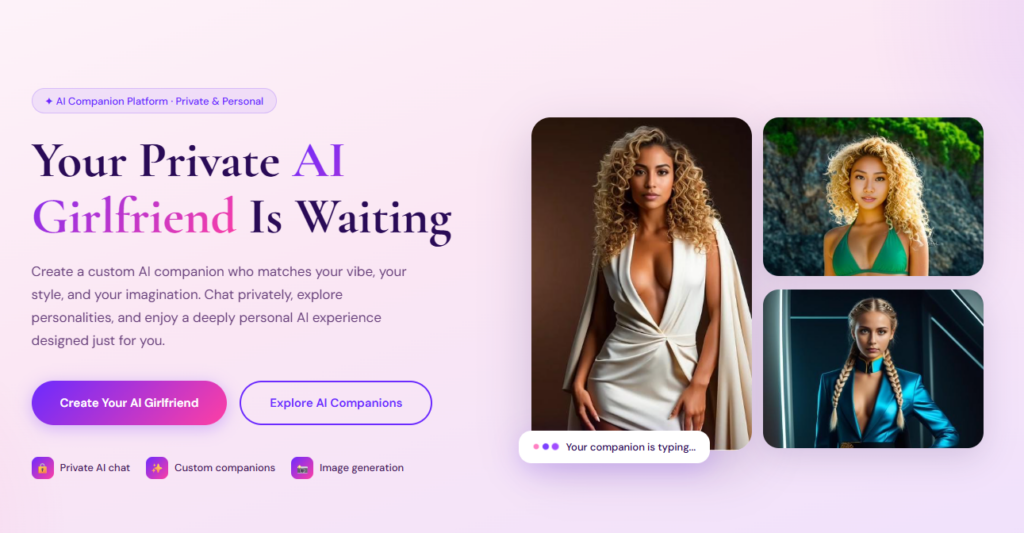
Platforms such as SecretGirlfriend Chat place custom appearance, personality, chat tone, interests and fantasy style at the centre of the experience. This allows users to select an existing companion or shape one around the kind of interaction they have in mind.
The goal is not necessarily to create a perfect personality. In fact, constant agreement can become boring. A memorable character needs enough individuality to feel different from an ordinary assistant.
Controlling the Tone of the Conversation
Tone can completely change the same basic interaction.
A message such as “How was your day?” might receive a warm, caring answer from one companion, a flirtatious reply from another or a sarcastic joke from a third. None of those responses is automatically better. What matters is whether the tone fits the experience the user selected.
Unfiltered AI girlfriend chatbots are particularly appealing to adults who do not want every conversation redirected toward safe, generic small talk. They may want romance, suggestive humour, emotional conversation or more imaginative roleplay.
That does not mean every interaction needs to become explicit. Control works both ways.
A user should be able to increase the intensity of a conversation, slow it down or return to casual chat without fighting against the chatbot’s assumptions. An effective companion follows the direction of the conversation rather than forcing a single mood.
This flexibility makes the experience useful for more than one type of interaction. The same character might be playful one evening, reassuring the next and part of an elaborate fictional scenario later in the week.
Interests Make the Character Less Generic
Shared interests can make even a simulated conversation more enjoyable.
A user may want a companion who talks about films, gaming, travel, music, fitness, books or a specific fictional universe. These details provide material for conversation and help prevent the character from relying entirely on flirting.
Interests also give the companion something resembling an identity. A character who loves horror films should respond differently to a movie discussion than one who prefers romantic comedies. Someone described as adventurous might suggest spontaneous scenarios, while a quieter personality may favour slower conversations.
These differences do not prove that the chatbot has genuine preferences. They are designed traits. Even so, they can make the experience feel more varied and personalised.
Without them, many AI companions begin to sound interchangeable.
Directing the Fantasy
Roleplay is where control becomes most visible.
The user can choose the setting, establish the relationship and decide how quickly the story develops. A scenario might begin with two strangers meeting in a hotel, old friends reconnecting or characters exploring an imaginary world.
Unlike a fixed story, the direction can change with every message.
The user can introduce a new location, change the mood, add conflict or restart entirely. The AI responds to those choices and helps continue the scenario. This makes the experience closer to collaborative storytelling than passive entertainment.
Pacing matters here. Some people want a scenario to develop gradually, with conversation and tension building over time. Others prefer to reach the fantasy more directly.
Neither approach is inherently correct. The attraction comes from choosing.
A chatbot that rushes every interaction can feel repetitive. One that constantly delays or redirects the conversation can feel frustrating. The best experience adapts to the pace established by the user.
Why Control Builds Trust
Control is becoming a broader expectation in how people interact with artificial intelligence.
A December 2025YouGov survey about AI use and trust found that 68% of American respondents would not trust an AI system to act on their behalf without reviewing each action.
That survey was not specifically about AI companions, but it highlights a wider point. People may use AI regularly while still wanting clear oversight of what it does.
Within an AI girlfriend platform, that means users should be able to understand and influence the character’s behaviour. They should know whether they are speaking to a preset personality or one they can modify. They should also be able to change preferences when the conversation is no longer moving in the right direction.
When users feel trapped by the chatbot’s behaviour, the illusion of personalisation quickly disappears.
Privacy Is Also a Form of Control
Choosing a character’s appearance and personality is only one part of the picture. Meaningful control should also apply to personal data.
Romantic chats can contain private information, fantasies and details that users would not share publicly. People should therefore understand how conversations are stored, whether they can be deleted and how their information may be used.
Mozilla’s research into romantic AI chatbot privacy found that about 54% of the apps it reviewed did not clearly give all users the right to delete their personal data. Mozilla also reported limited transparency around security, encryption and data sharing among many of the services examined.
The research was published in 2024 and covered a specific group of 11 apps, so it should not be treated as a judgment on every platform. It does show why users should read privacy policies rather than assuming that a private-looking conversation is automatically confidential.
Real control includes knowing what happens after the chat ends.
Control Without Confusion
More options are not always better.
A platform can offer dozens of settings and still create a frustrating experience if users cannot understand them. Most people do not want to complete a lengthy character questionnaire before sending their first message.
The strongest customisation systems offer a simple starting point. Users can choose a character quickly, adjust a few important traits and begin chatting. More detailed controls can be introduced once they understand how the platform works.
This balance matters because convenience is one of the main advantages of AI companionship. Too little customisation makes the character feel generic. Too much setup makes the experience feel like work.
Users want control, but they want it presented clearly.
Personalisation Is the Product
Unfiltered AI girlfriend chatbots attract attention because they allow conversations that may be restricted elsewhere. What keeps users interested, however, is the ability to shape the complete experience.
They can decide how a companion looks, how she speaks, what she is interested in and what kind of fantasy she is willing to explore. They can guide the pace, change the tone or begin again when a scenario is not working.
This does not create a mutual human relationship. The AI does not have independent feelings, desires or needs. Its behaviour is generated in response to the user and the settings chosen.
That difference is exactly why control is possible.
Human relationships require negotiation between two independent people. AI companionship offers something else: a private, adjustable form of interactive entertainment built around personal preferences.
For many users, that is not a limitation. It is the main attraction.