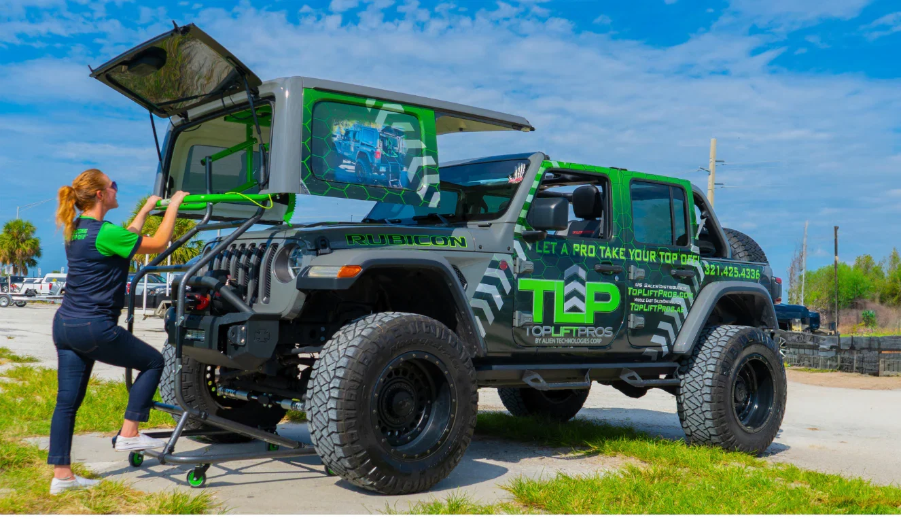
Removing a Jeep hardtop should not turn into a difficult garage project. The hardtop is large and awkward to handle. If you need another person every time you want to remove it, the process can quickly become inconvenient. Storage can create another problem once the top is off the vehicle.
Considering that, the right Jeep top lift can give you a more controlled removal process and a convenient place to store the hardtop afterward. However, lifting power is not the only thing to consider before selecting a top lift. Compatibility, stability, storage, portability, construction, and setup all determine how practical the equipment will be in your garage and workspace. Moreover, research on manual material handling also highlights why load position and lifting conditions deserve attention.
These seven considerations can help you compare Jeep top lifts based on your vehicle, space, routine, and long-term needs.
Table of Contents
1. Check Vehicle Fit and Capacity
When choosing a Jeep top lift, start with your exact Jeep model and year.
Wrangler versions and body styles can have different dimensions. A lift should clearly state which vehicles it supports. In case you have aftermarket equipment on your Jeep, make sure that the modifications do not have an impact on fit or clearance.
Capacity is also of equal significance to compatibility. You need equipment that can support your hardtop without requiring workarounds.
Positioning becomes easier when the support system matches the intended hardtop and vehicle design.
Furthermore, measure your Jeep and available space before ordering. Check the lift’s working height and clearance. This step can help you avoid choosing a system that does not suit your garage or vehicle setup.
2. Assess Solo Use and Control
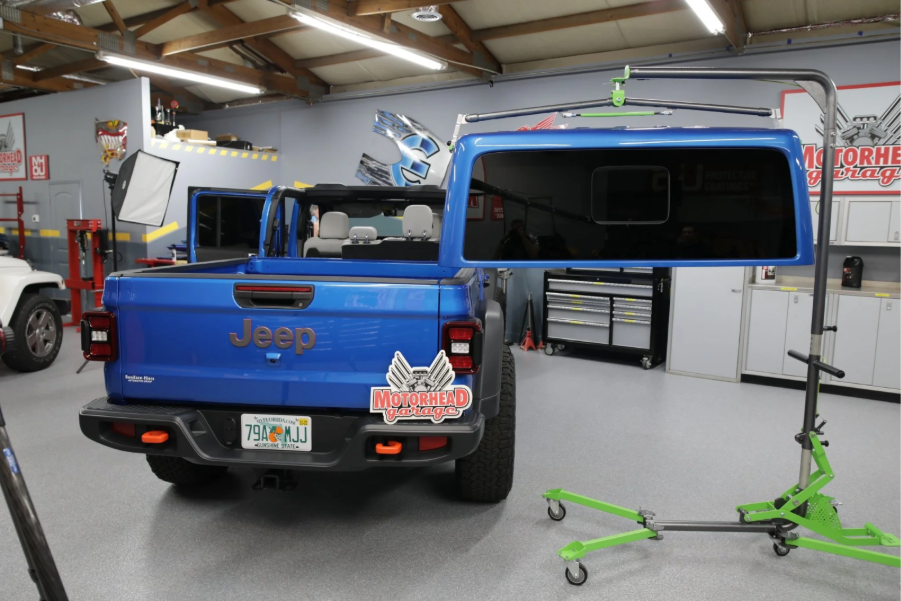
Think about how many people you want involved each time you remove the hardtop.
A system designed for solo use gives you more flexibility because you do not have to arrange help around your schedule. That matters if you switch between hardtop and open-air driving often.
Control during the lift is equally important. The hardtop should remain supported as you raise it and move it away from the Jeep.
Research on manual handling shows that load position, distance, posture, and task conditions can affect lifting demands, so reducing unnecessary physical handling is a sensible consideration.
Look for a system that lets you position the lift carefully before raising the top. Clear operating steps and predictable movement can make the process easier to repeat.
3. Review Support and Stability
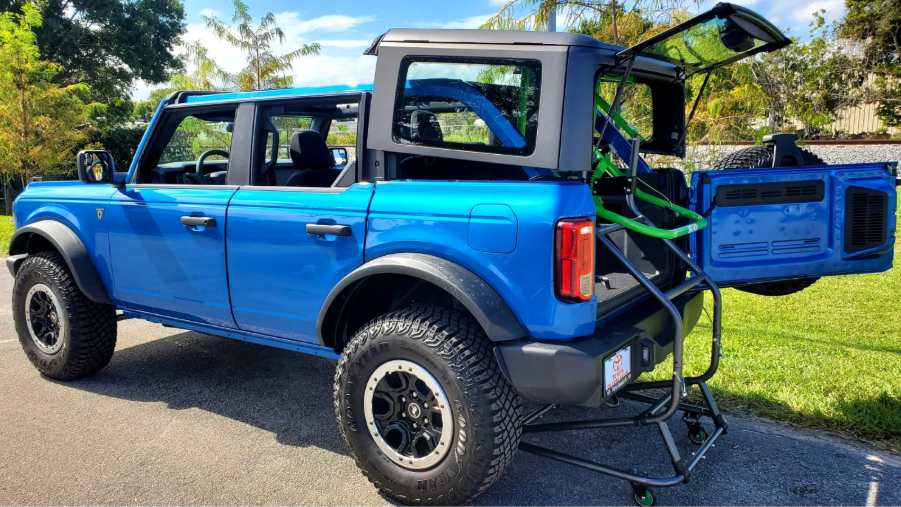
Examine exactly how the lift contacts and supports your hardtop. The support system should secure the top without applying unnecessary pressure or contacting sensitive surfaces. Look at the padding or other protective means in the area where the hardtop is resting.
The base and wheel design also contribute to overall stability. As you move a loaded lift across your driveway or garage, it should remain balanced and controlled. Predictable positioning can be made possible using a stable base and reliable wheel controls.
Your workspace should guide the comparison. Examine the floor, turning room, and the route between your Jeep and storage facility. A lift still needs to move safely through your space.
4. Consider Storage Space and Access
Removing the hardtop is only half the process. You must also have a convenient method of storing it till you need it back on the Jeep.
A lift with storage can save the use of individual racks, stands, or makeshift solutions. That said, determine the available floor and overhead space prior to selecting equipment. Ensure the stored hardtop does not interfere with your vehicle, tools, or other items in the garage. When there is a lack of space on the floor, efficient utilization of the vertical space can be used.
Access matters too. The stored hardtop should be accessible to you without having to keep on rearranging other equipment. Look at the location where the lift will be when the top is off your Jeep.
5. Compare Portability and Setup
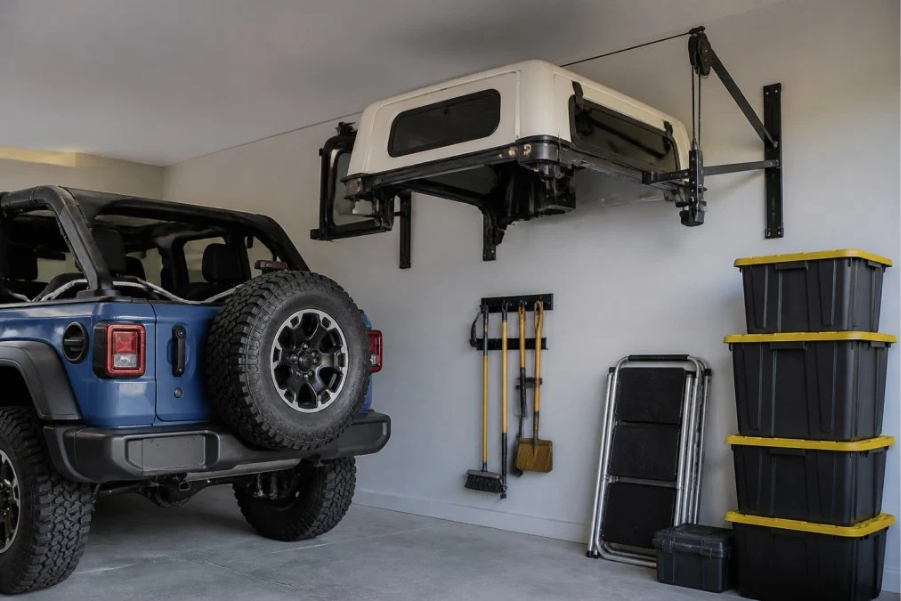
Consider where you expect to remove the hardtop. If you just work in a single garage, then a fixed system can be suitable for your routine. A freestanding lift can allow you to work in different locations without requiring permanent overhead mounting.
Portability also encompasses the work involved in moving the equipment. Check the wheel arrangement, footprint, and whether the system can be repositioned without excessive effort. That information is important when you have a different storage space and work space.
Assembly deserves attention too. Read the instructions of the manufacturer and check whether any specific tools or complex adjustments are necessary to be made in the setup. The simple assembly will save time when your plans vary.
6. Examine Construction and Adjustability
The lift is strained when used repeatedly, so the quality of the construction should be included in your comparison.
Examine the frame, joints, wheels, handles, support surfaces, and adjusting elements. Durable materials may be more important than cosmetic features in the case of repeated use of equipment.
Adjustability becomes valuable when you change your Jeep setup. Clearance can be changed by bigger tires, suspension changes, accessories, or other setups of the hardtop. Practical adjustment options can give you more working space without forcing awkward positioning.
Do not consider the durability of the frame itself. See what the manufacturer says about load support, finishes, hardware, and use. An efficient system must ensure that removal and storage are something that is in control and not an improvised process.
7. Check Installation and Long-Term Support
Before purchasing, decide whether the lift needs to be permanently installed. Systems on ceilings might require structural support, drilling, and sufficient overhead clearance. Freestanding design may be more appropriate in cases when you do not want to make permanent changes in the garage.
Take into account the way the lift can become part of your daily life. A portable system can provide more flexibility if you change garages, move homes, or remove the hardtop away from your usual workspace. Take into account present and future applications.
Lastly, check the warranty, instructions, replacement parts, and support from the manufacturer. Clear instructions can help with compatibility, assembly, and operation. The price is not the only consideration to be made in your decision-making.
Conclusion
Choosing a Jeep top lift involves more than checking whether a system can lift your hardtop. Practical use is influenced by vehicle compatibility, lifting control, support, stability, storage, portability, construction, adjustability, installation, and support. The comparison of those factors can help you avoid using equipment that is not suitable for your routine.
Measure your Jeep and available space, confirm compatibility, and consider how you will remove, move, and store the hardtop before buying. Concentrate on the functioning of the entire system in your actual setting. That strategy can assist you in picking equipment that would be viable whenever you alternate between hardtop and outdoor driving.


