If you’re reading this because your phone just buzzed with a message from someone claiming to be a “manager,” a “pimp,” or a member of a cartel demanding money — stop scrolling and take a breath first.
The short version: you are not in physical danger, and this is a scam. The person on the other end is not connected to any cartel. They are running a script designed to scare you into paying before you have time to think clearly. This guide breaks down exactly how the ListCrawler Cartel Scam scheme operates, why the listcrawler cartel threats feel so convincing, and the concrete steps to shut it down.
Table of Contents
What Is the ListCrawler Cartel Scam?
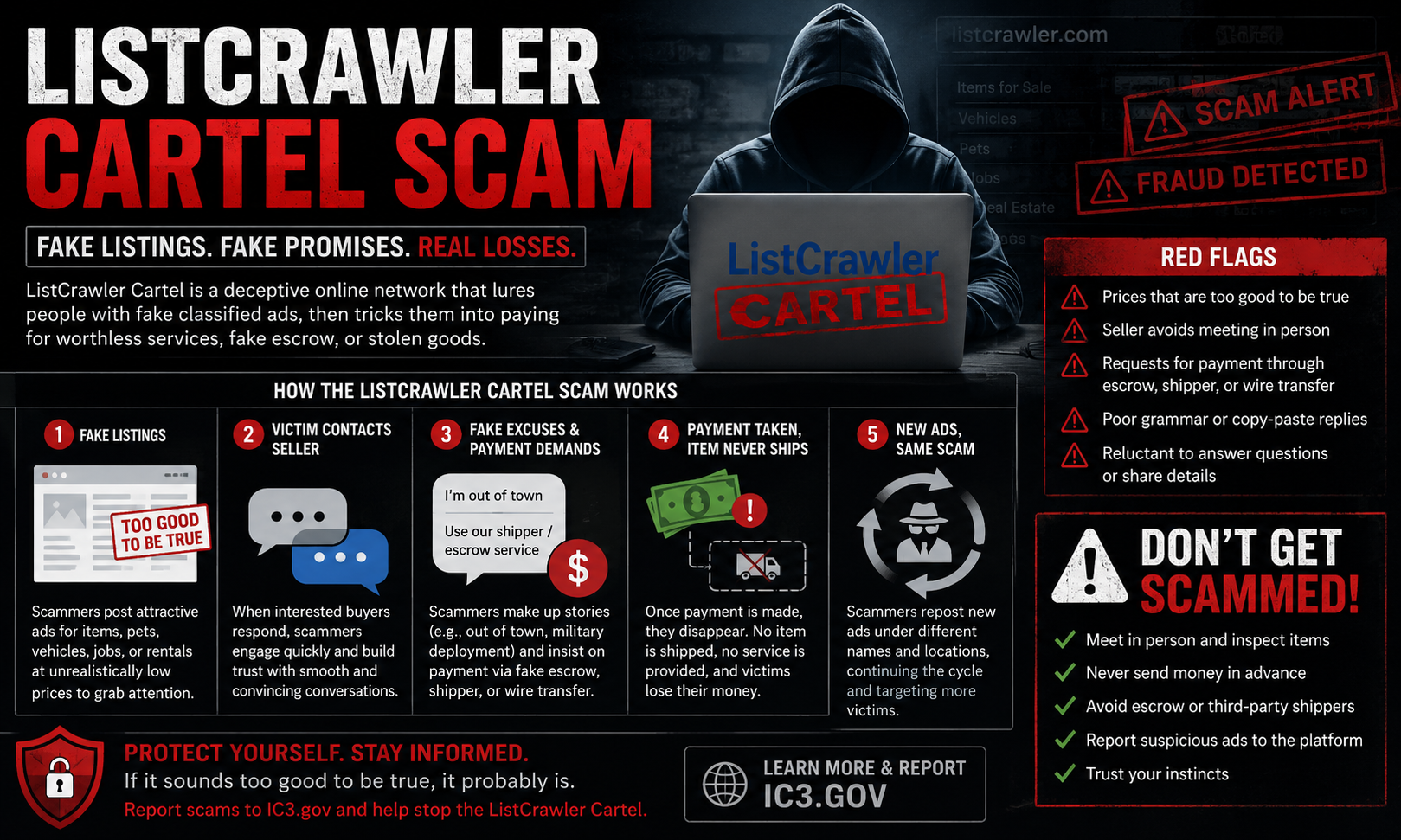
The ListCrawler cartel scam is an extortion and blackmail operation, typically run out of overseas call centers, that targets people who have contacted ads on classified and adult-services sites. While it’s most associated with ListCrawler, the same script shows up on SkipTheGames, Megapersonals, BedPage, and similar platforms — it isn’t tied to one site, it’s a tactic that gets recycled wherever this kind of advertising exists.
It’s worth being clear about one thing: this scam has nothing to do with actual drug cartels. Mexican cartels like CJNG and Sinaloa are real, and 2026 has seen genuine cartel-related unrest making headlines. But that’s exactly why scammers borrow the name — it’s frightening, it’s in the news, and it makes an empty threat sound plausible. The scammer texting you is almost certainly sitting at a desk reading from a flowchart, not affiliated with any criminal organization.
TokUpgrade Review – Is it Safe or a Scam?
How the listcrawler cartel threats scam Works
The scheme follows a remarkably consistent pattern across victim reports. Understanding each stage makes it much easier to recognize — and dismiss.
Step 1: You Make Contact
It starts with something completely ordinary: you respond to a listing. Maybe you asked “is this still available?” Maybe you scheduled something and then changed your mind. You don’t need to meet anyone, send money, or do anything beyond sending that first text.
Step 2: Your Number Gets Logged
The moment you replied, your phone number was captured. Whether the original ad was even legitimate doesn’t matter — your number now sits in a database that gets reused across multiple extortion attempts, sometimes by entirely different scam crews.
Step 3: The Threatening Persona Appears
Hours or days later, a new number contacts you. They’ll usually adopt a menacing alias — “Tony,” “Don Carlo,” “The Manager” — and claim to represent a cartel or a “boss” who’s unhappy about how you handled the interaction.
Step 4: The Manufactured Debt
The accusation is almost always some version of “you wasted her time” or “she got in trouble because of you, and now there’s a fee to make it right.” The amount typically lands somewhere between $1,000 and $3,000, though it can vary.
Step 5: Escalation If You Engage
If you respond at all — even to argue or explain — the scammer treats that as a bite. New “fees” appear: a security deposit, a clearance charge, a fee to call off the supposed enforcers. There is no version of this where paying makes it stop.
Why the Listcrawler cartel threats Feel So Real (But Aren’t)
This scam works because it pairs a financial threat with sensory shock. A few tactics make it land harder than a typical phishing attempt.
Graphic images. Scammers often send violent photos to “prove” they’re serious. Historically these have been recycled images from real news coverage of cartel violence in Mexico or South America. In 2026, there’s an added wrinkle: some of these images may be AI-generated rather than pulled from old news archives, which makes a simple reverse-image search slightly less reliable than it used to be — though it’s still worth trying, since many scammers are still using recycled stock photos out of convenience.
Personal details that seem impossible to know. This is the part that genuinely unsettles people. How does a random scammer know your home address or your mother’s name?
The answer is OSINT — open-source intelligence. Once a scammer has your phone number, they can run it through any number of public “people search” data broker sites (the kind that legally aggregate public records) and pull your full name, address history, and relatives’ names within seconds. It looks like surveillance. It’s actually just a database lookup anyone could do.
“Proof” they’re outside your house. Some victims receive a photo of their own front door. This isn’t a stakeout — it’s a screenshot from Google Street View or a real estate listing site, matched to the address pulled from that same data broker search.
UseViral Review – Is it a Scam, or is it Legit?
How Big Is This Problem, Really?
This isn’t a handful of isolated incidents. Imposter scams — the broader category this falls under — account for billions of dollars in reported losses annually according to FTC consumer fraud data, and sextortion-style reports tracked by the National Center for Missing & Exploited Children have climbed sharply year over year. Local police departments, including agencies in Canada, have issued public advisories specifically about cartel-themed extortion texts tied to escort-ad responses. By 2026, this style of scam has become one of the more frequently reported variants in the broader catfishing-and-extortion category — which is exactly why it’s worth writing about, and why you shouldn’t feel singled out if it happened to you.
Step-by-Step Action Plan
If you’re currently being targeted, here’s the protocol to follow.
1. Do not pay, and do not engage. Don’t explain yourself, don’t negotiate, don’t ask them to stop. Any reply — including pleading — signals that the number is active and worth continuing to message.
2. Screenshot, then block. Keep a record of the messages before you cut contact, in case you need it for a report later. Then block the number. Expect them to text from a new one; keep blocking.
3. Lock down your social media. Scammers sometimes dig through public profiles for additional family names to mention. Setting Facebook, Instagram, and LinkedIn to private removes that resource.
4. Silence unknown callers. Most phones let you automatically silence calls from numbers not in your contacts — useful while the harassment is active.
5. Report it. File a report with the FTC at ReportFraud.ftc.gov and with the FBI’s Internet Crime Complaint Center at ic3.gov. It likely won’t lead to an arrest, but it builds a record and helps agencies track the scale of the scheme.
If You Already Paid
If you’ve sent money, the priority shifts from prevention to damage control.
- Contact your bank or the payment app (Zelle, Cash App, etc.) immediately and report it as fraud — refunds are uncommon but worth pursuing, especially if the transaction is recent.
- Brace for escalation. Having paid once marks you as someone willing to pay, so expect louder, more aggressive follow-up demands.
- Hold the line anyway. Block and go silent. Scammers move on to easier targets; continued payment never resolves the situation.
Watch Out for “Recovery Agent” Scams
There’s a second wave to be aware of. If you post about your experience on Reddit or social media, you may be approached by accounts claiming they can “hack the cartel back” and recover your money — often citing some specific ethical hacker handle as proof it worked for them.
This is a separate scam layered on top of the first one. No one can reverse a completed Zelle or crypto transaction, and legitimate law enforcement doesn’t operate through DMs offering recovery services for an upfront fee. Treat any unsolicited recovery offer as a second extortion attempt, not a lifeline.
Frequently Asked Questions
Is my family actually in danger?
No documented case shows these scammers escalating from text threats to physical harm. The entire model is built on high-volume messaging, not violence — actual cartels don’t operate this way, and a real threat wouldn’t come bundled with a price tag and a Cash App handle.
Can they really find my exact address?
Yes, through public data broker sites — but that’s a far cry from someone being physically present. It’s a database lookup, not surveillance.
Should I change my phone number?
Usually not necessary. Blocking is typically enough, since the volume of harassment tends to drop off within days once it’s clear you won’t respond or pay.
Will the police actually do anything?
Local police generally have limited ability to act on a scam routed through a foreign burner number, but filing a report still creates a useful paper trail, especially if you need to dispute charges later.
How can I tell if listcrawler cartel threats photo is fake?
Try a reverse image search first — many photos are recycled from old news coverage. If that comes back empty, treat any violent image sent alongside a payment demand as fabricated regardless, since legitimate threats don’t arrive with a negotiable price.
Key Takeaways
This scam is upsetting because it’s designed to feel personal — invoking your name, your address, your family. But strip away the theatrics and it’s a high-volume con relying entirely on panic, not capability.
The plan is simple: block the numbers, ignore the threats, and report it to the FTC and IC3. Responding to an ad online isn’t a crime, and it certainly isn’t one that comes with a death sentence. Once you stop feeding the script, the messages stop too.
 About Carson Derrow

