Being the only person doing something can feel a bit lonely. Flicking through the https://free-spins-professor.com/fairgo-casino-no-deposit-bonus on a quiet Tuesday night might seem like a solo mission. But smart platforms have figured out how to create a buzz even when someone is sitting by themselves.
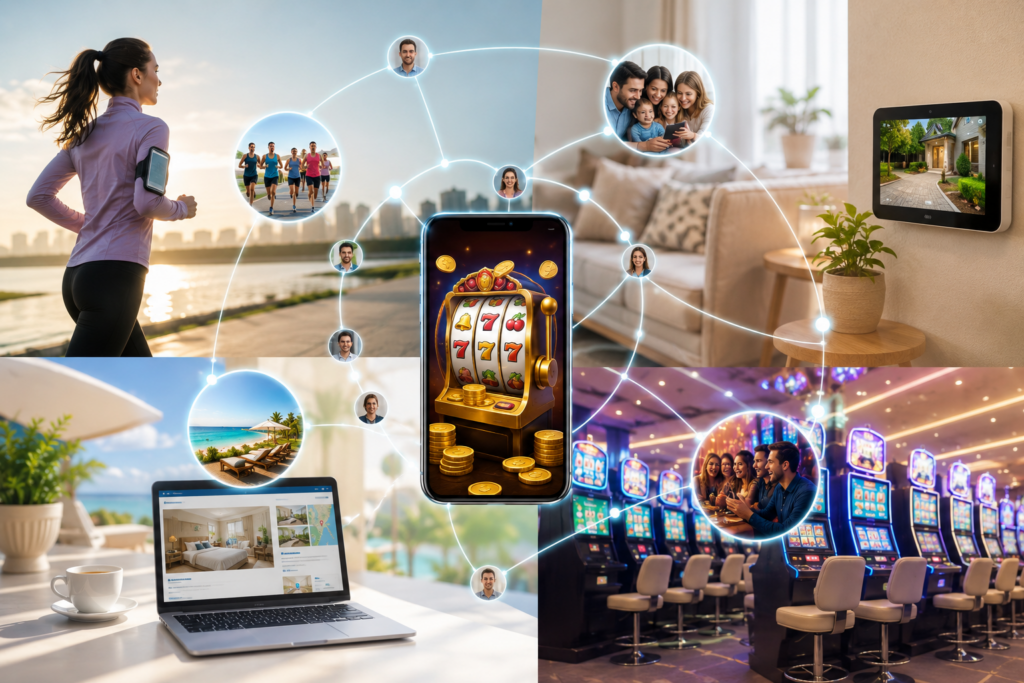
The trick is called social synchronisation — making a single user feel like they are part of a moving crowd. This process shows up everywhere from running tracks to booking websites. No need for chat rooms or noisy lobbies. Just clever little nudges that whisper: “you are not alone in this.”
Table of Contents
What Social Synchronisation Actually Means
The core idea is dead simple. A person sees what other people are doing right now, or very recently. That visibility creates a strange but pleasant sense of belonging.
How Online Casinos Build A Virtual Crowd
Open almost any modern online casino and the crowd noise hits straight away. A little ticker runs along the side of the screen.
“Mitch just won $240”.
“Sarah scored 500 credits”.
“Jackpot pool up by $1,200 in the last hour.”
These messages pop up every few seconds, and while they are not personalised, they do not need to be. The effect works anyway. A Fair Go casino player feels like they are sitting in a busy venue rather than staring at a screen alone.
Another classic example is the shared jackpot. Everyone sees the prize growing in real time. The meter ticks up. Someone across the country adds a few dollars. Another punter across the city adds a few more.
The no deposit bonus codes section of a site might even highlight which jackpots are climbing fastest, pulling attention toward the most active games.
Sport And Lifestyle Run The Same Race
Fitness apps mastered this years ago. Someone goes for a jog through their local neighbourhood, phone strapped to an arm. Halfway through, a notification pops up: “You are 12th in your age group for this city route today.” No need to meet the other eleven runners. Just knowing they exist changes the feeling of the run.
Strava does this beautifully. Runkeeper too. The leaderboard filters by age, by postcode, by friends list. Suddenly a solo jog starts resembling a low-key race.
A Quick Look At Where Social Sync Shows Up
Different industries have borrowed social synchronisation, each tweaking the formula to fit their crowd. The table below lays out four clear examples before the deeper dive into casino mechanics.
- How Social Synchronisation Works
- Online casinos
- Live win tickers and shared jackpot meters
- Fitness apps
- Age-group rankings on city routes
- Booking sites
- “Three people looking at this room right now”
- Security apps
- Neighbour activity feeds on smart locks
Before the table lands, it helps to see the pattern clearly. Different industries use different tools, but the psychology stays identical. After the table, the takeaway is simple: nobody wants to feel like the only one moving.
Booking Sites And Security Apps Get In On It
Hotel booking pages use social sync all the time. A message flashes near the “book now” button. “Three other travellers are viewing this room at this exact moment.” The effect nudges hesitation straight out the window.
Suddenly the decision feels urgent, not because of a timer, but because other humans are circling the same deal. The Fair Go Australia interface applies similar logic in its tournament sections, showing how many players have joined a comp in the last hour.
Security apps jumped on this trend too. Modern smart doorbell systems show a little feed of neighbour activity. “Smith family armed their system 2 minutes ago.” “Jones residence disarmed at 6:15 PM.” Just seeing the pattern creates a quiet sense of shared vigilance.
The Fair Go casino dashboard uses a parallel idea in its live dealer rooms, displaying how many players are currently at each table.
Why Social Synchronisation Keeps People Hooked
Humans are wired to look for crowds. Evolution favours safety in numbers. A solo caveperson felt nervous. A solo punter feels the same way deep down. Social sync tricks that ancient wiring without requiring actual company. The Fairgo Casino Australia experience demonstrates this perfectly — players stay longer when they see activity around them.
Runners push harder when they know their age group ranking is live. Shoppers convert faster when they see browsing neighbours. Security feels tighter when the whole street appears on the app.