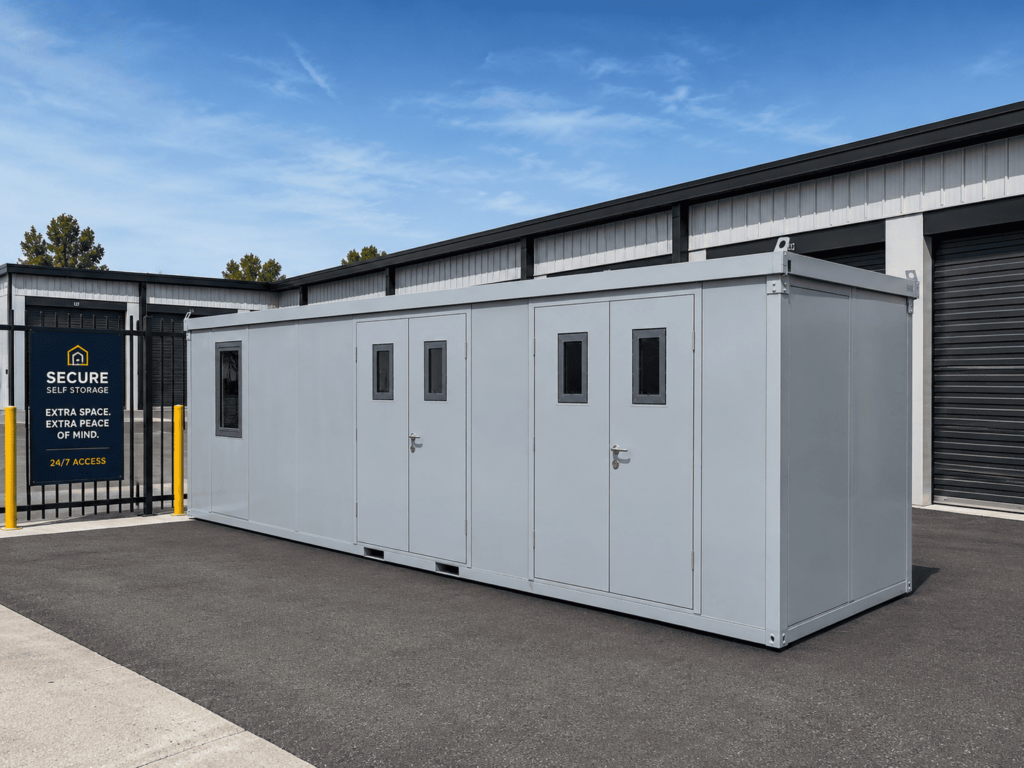
Business storage needs can change quickly. Inventory increases, equipment requirements shift, seasonal demand rises, and project materials need secure space close to where work happens. For many companies, the challenge is not simply needing more room. It is finding storage capacity without committing too early to permanent construction or long-term facility expansion.
Table of Contents
Adding Capacity Without Permanent Construction
Permanent construction can be valuable, but it is not always the right first step. It often requires planning approvals, higher upfront costs, longer timelines, and a clear long-term space forecast. Many businesses do not have that level of certainty when storage needs are changing month to month.
A flexible storage approach gives companies room to grow without overbuilding. This can be especially helpful for contractors, retailers, logistics teams, agricultural operations, and companies managing temporary project demands.
The U.S. Small Business Administration notes that business growth often requires planning around operations, staffing, and changing capacity needs. Storage should be part of that planning because space limitations can slow down otherwise healthy growth.
Reducing Logistics and Transport Friction
Storage is not only about square footage. It also affects how efficiently teams move materials, access equipment, and complete daily tasks. When tools or inventory are stored far from the worksite, businesses may lose time through repeated trips, delayed access, or disorganized loading processes.
Portable and modular storage can reduce that friction by keeping materials closer to where they are used. For example, a construction company may need secure storage near a jobsite, while a retailer may need overflow space during seasonal peaks. In both cases, proximity can improve workflow.
Businesses researching Self Storage for Sale are often evaluating how flexible storage infrastructure can support practical needs such as space expansion, site organization, and operational efficiency without requiring a permanent buildout.
Evaluating ROI Before Buying Storage Infrastructure
A storage purchase should be assessed through more than the initial price. Businesses should consider how often the space will be used, whether it can serve multiple purposes, and how easily it can adapt when needs change.
A useful ROI evaluation may include:
- Reduced transport time
- Improved inventory organization
- Lower reliance on off-site storage
- Faster access to tools or materials
- Reuse across projects or locations
The National Institute of Standards and Technology highlights efficiency and operational improvement as key concerns for modern businesses. Storage infrastructure can support those priorities when it helps teams work with fewer delays and less wasted movement.
Choosing Between Build, Buy, or Modular Storage
Businesses often compare three broad options: expanding permanent facilities, renting off-site storage, or investing in modular storage. Each option has a place, but the right choice depends on timeline, budget, location, and expected future use.
Permanent construction may suit companies with stable long-term growth and available land. Off-site storage may work for low-access items. Modular or portable storage can be useful when businesses need faster deployment, location flexibility, or scalable capacity.
The key is to match the storage decision to the actual operational problem. If the main issue is temporary overflow, a permanent expansion may be excessive. If the issue is frequent site-based access, off-site storage may create delays. A flexible model can help bridge the gap.
Planning for Future Growth
Storage needs often reveal broader business patterns. A company that repeatedly runs out of space during busy seasons may need a more scalable system. A business managing multiple worksites may need portable infrastructure that moves with projects. A growing operation may need storage that can expand gradually instead of all at once.
Good planning means choosing solutions that solve current problems while leaving room for future adjustments. Storage that can be reused, relocated, or scaled may offer stronger long-term value than a fixed solution built around today’s needs only.
Conclusion
For growing businesses, storage decisions should support flexibility, efficiency, and long-term planning. The goal is not simply to add space. It is to add the right kind of capacity in a way that reduces operational pressure without locking the business into unnecessary infrastructure.
Companies that evaluate storage through scalability, logistics, and ROI can make smarter decisions as their needs evolve.
Additional Resources
For businesses comparing flexible storage options, this resource on Portable Storage Containers may be helpful.