Mobile devices are now the key to how fans engage with sports across much of Asia due to both their widespread use and low-cost access to internet services. With widespread 4G mobile networks and increasingly ubiquitous 5G mobile services, Malaysian consumers can easily, reliably, and consistently access live sporting content. Consequently, people now watch games as they occur, access information, and interact with digital platforms during games, all in real time rather than through television broadcasts.
Table of Contents
Mobile Platforms and Real-Time Sports Interaction
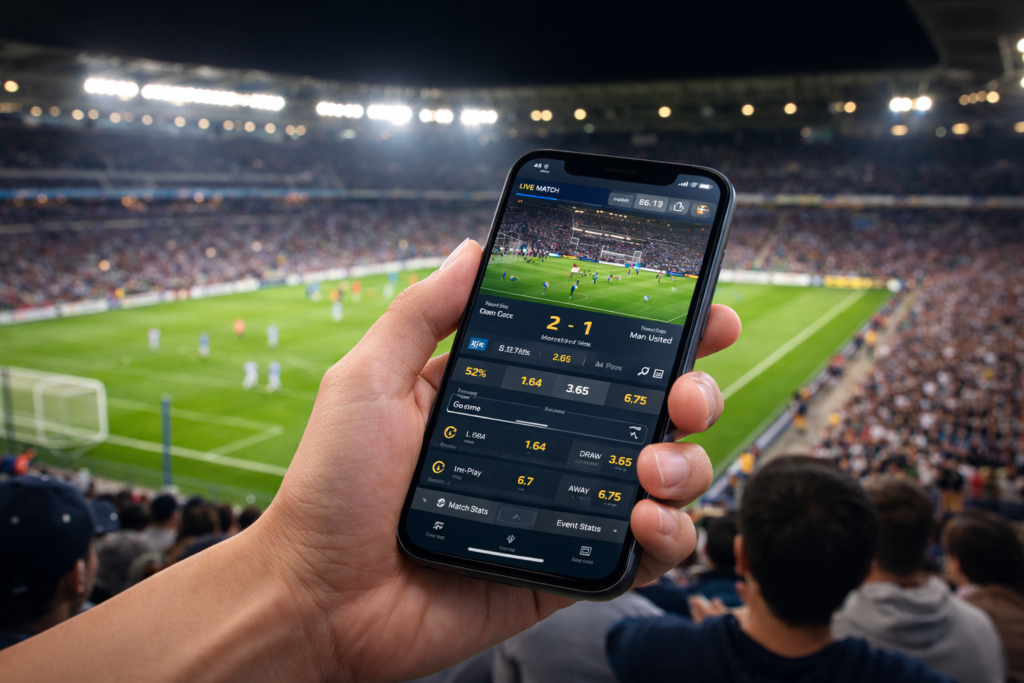
Smartphones now act as the primary tool for following live sports, bringing together streaming, statistics, and notifications in one place. During events such as the AFC Asian Cup 2023, mobile traffic increased as viewers depended on apps for instant updates and second-screen data. Within this environment, online betting is integrated into mobile apps through live odds, match timelines, and in-play statistics that update continuously as the game progresses, enabling faster decisions without switching between multiple sources during live play.
Platform design focuses on speed and direct access. Navigation is kept simple, making it easy to switch between matches, check key metrics, and receive push alerts without interruption. Engagement with sports content now occurs in real-time rather than before or after games.
Key features driving mobile engagement include:
- Instant push notifications for match events and score changes
- Integrated live streaming with synchronized statistics
- Customizable dashboards based on selected teams and leagues
- Real-time data feeds supporting second-screen interaction
Mobile apps during SEA Games 2023 offered live updates in addition to the live broadcasts, which have proven to be very popular in the Asian market. During matches, movement between video, statistics, and alerts happens within the same app, without leaving the screen.
Convergence of Streaming, Gaming, and Interactive Services
Mobile platforms now combine different forms of digital entertainment within a single environment. Streaming services operate alongside analytics tools, prediction features, and gaming elements, forming layered user experiences. Mobile apps include sections where online casino games such as slots, live dealer tables, and quick-play formats appear next to sports content, allowing short gaming sessions to run alongside live matches. These features are optimized for mobile use, with fast loading, simple controls, and continuous availability during live events.
Faster networks have made this model practical. GSMA data points to steady growth in smartphone use across Asia-Pacific, with more people watching video and following live content on mobile connections. Analysis of the APAC live sports streaming market shows that mobile viewing continues to expand across the region. In practice, this means a match, its statistics, and related features can all be accessed in one flow without interruptions.
The integration of services can be observed through several patterns:
- Unified interfaces combining video, data, and interaction tools
- Cross-platform synchronization between mobile and smart devices
- Real-time analytics layered over live broadcasts
- Continuous content updates driven by automated systems
Sports content is now integrated with a larger mobile ecosystem with streaming, data, and interactivity. Community features like live chat, prediction sharing, and in-app discussions are positioned next to the video stream so users can provide and respond to commentary in real-time while watching the game.
Personalized Mobile Ecosystems and User Behavior
Personalization affects how sports content is presented on mobile devices. User activity influences layout, with interfaces adjusting to selected teams, leagues, and preferred updates. The system behind the MelBet App Philippines is built around a clean interface, fast response time, and simple navigation between sections, allowing quick access to live matches, statistics, and updates without delays. Key information is grouped on one screen, reducing the need to switch between tabs during live events.
In Southeast Asia, including Malaysia, mobile usage patterns show a preference for apps that simplify access to information. Global data from the sports app market overview indicates that hundreds of millions of users rely on apps for live scores and match tracking. During live matches, delays disturb the experience, making quick updates, short loading times, and stable performance critical.
Emerging trends shaping mobile sports ecosystems include:
- Machine learning models refining content delivery based on behavior
- Cloud infrastructure supporting live synchronization
- Adaptive interfaces adjusting to user preferences over time
- Secure authentication systems aligned with regional regulations
Mobile apps have become interactive environments in which viewing, engagement, and personalization occur concurrently. Users exchange reactions, follow trending moments, and take part in shared viewing experiences within the same space.
Infrastructure, Connectivity, and the Future of Mobile Sports
Mobile sports engagement continues to be influenced by the expansion of 5G networks across Asia. In Malaysia, national digital initiatives support infrastructure growth, improving data speed and reducing latency. This allows high-definition streaming, multi-angle viewing, and live analytics during live matches.
Major sporting events drive further adoption. For the Asian Games and the associated regional football competitions, official digital distribution channels provide content directly to users’ mobile phones, resulting in smartphones quickly becoming the primary device for sports content access in these environments.
With the advancement of mobile ecosystems, the three components of streaming, analytics, and user engagement are becoming more integrated. Asia’s methods of engaging with sports will continue to be influenced by changes in infrastructure and platform design, but will always center around mobile devices.


