Let’s be honest, we’ve all wanted to do it. You remember a review someone left, maybe a glowing compliment or a dramatic rant, and now you want to find it again using the reviewer’s name. The task appears easy because you need to enter a name and then click the search button. The process becomes complex because Google Reviews requires different procedures than expected. Google operates differently than social networks because users cannot access all content created by individual users. Google displays reviews within business listings because its system operates via location-based systems instead of tracking individual users. Nevertheless, you have multiple options to reach your destination. You can use several indirect techniques together with search methods and platform capabilities to assist you in finding your target. This guide explains how Google Reviews search by name operates, including Google’s regulations and restrictions and the methods users and business owners use to find particular reviews.
Table of Contents
Why People Want to Search Google Reviews by Name
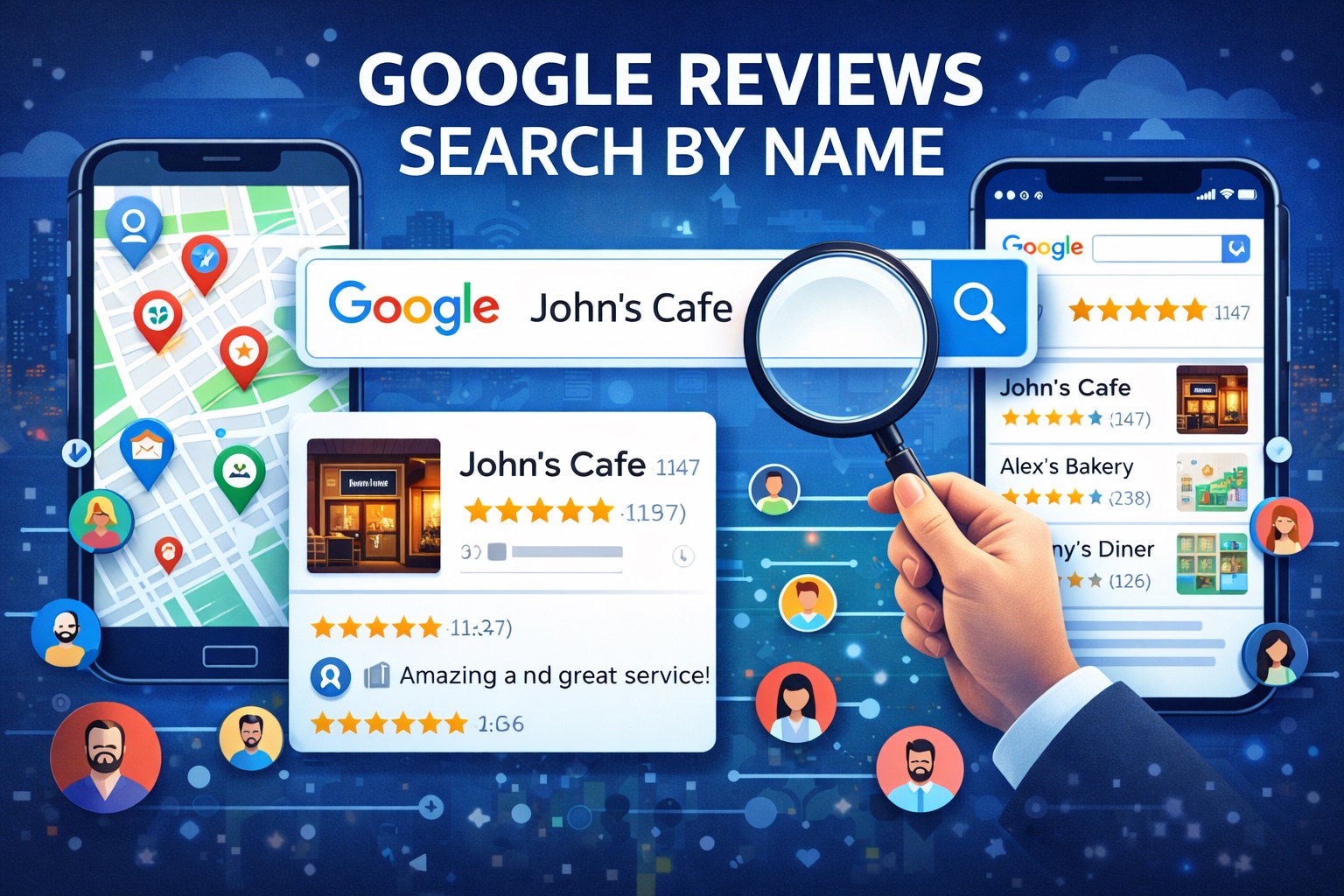
Some people find it easier to remember who wrote the review than to recall the contents of their review. You need to check customer feedback which comes from either regular clients or customers who filed complaints against your business. Business owners will use the process to confirm their customer interactions while users will use it to check if a reviewer is trustworthy. The interest becomes logical because Google created its review system to function as a tool for searching people.
The Big Truth: Google Doesn’t Offer a Direct Name Search
The main point that most people overlook in the headline shows that Google lacks a built-in tool which enables users to search business reviews using a specific reviewer’s name. The website does not provide a single search function which allows users to enter “John Smith review” and see all content created by that individual. Reviews are attached to business profiles, not organized in a public directory by reviewer identity.
Business Listings Contain Reviews Instead Of Showing Them Through Reviewer Profiles
Google operates according to its location-first system. Businesses display their reviews on Google listings which appear in Search and Maps. Google requires reviewers to create profiles yet the company does not offer an accessible public system which enables users to search for all reviews written by specific reviewers. Name-based search results suffer because this structure exists in its current state.
Search Google or Type a URL Meme, Explained
What Happens When You Click a Reviewer’s Name
You can view additional reviews which a reviewer has written when you access their profile through a review link. The outcome depends on two factors: The reviewer decides to share their information and the user decides to display their activity. You need to discover one of their reviews first before this method will work. The function does not operate as a genuine search tool.
Using the Review Search Bar Inside a Business Listing
Google provides a helpful feature which exists in specific business listings. The review section on Google Maps or Search allows users to filter reviews by keywords through a search box which appears when they access business reviews. The search function enables users to find words from review text but it does not support searching for reviewer names and this limitation still enables users to narrow their search results.
Why Name Searches Don’t Work Like Keyword Searches
The review search tool conducts a comprehensive review of all text contained in reviews. The review system will display a name when someone mentions their own name within the review which occurs very infrequently. The search bar treats reviewer names as metadata because they exist outside of the actual review content.
SEO vs Google Ads: Which One Is Better for Your Business
Users Attempt to Use Google Search as a Workaround
Some users try using regular Google Search with the reviewer’s name and the business name together. The system can locate reviews through this method when the review has been indexed in a manner that allows it to appear through search results. The system operates in an unpredictable manner since its functionality depends on how Google indexes that particular piece of information.
Quotation Marks and Search Operators
Using quotation marks around a full name along with the business name in Google Search can occasionally narrow results. The method requires Google to find precise matches through exact match searching. Google does not guarantee success because it does not always show review snippets which directly relate to specific reviewer names.
Searching Within Google Maps
Most users conduct their review browsing activities through Google Maps. You can scroll through reviews manually and sort them by newest, highest rating, or lowest rating. The system does not support name filtering but its sorting function enables you to narrow down your time period which simplifies your manual search process by providing an approximate time frame for the review date.
The Role of Privacy in Review Visibility
The visibility of your reviews gets determined by the privacy settings established by reviewers. Some profiles display multiple publicly accessible reviews while others show only minimal information. Google provides users with visibility control options which restrict strangers from monitoring their business activities across various establishments.
What Business Owners Can See in Their Dashboard
Business owners using Google Business tools can view reviews left on their own listings, but they still cannot run a global search by reviewer name. Users can respond to reviews while viewing the name which the reviewer has chosen to display, but the system lacks a mechanism that enables users to access all reviews written by one particular reviewer across different listings.
Search Google Or Type A URL: Which One Is Right For You?
Why Google Limits Name-Based Review Searches
The restrictions exist primarily because they protect user privacy while preventing unauthorized use of the system. The ability to search reviews through personal identification would enable users to track individuals who provide feedback which would result in their privacy being violated. The design of Google systems protects reviewers through his security measures which make their information difficult to access.
Third-Party Tools and Platforms
Various third-party tools exist which help businesses track and manage their Google reviews, especially for reputation purposes. These platforms may offer better filtering within a single business’s reviews, but they still depend on the data Google makes available and generally cannot create a full cross-platform name search either.
Manual Search: Still the Most Reliable Method
The review process becomes more effective when users use manual scrolling through reviews because they already know the business along with the expected review posting date. The newest and lowest rating sort options enable users to locate exceptional reviews within a complete set of reviews more quickly than random review scanning.
Looking for Clues in the Review Content
Reviewers sometimes provide personal information along with the dates of their visits and the details of their specific encounters. The search for keywords in a business’s reviews will help you identify the review more quickly than searching by name.
Reviewer Profiles as a Starting Point
The first review from a user leads to their other reviews through their profile which users access by clicking their name. The method enables users to track a reviewer through their activities but it requires their profile to be accessible to the public.
Limitations Across Devices
Mobile devices and desktop computers show different experiences because of differences in review presentation and review filtering methods. The system remains unchanged because its identifier for reviewers does not exist as an internal name search function.
Common Misconceptions
People believe that Google Reviews function like social media posts which users can search easily. The system operates through its business and location framework which does not enable search capabilities for reviewer records.
When a Review Seems “Missing”
Users assume that reviews have vanished when they cannot discover them through a named search. The content remains accessible but hidden because it exists among numerous items which different filters display and users need specific terms to find it.
Setting Realistic Expectations
Google Reviews search by name does not function as a regular system according to the main point. Users must treat all methods as temporary solutions which do not guarantee successful results. The understanding of these restrictions enables people to handle their frustration better while they search for specific reviews.
Conclusion
The system of Google Reviews search by name for its simple appearance depends on Google system requirements which cannot operate through its current setup. The platform directs users to search for business reviews because it does not support direct name-based searches for which people search. The process of finding a specific person’s review requires users to combine three methods which include manual searching and keyword filtering and they need to exercise their patience. Users can sometimes find success through three methods which include clicking on reviewer profiles and using Google Search and they can narrow their results to specific business listings but these methods do not guarantee success. The most important thing is understanding the limits so you don’t waste time chasing a feature that doesn’t exist. The knowledge of how Google manages its review process enables you to develop better strategies which help you set accurate expectations while you search for your essential feedback.
 About Carson Derrow