You can recognise Dogecoin instantly and still know little about sending it. That gap matters when you move from watching a rally to looking up how to buy dogecoin. Who records your coins? Who checks a payment? What happens if the wallet disappears? The answers sit in the blockchain’s older, less fashionable machinery, beneath the dog pictures and the celebrity attention.
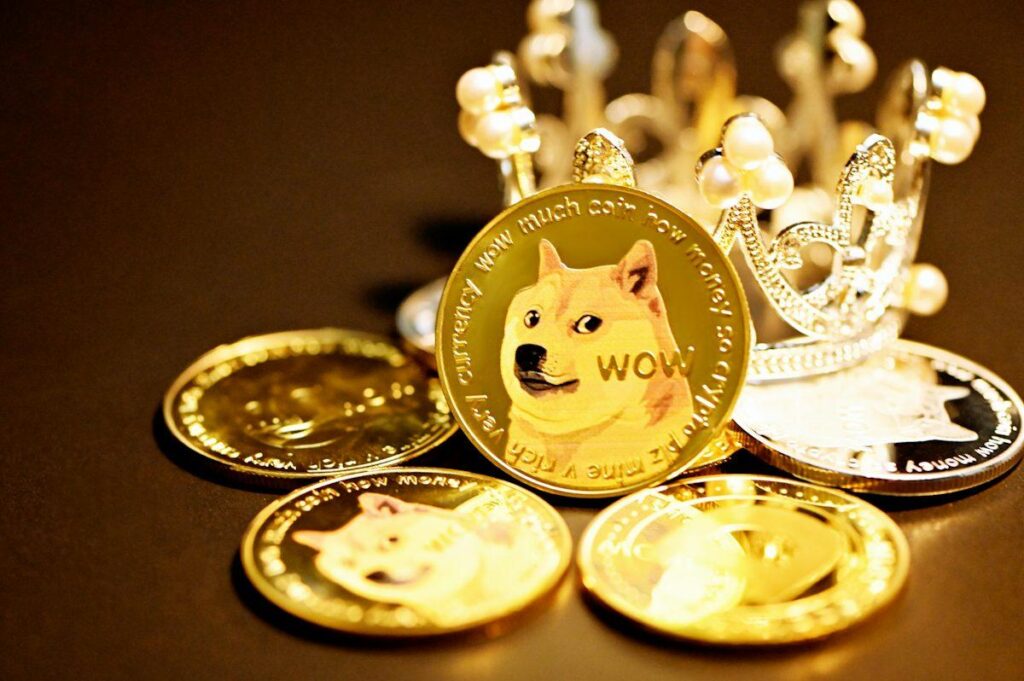
Image credits: https://unsplash.com/photos/gold-and-white-cat-on-round-gold-coins-r9dG85a7E_U
Table of Contents
Code With a Family History
The developers did not start with a blank page. They changed Luckycoin’s code; Luckycoin had come from Litecoin, which in turn drew on Bitcoin. A code fork gives a new project existing machinery to work with and room to choose different rules. The family resemblance begins there, not in the coin’s price.
A payment goes into a block, which points back to the earlier block using a hash. Think of a fingerprint: change the earlier data and the result changes. Someone replacing old payments must also supply competing work for the history built above them. Further blocks make that replacement a bigger job.
Miners Have to Do the Work
A miner pays to run machines that keep trying possible results. Most attempts go nowhere. Eventually one meets the difficulty requirement, and the miner puts forward a block with the allowed reward. The rest of the network can reject it if the transactions break the rules. Buying more machines gives a miner more attempts. It does not make an invalid transaction acceptable.
Electricity is the running cost of those attempts. Someone trying to replace the accepted record has to produce competing work while honest miners keep moving ahead. That is the economic obstacle proof-of-work puts in the way. It can be formidable without making the network invulnerable. The energy criticism does not vanish, either: the electricity is being used to make competing histories expensive.
Scrypt and Shared Mining
The machines are different from Bitcoin’s. Dogecoin miners do Scrypt work, as Litecoin miners do, rather than Bitcoin’s SHA-256 work. Scrypt was once meant to leave more room for ordinary hardware. Specialised machines arrived anyway. Dogecoin’s response to the competition for that computing power was to let miners contribute work already being done elsewhere.
That decision brought Litecoin’s miners into the picture.
A compatible pool lets them use the same mining work for both networks. They can earn rewards on Litecoin and Dogecoin without repeating the main calculation for each. Each network still checks its own blocks and records its own payments. You cannot spend DOGE on Litecoin simply because the miner contributed to both. The arrangement brings more work within Dogecoin’s reach while leaving the two ledgers separate.
The mascot may be a joke. The equipment and electricity bills are real.
What a One-Minute Block Means
Send DOGE and you wait for a miner to include the payment. Dogecoin aims for blocks about a minute apart; Bitcoin aims for about ten minutes. Your payment can take longer, and the recipient may wait for further blocks before accepting it.
Two miners can find competing blocks before either hears from the other. Only one branch becomes the accepted history. More frequent blocks give that race more chances to occur, so the design must accommodate it.
For tips and small transfers, less waiting for a first block has obvious appeal.
The recipient still decides how much confirmation is enough.
A Supply That Keeps Growing
Bitcoin limits issuance to 21 million coins; Dogecoin keeps rewarding miners with 10,000 DOGE per block. At roughly one block per minute, about 5.26 billion new coins arrive in a year. There is no final coin at the end of the schedule.
A critic sees dilution. A supporter sees a continuing payment currency.
Both can calculate the addition in advance. What they cannot calculate from it is next year’s price. The same annual number becomes a smaller percentage as the existing supply grows, but people still decide whether to spend, save or sell. Continuing issuance can fit a payment-oriented design without forcing anybody to use it that way. Demand remains the other half of the argument.
Predictable supply starts the debate; it does not settle it.
Who Checks the Ledger?
If you run a full node, you check Dogecoin’s record for yourself. A miner can send you a proposed block, but your software will reject it if it breaks the rules. The same is true of a block sent by a familiar company. That independence is the point. Many operators in many places can make the network harder to pressure, although counting machines is not enough: a thousand nodes under one owner’s control are not a thousand independent decision-makers.
Ask who operates them, as well as how many there are.
The Wallet Question Is About Control
To receive DOGE, give the sender your address. That lets them pay you, not take the payment back out of your wallet. Spending requires authorisation from the private key. In self-custody, looking after that key is your job. The cryptography makes calculating it from public information impractical; stealing an exposed copy is another matter. The coins are recorded on the ledger, while the wallet manages the means to spend them.
A broken phone need not end that control. If you kept a valid recovery backup, you may be able to restore the wallet on another device. If every usable key and backup is gone, installing another app will not bring the coins back. A custodial service takes a different role: it controls the keys, so you recover access through its account process rather than by independently restoring those keys.
Keeping the Software Working
A developer proposing a fix puts code where others can examine it. They can question the change or suggest repairs before a release. Operators decide whether to run that software; no board can order every participant to upgrade. Much of the job is ordinary upkeep, easily overlooked until something stops working.
Open review works through people doing that job carefully, not through openness alone.
The Network Behind the Name
A meme can bring someone to Dogecoin. It cannot process their payment. That takes the miners doing work, the nodes checking it and the owner authorising the transfer. Dogecoin has kept those roles operating over the years without having to become every new thing the market gets excited about. Understanding that achievement is useful. Confusing it with a promise of investment returns is not.


