
Digital entrepreneurs constantly seek new environments to apply arbitrage principles, yet many operators overlook sophisticated financial systems within massively multiplayer online games. These digital realms possess self-contained economic structures, complete with internal inflation models, scarce commodity markets, and complex supply chains. Unlike traditional global e-commerce requiring physical overhead, virtual markets allow data analysts to study behavioral economics with minimal friction. Participating actively in these environments offers a measurable advantage for testing micro-economic theories using real-time demand.
The primary barrier to establishing a functional trading operation in virtual environments is overcoming initial capitalization without exhausting hours on low-yield resource gathering. Arriving in a mature server economy with zero purchasing power forces participants into manual labor rather than high-level market analysis. Establishing an immediate pool of tradeable wealth is foundational for testing arbitrage strategies. Sourcing foundational liquidity externally, such as choosing to Comprar Kinah Aion 2, bypasses the time-sink and provides leverage to participate in auction dynamics. This allows traders to allocate time exclusively toward evaluating temporal trends.
Table of Contents
Evaluating the Velocity of Virtual Assets
Understanding how quickly an item converts back into base currency is the cornerstone of virtual trading operations. Asset velocity determines whether investments compound efficiently or tie up capital in stagnant inventory. High-velocity items typically include daily consumables, vital enhancement materials, and access passes that players require consistently. These goods experience constant demand, creating narrow bid-ask spreads for flipping high volumes. Identifying high-turnover assets requires mapping the daily consumption rate against active server peak times.
Conversely, low-velocity assets consist of rare cosmetic items, end-game equipment drops, or specialized crafting recipes. While these items boast massive profit margins on successful sales, they can sit dormant on the market board for consecutive weeks awaiting specific buyers with sufficient capital. Tying up foundational currency in low-velocity goods severely limits operational agility and restricts reactions to sudden market shifts. A balanced approach requires calculating the historical trade volume of specific assets over a thirty-day period before committing funds. Without a consistent daily clearing rate, these items introduce severe liquidity risks that halt trading cycles.
Establishing a Baseline for Market Participation
1. Calculate the Necessary Initial Capital
Entering digital markets requires determining the exact currency threshold needed to control a specific commodity sector. To monopolize mid-tier crafting materials, you must calculate the total cost of clearing the existing market board. Review active listings, identify average unit prices, and project the volume required to influence buyout thresholds. This prevents entering markets undercapitalized, which results in being undercut by established suppliers before finalizing flips. Always maintain a twenty percent buffer above your calculated requirement for sudden price spikes.
2. Secure Your Foundational Trading Assets
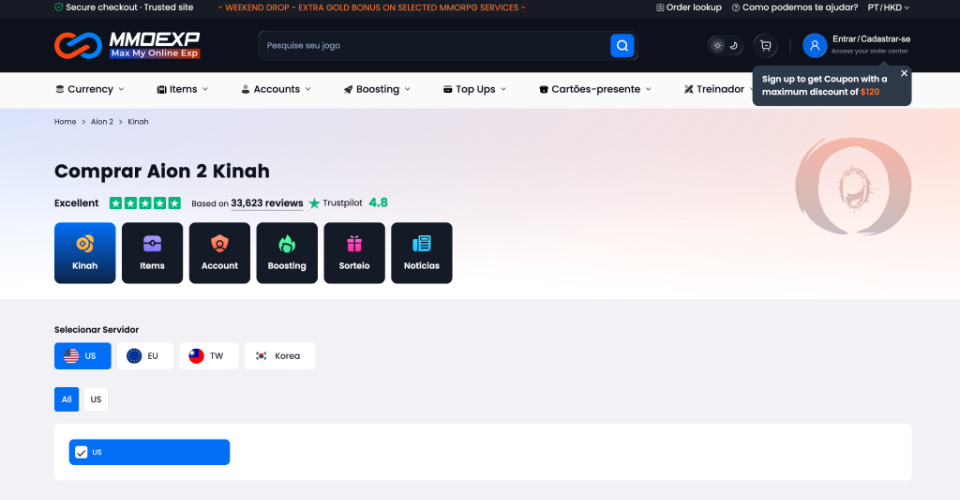
Once defining exact capital requirements, sourcing foundational currency efficiently becomes the critical operational phase. Relying on manual generation takes time away from analytical tasks. When setting up initial inventory, inputting target server details into a platform to acquire Aion kinah provides the volume needed for execution. After initiating external transactions, log in and monitor your in-game mailbox to verify balance transfers align with purchase orders. Upon receipt, update tracking spreadsheets to reflect new liquidity pools, ensuring active trading budgets match projected acquisitions.
3. Identify Target Commodities for Arbitrage
With capital secured, the next definitive action is filtering active market boards for arbitrage opportunities. This involves identifying items where raw material costs are lower than finalized products, or finding assets below historical moving averages. Set highly specific percentage thresholds for engagement, like requiring a minimum projected net return of twenty percent after auction taxation fees. Establishing strict entry parameters prevents emotional purchasing decisions and keeps trading operations completely grounded in verified mathematical probability.
4. Monitor Auction House Price Fluctuations
Digital economies move rapidly, often shifting entirely based on developer announcements or weekend population surges. Establishing a daily monitoring routine is non-negotiable for long-term profitability. Record the lowest, highest, and average clearing prices for target commodities across three different daily intervals. Consistent data collection reveals cyclical patterns, such as prices dipping during server maintenance and peaking when player activity is highest. Tracking these temporal fluctuations allows you to strategically time bulk purchases and schedule listings during peak hours.
Mitigating Risks in Digital Ecosystems
Virtual markets are highly susceptible to artificial inflation and sudden regulatory changes imposed directly by game developers. A major risk factor is introducing expansion packs or patches, rendering previously valuable materials obsolete. When developers announce structural updates, traders must immediately evaluate inventories and ruthlessly liquidate assets connected to deprecated mechanics. Holding legacy items during transition phases results in catastrophic depreciation, as the player base shifts to newly introduced commodity tiers and completely abandons older progression zones.
Another significant systemic risk involves inflation caused by automated farming operations injecting massive amounts of raw currency into servers. This constant, unregulated influx of unbacked capital steadily reduces the purchasing power of idle reserved funds. To combat persistent inflationary pressure, traders must proactively avoid holding massive stockpiles of raw currency. Instead, realized profits should be reinvested into stable, inflation-resistant assets that appreciate alongside the broader economy. Recognizing early warning signs of hyperinflation allows converting liquid currency into hard digital assets before exchange rates become unfavorable.
Structuring Long-Term Asset Portfolios
Operating within virtual economies requires treating digital assets with the analytical rigor applied to real-world financial instruments. The primary function is establishing a disciplined framework for evaluating asset liquidity, calculating risk-to-reward ratios, and timing market entries based on historical data. By maintaining strict capital requirements and continuously monitoring temporal price fluctuations, skilled operators can transform chaotic server environments into highly predictable revenue models. The daily mechanics of auction house arbitrage constantly demand swift adaptation to patch notes, shifting community behavior, and inflationary trends.
Mastering closed-loop financial ecosystems ultimately builds robust analytical capabilities that translate seamlessly into broader economic endeavors. Managing diversified portfolios of high-velocity consumables and rare commodities teaches fundamental principles of supply chain control and capital allocation. The ability to strategically source foundational liquidity, interpret sudden shifts in market demand, and cleanly execute calculated asset flips provides a practical foundation in behavioral economics. These specific competencies ensure your analytical approach to digital trade remains highly scalable and consistently capable of generating compounded returns across data-driven marketplaces.


