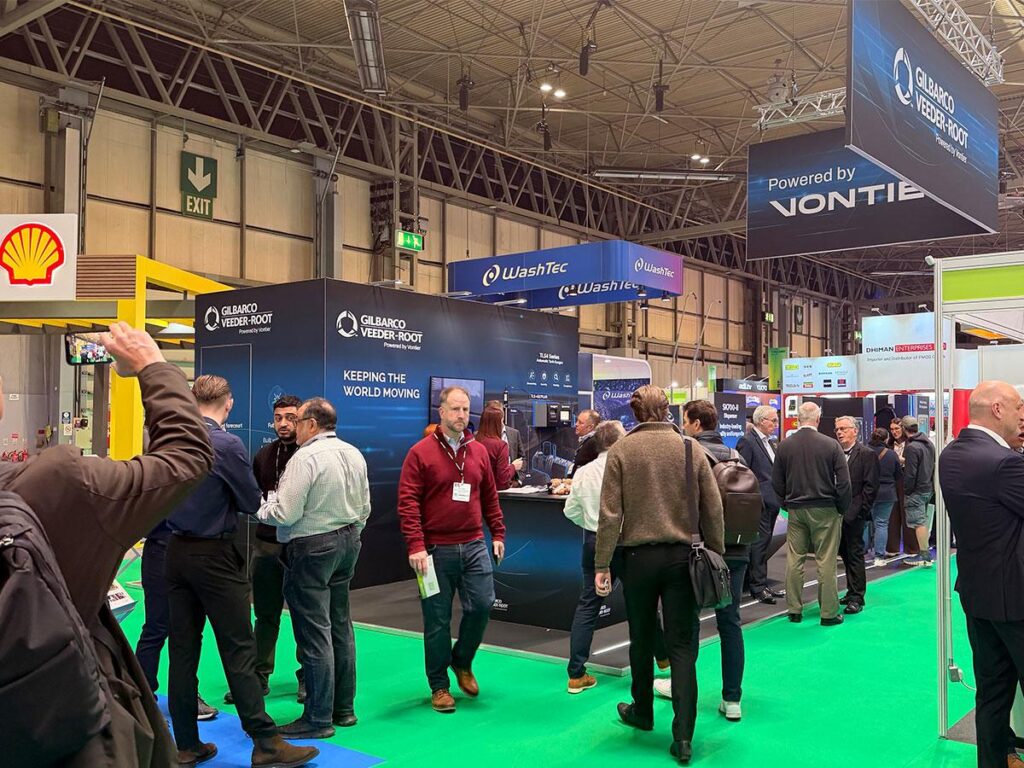
Getting five minutes with the right decision-maker can take weeks of emails, phone calls and LinkedIn messages. At a trade show, an entire industry can be standing in the same room.
That is what makes exhibitions such a unique sales and marketing opportunity.
For a few days, buyers, suppliers, distributors, potential partners and industry leaders gather under one roof. More importantly, they are there expecting to discover new businesses, explore products and have conversations.
Instead of trying to get somebody on the end of a phone, you can be standing face-to-face with them.
For entrepreneurs and growing businesses, that opportunity can be incredibly valuable. A product can be demonstrated rather than described. A service can be explained directly to the people who might need it. Prospects can meet the people behind the company, ask questions and experience the brand first-hand. Relationships that might otherwise take weeks to develop can begin with a conversation on the show floor.
But exhibiting successfully requires more than simply turning up.
Floorspace, stand design, staffing, travel, accommodation and marketing can represent a significant investment. Before committing that budget, there are four questions every business should answer.
Table of Contents
1. Why Am I Exhibiting?
Before looking at floorplans or deciding how your stand should look, establish what you actually want to achieve.
It sounds simple, but businesses often attend trade shows because their competitors are exhibiting or because they have always attended. Sometimes it’s simply because a particular event is considered important within their industry.
Those might be good reasons to investigate an event, but they are not objectives.
Ask a much more useful question:
What would make this exhibition successful for our business?
The answer could be generating qualified sales opportunities, launching a product or entering a new market. You might want to meet existing customers, find distributors, build brand awareness or conduct market research.
Ideally, identify your primary objective and decide how you are going to measure it.
That should influence everything from the exhibition you choose to the stand you ultimately create.
A company launching a physical product might make live demonstrations central to its space. A business selling a complex service could benefit from quieter areas for longer conversations. If brand awareness is the priority, visibility, lighting and digital content might take greater importance.
Your stand should ultimately be designed around what you want visitors to see, understand and do, rather than aesthetics alone.
2. Will the Right People Actually Be There?
A trade show attracting 30,000 visitors is not automatically more valuable than one attracting 5,000.
What matters is who those visitors are.
Before booking, ask the organiser for information about previous attendees. Depending on the event, this may include industries, job functions, seniority levels, geographical markets and purchasing responsibilities.
Look at the exhibitor list too. Are your competitors there? What about major suppliers or other established businesses in your market? This can give you a good indication of how relevant the event really is.
Better still, visit the exhibition before becoming an exhibitor yourself whenever possible.
Walking the floor tells you things an event brochure cannot. You can see where the traffic naturally flows, what types of businesses attend and how visitors interact with different stands. You can also get a feel for which locations work well.
Speaking with previous exhibitors can be equally revealing.
Ultimately, the value isn’t in filling an exhibition hall with people. It’s in filling it with the right people.
Ten meaningful conversations with genuine buyers can be worth considerably more than hundreds of visitors who were never realistic prospects.
3. What Should I Actually Book?
Once you have identified the right exhibition, attention turns to the floorplan.
Location matters, but so does the type and amount of space you book.
Entrances, main aisles, catering areas and seminar theatres can all influence visitor movement. The number of open sides also affects how accessible and visible your stand feels.
However, don’t assume that bigger automatically means better.
Every additional square metre has a cost. You pay for the floorspace and then have to create a stand to fill it. A well-planned space can be a much better investment than paying for additional floor area you don’t really need.
Think first about what needs to happen on the stand.
How many people will be working there? Are you demonstrating products? Do you need meeting areas? Hospitality? Storage? Screens? Interactive experiences?
Once you know that, you can start working out how much space you actually need.
Shell Scheme or Space-Only?
Most exhibitions offer two broad choices.
A shell scheme exhibition stand starts with a prefabricated structure supplied by the organiser, typically consisting of aluminium framework and basic wall panels ready to be branded. It provides a straightforward and cost-effective starting point, particularly for first-time exhibitors.
The downside is that every shell scheme starts with the same framework. When you’re surrounded by rows of similar stands, creating a strong presence can be more difficult. However, there are plenty of ways to upgrade the standard structure. Seamless shell scheme graphics, illuminated displays, custom counters and other branded features can transform the basic framework and give your stand a much more individual look.
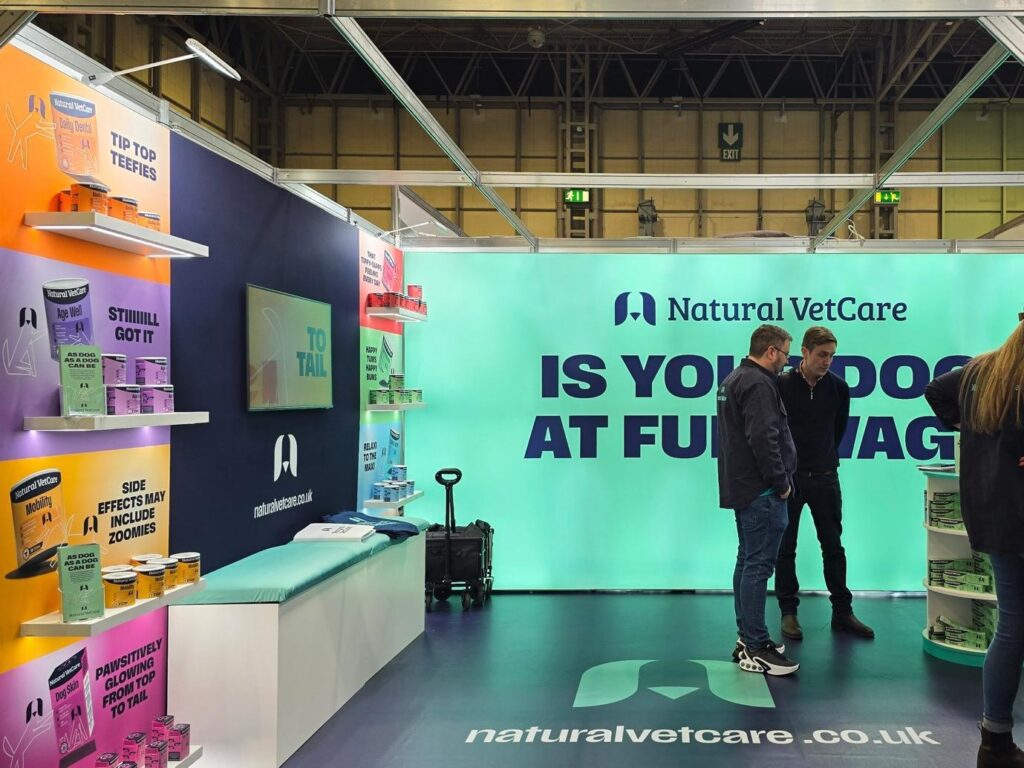
A space-only stand is essentially an empty area of exhibition floor. You appoint an exhibition stand contractor to turn that space into the finished environment. It takes more planning, but gives you much greater freedom over height, layout, lighting, materials, AV, meeting areas and the overall visitor experience.
If you choose space-only, you’re starting with an empty area of exhibition floor. The next step is deciding how that space will be turned into your finished stand.
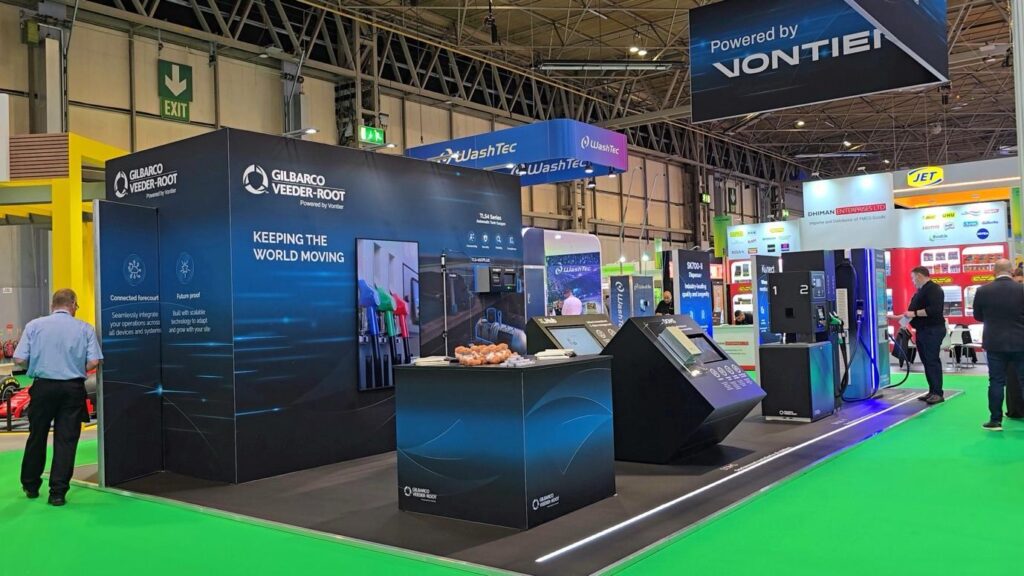
There are several approaches, ranging from portable and self-build systems to professionally designed modular, hybrid and custom fabricated stands.
Portable and self-build systems can work well for smaller spaces and straightforward requirements.
Modular exhibition stands offer far more creative possibilities than you might expect. Reusable by design, but bespoke in appearance, modern modular systems can create everything from simple branded spaces to large architectural stands with sweeping curves, towering structures, integrated AV, lightboxes and creative lighting. Behind the finished design is a reusable framework that can be redesigned and reconfigured for different stand sizes and floorplans. So, if you exhibit again in the future, your stand can evolve with you rather than starting again from scratch.
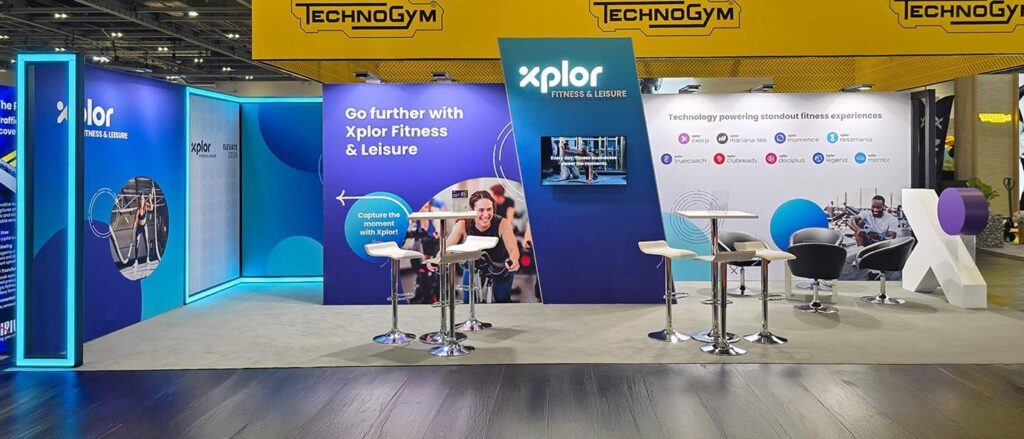
Hybrid exhibition stands take that modular concept further. They combine reusable structures with features such as bespoke joinery, architectural lighting, seamless graphics, lightboxes and integrated AV. This gives you greater creative freedom while keeping many of the components reusable.
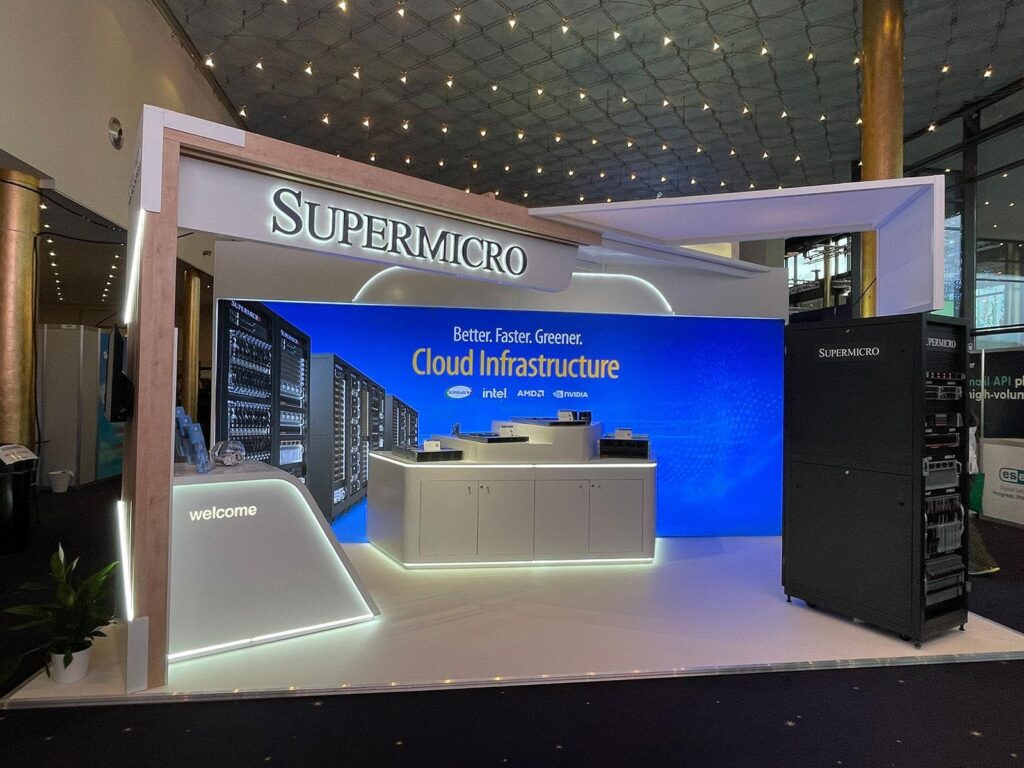
If you don’t want to purchase a stand, exhibition stand hire provides another route. Your contractor can design the stand and manage production, logistics, installation and dismantling. You get a professionally built stand without having to own and store the complete structure.
A traditional custom fabricated stand built from materials such as timber, MDF, paints and laminates is another option. It offers extensive creative freedom, but many elements may be produced specifically for one event and won’t be reusable. This can create more waste and make it a more expensive option over time, particularly when compared with reusable systems that can be reconfigured for future shows.
Which route makes sense will depend on your objectives, budget and how often you plan to exhibit.
4. Does It Fit My Budget?
One of the easiest mistakes to make is treating the stand budget and exhibition budget as the same thing.
They aren’t.
Your total investment may include floorspace, stand design and construction, graphics, flooring, electrics, rigging and AV. Then there can be internet, furniture, logistics, accommodation, staffing, marketing and organiser services to consider.
Some of those costs are easy to underestimate when you first look at a floorplan.
Before committing to the event, build a realistic picture of the total cost of exhibiting. Then decide what sort of return would justify that investment.
If lead generation is the main objective, you can work backwards from the value of a typical customer. How many qualified opportunities would you need to generate? What proportion would normally become customers? What would a realistic return look like six or twelve months after the event?
It’s also worth thinking beyond a single show.
If you attend several exhibitions each year, investing in a reusable modular or hybrid stand could make more financial sense over time. The framework can be stored and reconfigured, while graphics and individual features can change with each event.
If you only exhibit occasionally, an all-inclusive hire solution may make more sense. You avoid purchasing equipment that then needs to be transported and stored between shows.
The cheapest option for one event isn’t always the most cost-effective choice over several.
Make the Opportunity Count
In an increasingly digital business environment, exhibitions offer something remarkably simple: the opportunity to get the right people into the same room.
That doesn’t automatically make every trade show a good investment.
Success starts with knowing why you’re there and who you want to meet. From there, you can choose the right event, book the right space and set a realistic budget.
Only then should the conversation turn to what the stand looks like.
Because ultimately, an exhibition stand isn’t the objective.
The conversations, relationships and opportunities it creates are.
About 5 Studio
5 Studio is a UK based exhibition stand designer and contractor. The company designs, manufactures and installs exhibition stands throughout the UK and Europe.
Working with exhibitors and creative agencies, 5 Studio delivers modular and hybrid exhibition stands alongside all-inclusive exhibition stand hire. Its approach combines reusable stand systems with graphics, lighting, AV and bespoke elements to create spaces around each client’s objectives and exhibition programme.


