The technology landscape is constantly evolving, with new concepts and digital innovations emerging every year. One term that has recently sparked curiosity online is Upcvee6s5ku. Although there is very little publicly verified information about this keyword, it has become associated with discussions surrounding automation, artificial intelligence, cloud computing, and digital transformation. As businesses continue to modernize their operations, concepts like Upcvee6s5ku highlight the growing demand for smarter, faster, and more connected technological solutions.
Table of Contents
What Is Upcvee6s5ku?
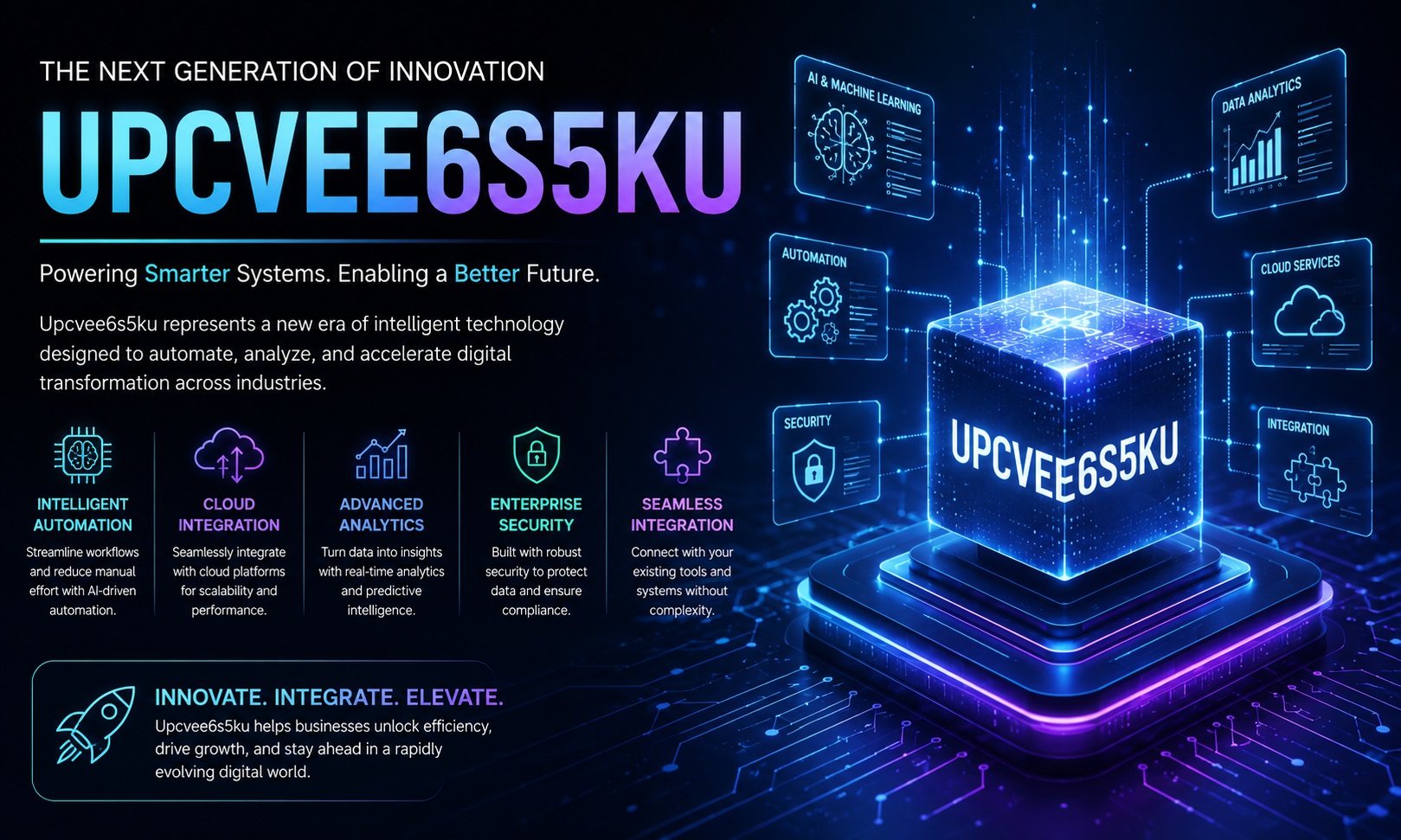
Upcvee6s5ku appears to be an emerging or experimental technology-related term that has gained attention across various online platforms. At present, there is no official documentation identifying it as a recognized software platform, programming framework, or commercial product. Instead, it is often used in discussions about next-generation digital solutions that aim to improve efficiency, automate workflows, and enhance decision-making through intelligent systems.
Whether it eventually develops into a real technology platform or simply serves as a placeholder for innovative digital concepts, Upcvee6s5ku reflects the direction in which modern technology is moving. Businesses today are investing heavily in solutions that reduce manual effort, analyze large volumes of data, and integrate multiple systems into a unified ecosystem.
Why Is Upcvee6s5ku Gaining Attention?
The growing interest in Upcvee6s5ku is largely driven by the increasing importance of digital transformation across industries. Companies are constantly searching for technologies that help them improve productivity while reducing operational costs. As artificial intelligence, machine learning, and cloud-based infrastructure become more accessible, organizations are exploring new frameworks capable of simplifying complex business processes.
The mystery surrounding Upcvee6s5ku has also contributed to its popularity. Since limited verified information is available, many technology enthusiasts are eager to understand whether it represents a future software platform, an internal development project, or simply a conceptual innovation. Regardless of its origin, the discussions surrounding it emphasize the need for intelligent, scalable, and secure digital solutions.
Core Characteristics of Modern Digital Technologies
If Upcvee6s5ku represents an advanced technology framework, it would likely focus on automation, intelligent data processing, system integration, and scalability. Modern businesses generate enormous amounts of information every day, making it essential to have systems capable of processing data quickly and accurately. Intelligent automation reduces repetitive tasks, allowing employees to focus on strategic work instead of routine operations.
Another defining characteristic of today’s digital platforms is their ability to integrate with existing software. Organizations rarely rely on a single application to manage their operations. Instead, they use multiple tools for accounting, customer relationship management, inventory, communication, and marketing. Efficient integration ensures these systems can exchange information seamlessly, eliminating data silos and improving collaboration.
Scalability is equally important. As businesses grow, their technology infrastructure must be capable of handling increasing workloads without sacrificing performance. Cloud-based architecture has made this possible by allowing organizations to expand resources whenever needed while maintaining flexibility and cost efficiency.
Potential Applications Across Industries
Although Upcvee6s5ku itself has not been officially linked to specific industries, technologies with similar capabilities can deliver significant value across multiple sectors. In business operations, intelligent automation can streamline administrative processes, reduce paperwork, and improve workflow management. Employees spend less time performing repetitive tasks and more time focusing on innovation and customer service.
In manufacturing, digital technologies support production planning, predictive maintenance, inventory management, and quality control. Real-time monitoring enables manufacturers to identify problems before they lead to costly equipment failures, improving both productivity and operational efficiency.
The healthcare industry also benefits from advanced digital systems that help organize patient records, optimize scheduling, and improve communication between departments. Healthcare providers increasingly rely on data-driven technologies to enhance patient care while reducing administrative burdens.
Financial institutions use intelligent systems to detect fraud, assess financial risks, automate compliance procedures, and analyze customer behavior. Retail businesses similarly utilize digital technologies to personalize shopping experiences, forecast demand, optimize inventory, and improve customer engagement through data-driven insights.
Benefits of Adopting Advanced Technology
One of the greatest advantages associated with technologies like Upcvee6s5ku is increased efficiency. Automation minimizes repetitive manual work, enabling organizations to complete tasks faster and with fewer errors. This improved efficiency often leads to significant cost savings over time while allowing businesses to allocate resources more effectively.
Another major benefit is better decision-making. Advanced analytics provide businesses with real-time insights into customer behavior, operational performance, and market trends. Rather than relying solely on intuition, managers can make informed decisions based on accurate and up-to-date information.
Modern digital platforms also improve customer satisfaction. Faster response times, personalized services, and streamlined communication contribute to better customer experiences, helping businesses build stronger relationships and maintain a competitive advantage.
Challenges to Consider
Despite their many advantages, implementing advanced digital technologies is not without challenges. Initial adoption often requires financial investment in software, infrastructure, employee training, and system integration. Organizations must carefully evaluate costs while planning long-term implementation strategies.
There is also a learning curve involved when introducing new technologies into the workplace. Employees may require training before they can fully utilize advanced systems, making change management an important part of successful implementation.
Cybersecurity remains another critical concern. As businesses become increasingly dependent on digital infrastructure, protecting sensitive information from cyber threats becomes more important than ever. Strong encryption, access controls, regular software updates, and continuous monitoring are essential for maintaining data security and customer trust.
The Future of Digital Innovation
The future of technology is being shaped by artificial intelligence, automation, cloud computing, big data analytics, and interconnected digital ecosystems. Businesses that embrace these innovations are better positioned to adapt to changing market conditions, improve operational efficiency, and remain competitive in rapidly evolving industries.
Whether Upcvee6s5ku ultimately becomes a recognized technology platform or simply remains an emerging concept, it reflects the broader trend toward intelligent and scalable digital transformation. Organizations worldwide continue investing in technologies that improve productivity, simplify operations, and create better experiences for both employees and customers.
Conclusion
Upcvee6s5ku has attracted attention because it represents the type of innovation many businesses are actively pursuing. While there is currently little verified information confirming exactly what the term refers to, it symbolizes the growing importance of automation, intelligent data analysis, cloud infrastructure, and connected digital systems. As technology continues to evolve, concepts like Upcvee6s5ku remind us that the future belongs to organizations willing to embrace innovation, adapt to change, and leverage technology to achieve sustainable growth.
 About Carson Derrow

