Imagine having your own Chipotle — the scent of fresh cilantro, the sear of the carne asada, the loyal customers waiting in line for their go-to bowls and burritos. It sounds like the ultimate business fantasy. But here’s the catch: when folks inquire “how much is a Chipotle franchise?”, the reply isn’t quite what you’d think.
In 2025, Chipotle is still among the few fast-casual franchises that isn’t dependent on old-school franchising in its domestic market. The majority of locations are still company-owned, and there are only a few choosy international partnerships. That doesn’t deter would-be entrepreneurs from speculating about what it could cost or generate if franchising were an option.
To get a realistic picture, we have to examine similar Mexican fast-casual chains, dissect startup and operating expenses, and examine Chipotle’s shifting expansion model. The figures tell us a great deal about the potential and the constraints of having a piece of a giant like Chipotle.
So, if you’ve ever fantasized about owning your own Chipotle, here’s what you actually need to know.
Table of Contents
What is Chipotle Franchise?

Chipotle Mexican Grill does not offer franchise opportunities, which is a common misconception about the company. Unlike many fast-casual restaurant chains, Chipotle operates entirely through company-owned locations. Since its founding by Steve Ells in 1993, the company has maintained a deliberate strategy of retaining full ownership and control of all its restaurants rather than allowing independent franchisees to operate under the Chipotle brand.
This business model means that all Chipotle locations are owned and operated directly by Chipotle Mexican Grill, Inc., with employees working for the corporation itself. The company chose this approach to maintain tight control over food quality, ingredient sourcing, preparation methods, and customer experience across all locations. While this strategy requires Chipotle to bear all expansion costs and operational risks, it ensures consistency in their standards and service.
If you’re interested in owning a fast-casual Mexican restaurant franchise, you would need to explore other chains that do offer franchise opportunities, such as Qdoba, Moe’s Southwest Grill, or similar concepts. Chipotle’s corporate-only model sets it apart from many competitors in the industry who have used franchising as their primary growth strategy.
Why You Can’t Just Buy a Chipotle Franchise
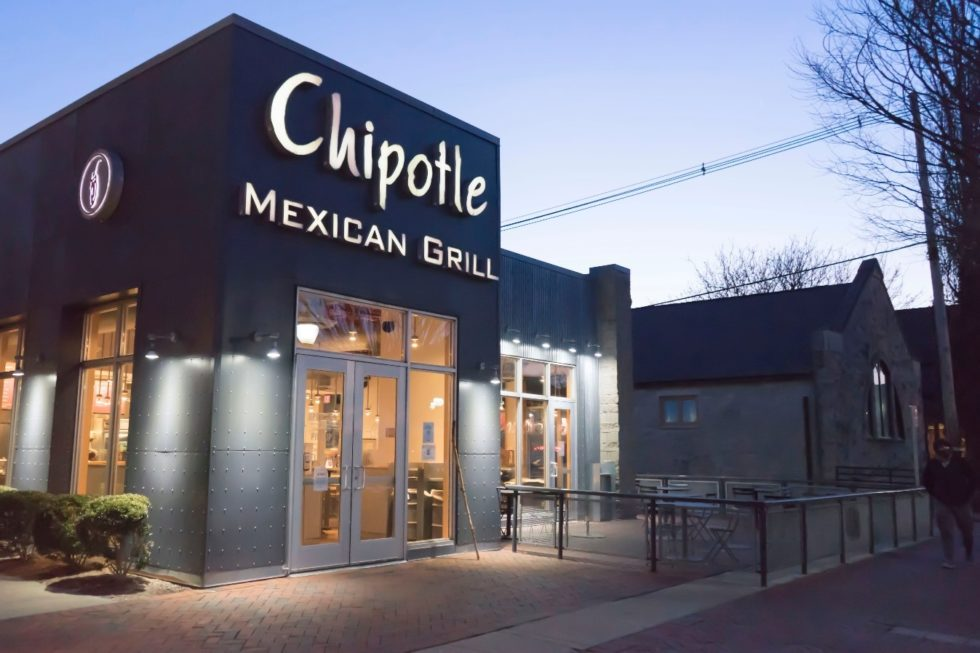
When people inquire about “how much does a Chipotle franchise cost?”, the unexpected reality is that you can’t just buy one in the usual way. Unlike the majority of fast-casual chains, Chipotle has a nearly all-corporate-owned strategy. Almost all of the restaurants you see are owned and operated directly by the company, rather than by individual franchisees.
This wasn’t always so. Early on — particularly when McDonald’s took a stake in Chipotle — there were a handful of franchised units here and there. But by 2006, the company decided to repurchase those stores, weaning itself off franchising in order to have tighter control over food quality, sourcing, and customer experience.
As a consequence, would-be entrepreneurs wanting to invest in Chipotle soon learn that the door to franchising is shut stateside. For the time being, there is no franchise fee listed, no disclosure package, and no overt mechanism for people to own a Chipotle by their own name.
That being said, things are changing worldwide. Chipotle has started testing selective development deals and joint ventures in foreign markets. In 2023, it allied with Alshaya Group to introduce Chipotle in the Middle East region, and in 2025 entered into a joint venture with Alsea for opening its first restaurants in Mexico by 2026.
So although you can’t purchase a Chipotle franchise today in the U.S., the brand is tentatively dipping its toes into franchising internationally, foreshadowing potentially a bigger opportunity, though very tightly managed under corporate reins.
How Much Would a Chipotle Franchise Cost If It Were Available?
Chipotle does not disclose franchise fees since it does not franchise within the U.S., but we can estimate based on similar brands such as Qdoba, Moe’s Southwest Grill, and Baja Fresh. These fast-casual Mexican chains demonstrate what would be required to open a Chipotle-type unit if it were willing to let investors in.
Here’s a hypothetical startup cost breakdown:
| Expense Component | Estimated Cost Range (USD) |
| Franchise / Licensing Fee | $20,000 – $50,000 |
| Real Estate / Leasehold Improvements | $250,000 – $700,000 |
| Restaurant Build-Out & Interior Design | $300,000 – $500,000 |
| Kitchen Equipment & Appliances | $150,000 – $350,000 |
| Initial Inventory & Supplies | $20,000 – $50,000 |
| Pre-opening Training & Staffing | $10,000 – $30,000 |
| Working Capital / Operating Cushion | $50,000 – $100,000 |
| Total Estimated Investment | $800,000 – $1.8 million+ |
Each expense bucket represents Chipotle’s standard operating mode:
Build-out & real estate are high since most Chipotle units are located in prime urban or college-town locations.
Equipment is expensive due to new prep (grills, refrigeration, prep areas).
Franchise/licensing fees would probably be in line with Mexican fast-casual norms.
Working capital so you can fund payroll and operations until the site picks up.
In total, the investment would probably fall in the $800K to $1.8M range, putting a Chipotle-type franchise at the high end of the fast-casual chain.
18 Cheapest Franchises to Open in 2024(Updated): Low-Cost Franchises
What Could You Expect to Earn?
While Chipotle isn’t a franchised brand across the country, it is fun to think about the possible profit if it was. The data from existing company units gives a good starting point: on average a Chipotle restaurant generates over $2.8 million dollars in annual sales. That’s impressive, especially for a fast-casual restaurant, and it begins to highlight why small business owners dream of and lock in to owning an iconic brand like this.
If we utilized a standard model for fast casual chains, margins for profit are typically around 10-15%. Based on $2.8 million top-line, that would net around $250,000-$420,000 per year – not factoring in lease payments, debt service or unexpected costs. Not bad for a single store, and remember that location, payroll, and competition in the neighborhood can make these numbers swing wildly in either direction.
Another factor to analyze is the breakeven period. For a potential investment cost of $800K – $1.8M, a franchise could reasonably expect a breakeven of 3-6 years. Urban locations with higher foot traffic would likely see a quicker breakeven period versus suburban or small markets, which could see increased breakeven periods.
In summary, if Chipotle was a franchise, there is a potential for a very sophisticated and profitable business case, however it would require a great manager, consistency, and of course, a sound location.
Krispy Kreme Franchise : How To Open, Cost & More
Major Factors That Affect Profitability
Even the most successful restaurant chains are not above the challenges of business, and an imaginary Chipotle franchise would not be an exception. There are a number of important factors that would have direct bearing on how much you could possibly make.
Location is more than just a cliché. High-traffic urban centers or college towns naturally draw bigger crowds, but they also come with higher rent and stricter lease terms. On the flip side, a suburban spot might be cheaper, but you’ll need a strong marketing strategy to pull in enough daily customers.
Another big piece of the puzzle is labor and food costs. Fast-casual establishments like to aim for food costs of around 28–32% of sales, but supply price fluctuations or labor shortages can wipe out profit margins in an instant. The key to good operations, well-trained staff, and proper inventory stewardship.
Brand standards and advertising are also involved. Consistency is something Chipotle is renowned for — from the quality of ingredients to speed of service. Maintaining these standards means spending money on training, quality control, and periodic local advertising campaigns to create and maintain loyal customers.
Finally, there’s competition. Even with a good brand, local eateries with the same Mexican cuisine or fast-casual options swoop in to steal your customers. It takes more than a name; it takes smart management, engagement with the community, and wisdom when it comes to localized palates.
In a nutshell, profits are not merely a matter of figures on paper. They are influenced by location decisions, operational effectiveness, and strategic management — the very elements that can make or destroy any restaurant business.
Jersey Mike’s Franchise Cost: Investment Breakdown & What to Expect in 2025
Why Chipotle Has Avoided Traditional Franchising
Chipotle has avoided traditional franchising to a large extent to preserve quality and consistency. Corporate-owned locations dominate, which enables close management of ingredients, service, and customer experience.
There were some franchise units with McDonald’s ownership in the early 2000s, but Chipotle acquired them back by 2006. The company insisted on every burrito and bowl being up to its high standards, something more difficult to enforce with independent franchisees.
The supply chain is also at issue. Chipotle’s responsibly sourced, fresh ingredients must be handled with care, and franchising might bring inconsistency that puts the brand at risk.
Overall, the company-owned model places control and brand integrity ahead of aggressive expansion. International alliances demonstrate cautious experiments with franchising, however, under strict control.
The Future of Chipotle Franchising: International Expansion
While U.S. franchising continues to be out of bounds, Chipotle is looking internationally with caution. In 2023, it partnered with Alshaya Group to run stores within the Middle East and in 2025 a partnership with Alsea to enter Mexico with its restaurants by 2026.
These steps signal Chipotle is franchising but only where allies can preserve rigorous quality and brand controls. To investors and business people, it could portend an imminent opening for closely controlled franchise opportunities abroad.
The strategy of the firm balances growth with defending the brand, proving that growth does not need to be made at the cost of consistency, a lesson that differentiates Chipotle’s model from fast-casual peers.
McDonalds Franchise in India: Cost & Process
Conclusion
So, how much does a Chipotle franchise cost? In the United States, it’s easy: not for sale. Chipotle holds tight to a company-owned system to maintain quality and consistency.
Theoretically, it would take $800,000 to $1.8 million in investment with possible profits of $250,000–$420,000 per year. Success would be a matter of location, operations, and demand in the local area — the same as any restaurant.
Globally, Chipotle is experimenting with franchising in the Middle East and Mexico, foreshadowing even more opportunities for savvy entrepreneurs. Until franchising expands further, Chipotle remains a blueprint for fast-casual success and quality.
 About Carson Derrow

