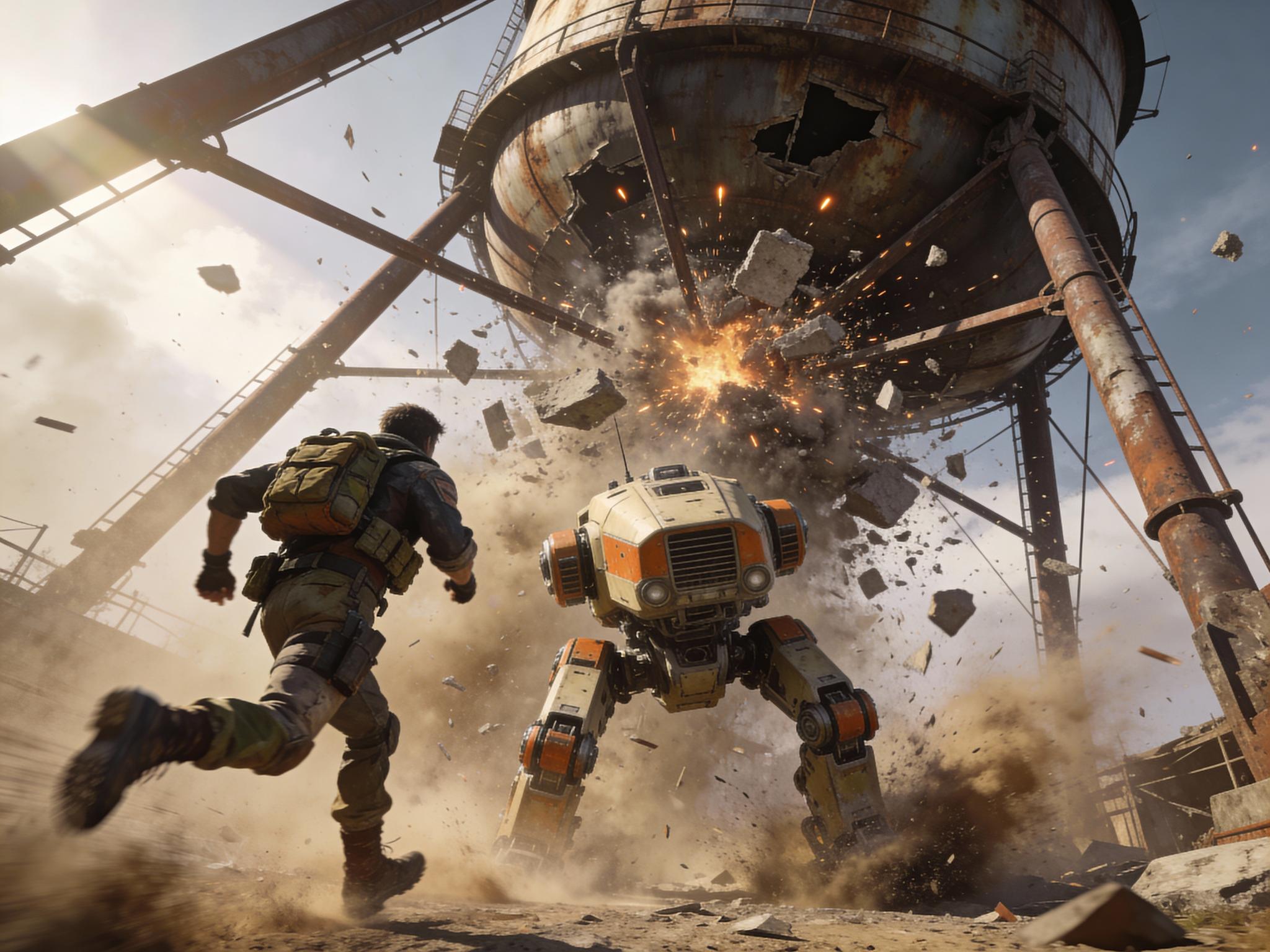
You don’t need a bigger gun. You need to understand gravity. You need to understand momentum. You need to understand that a falling steel beam deals more damage than your entire magazine. Of course, getting to the point where you can survive long enough to experiment takes time. The early game is brutal, and your gear is weak. This is why many veterans use ARC Raiders boosting to fast-track the early grind. It gets you the armor and the stats you need to survive. Once you aren’t dying in one hit, you can stop panicking. You can start thinking. You can start using the world to smash your enemies.
Table of Contents
The Myth of “Just Shoot It”
Let’s be real. Shooting is fun. The guns in this game feel great. They rattle your teeth.
But bullets are expensive.
In an extraction shooter, resource management is everything. Every bullet you fire is money leaving your pocket. Every magazine you dump into a spongey enemy is a waste. The environment, however, is free. Gravity doesn’t charge you a fee. Explosions don’t have a tax.
When you fight the ARC machines, you are fighting physics. They are heavy. They are clumsy. They have momentum. If you learn to use that against them, you become a magician. You stop fighting harder. You start fighting smarter.
Here is how you turn the map into a kill zone.
Gravity: The Ultimate Equalizer
The machines are programmed to kill you. They are not programmed to respect OSHA safety regulations. They will chase you anywhere. They will climb. They will jump. Use this.
If you are fighting a heavy unit, look up. Is there a ledge? Is there a bridge? Lure them to the edge. The physics engine in ARC Raiders calculates mass. If a heavy machine takes a bad step, it falls. It doesn’t just float down. It crashes. The impact damage from a high fall can one-shot enemies that would take five minutes to kill with a rifle.
The High Ground Bait
- Climb to a rooftop or a high platform.
- Wait for the machines to swarm underneath you.
- Don’t shoot them. Shoot the supports. Shoot the debris.
- Drop the world on their heads.
It is messy. It is loud. But it works.
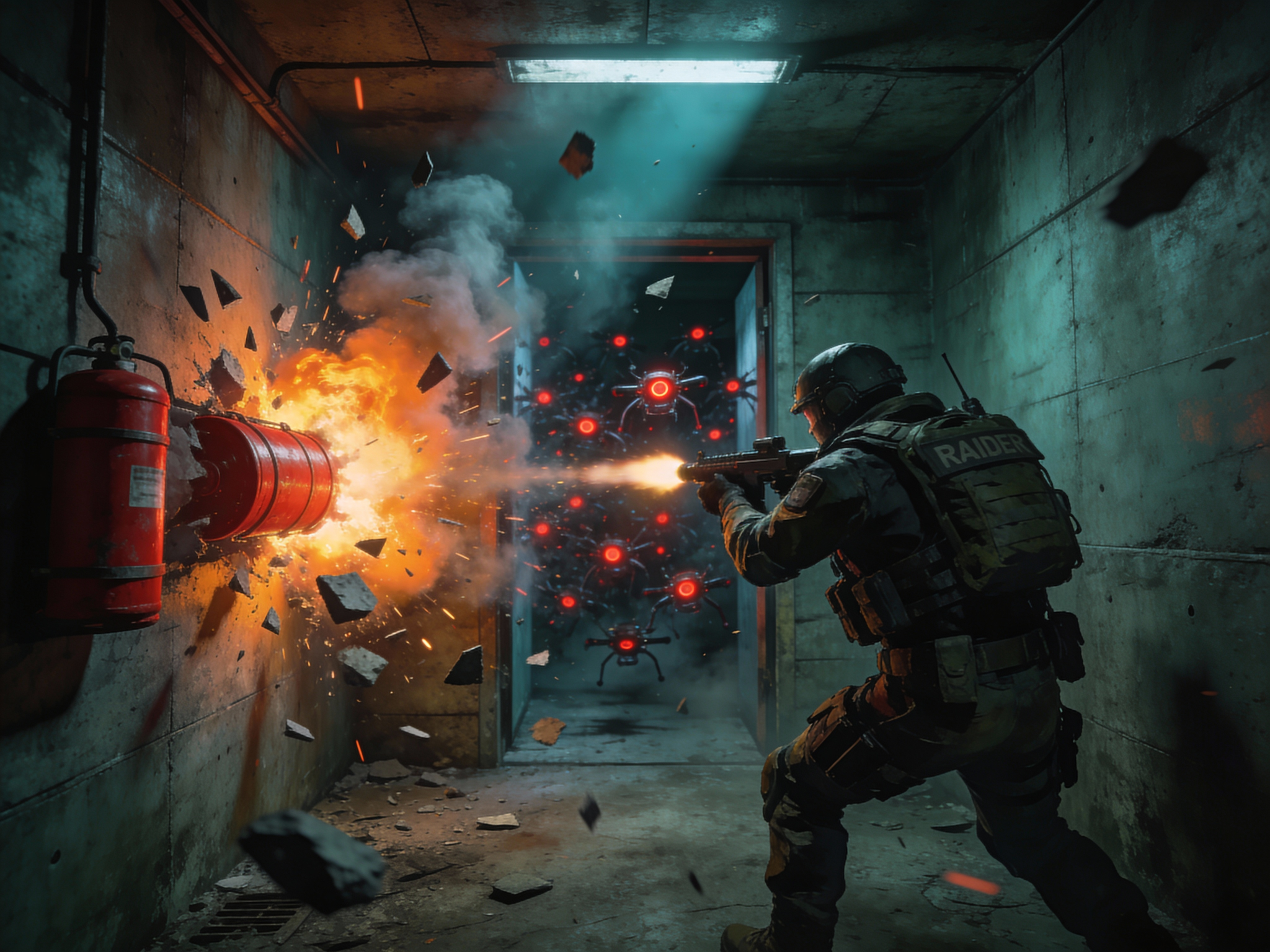
Video games have taught us that red barrels explode. That is old news. ARC Raiders takes it further. Everything is volatile. The machines themselves are walking batteries. When you kill a drone, it doesn’t just vanish. It crashes. It sparks. It becomes a hazard.
You can use a dead enemy to kill a live one. If you shoot the power core of a flying drone, it will spiral out of control. It essentially becomes a missile. Don’t just shoot to kill. Shoot to crash. Aim for the engines. Watch it spin. Watch it slam into the squad of ground units below it.
It is like bowling with robots.
This strategy requires specific weapons. You need high-impact rounds to knock drones off course. You need stability. If your starter gear is too weak to penetrate the armor, you can’t trigger the crash. This is another scenario where ARC Raiders boosting helps. It allows you to skip the “pea-shooter” phase and get your hands on weapons that actually have stopping power. You need guns that push back.
Choke Points and Kill Boxes
The open field is death. If you stay in the open, the ARC machines will surround you. They have swarm tactics. They communicate. You need to control the space. You need to force them into a “Kill Box.”
A Kill Box is a place where physics works for you, not them.
- The Hallway: Machines tend to bunch up in narrow corridors. Their bodies block each other. Their shots get blocked by their friends.
- The Stairwell: This is the best spot in the game. Machines struggle with stairs. They get stuck. They trip.
- The Doorway: A funnel. They have to come through one at a time.
When you force ten robots into a tiny room, you don’t need to aim. You just throw a grenade. The physics of the explosion in a confined space is devastating. The shockwave bounces. The debris flies everywhere. One grenade in a hallway is worth ten grenades in a field.
Debris as Mobile Cover
Destruction works both ways. The enemies will destroy the map too. Trees fall. Walls crumble. Cars explode. Most players see this as a problem. They lose their cover. They panic.
Read the Flow:
- Smoke: Use the dust from a collapsing building to break line of sight. The AI can’t shoot what it can’t see.
- Rubble: Use the piles of broken concrete to gain height. The AI pathfinding often struggles with jagged, random terrain.
- Noise: Chaos is loud. Use the sound of a crumbling tower to mask your footsteps when you flank.
The Weight of the Loot
Physics applies to you, too. This is an extraction game. You are here for the loot. But loot has weight. As you fill your backpack, you get slower. You jump lower. Your stamina drains faster. You become a heavy object.
This changes how you have to fight. At the start of the raid, you are light. You can sprint. You can jump gaps. You can play fast. At the end of the raid, you are a tank. You are slow. You cannot outrun the machines anymore.
This is where the environment becomes your shield. You have to move from cover to cover. You have to hug the walls. You have to avoid the open ground because you can’t dodge. Understanding your own mass is key. Don’t try to make that jump across the alleyway if your bag is full of heavy metal. You will fall. You will break your legs. You will die. Respect the gravity.
Conclusion: Be the Chaos
The standard way to play ARC Raiders is efficient. You aim. You shoot. You loot. But the fun way? The best way? That is about destruction.
So, next time you drop in, stop looking at your crosshair. Look at the walls. Look at the ceiling. Look at the explosive barrels rolling down the hill. Stop playing a shooter. Start playing a disaster movie. And make sure you are the director.


