By two in the afternoon, the truck has been parked in the sun for an hour, the sofa is wrapped in plastic, and nobody has had water since breakfast. That is how a summer move goes wrong.
The best summer moving tips for heat and humidity come down to three habits. Start early, so the heaviest work is done before the afternoon peak. Wrap wood and leather in breathable materials instead of sealing them in plastic. Keep electronics and people out of the hottest, stickiest spots. The rest of this guide explains how to do each one and why it matters.
Table of Contents
Why Heat and Humidity Are Hard on a Move
Wood is the clearest example. It takes on and gives off moisture until it matches the humidity of the air around it. A Purdue University Extension guide on wood and furniture explains that wood sitting at 75 percent relative humidity eventually settles at about 14 percent moisture content, while wood at 30 percent humidity settles near 6 percent. Those swings add up. The guide estimates that a 16-inch-wide red oak panel can swell as much as a quarter inch when its moisture content rises by six percentage points. A quarter inch is plenty to jam a drawer or stress a joint.
Humidity creates a second problem. Mold needs moisture to grow, and a sofa or box of linens that sits damp in a closed truck can offer plenty. Heat adds a third: devices, candles, and records all have temperature limits, and a truck body parked in the sun can blow past them.
Summer Moving Tips for Planning the Day Around the Heat
Start loading at sunrise and aim to have the truck packed before the hottest part of the afternoon. OSHA, the federal workplace safety agency, also advises scheduling hot-weather work for a cooler time of day whenever possible.
A few habits make that schedule work:
- Check the heat index, not just the temperature. The National Weather Service notes that heat index values are calculated for shade, and that direct sunlight can add up to 15°F. A forecast heat index of 95°F can feel like 110°F on a driveway with no tree cover.
- Park the truck in shade when you can. Leave the doors open between loads so hot air can escape.
- Load heat-sensitive items last. Put electronics, leather and fragile pieces on the truck at the end so they spend the least time inside it, and unload them first.
- Turn on the air conditioning at the new home the night before. Furniture and crew both do better arriving in a cool, steady room than in a stuffy one.
- Stage boxes in shade. A garage, porch or shaded corner of the yard beats a sunny driveway.
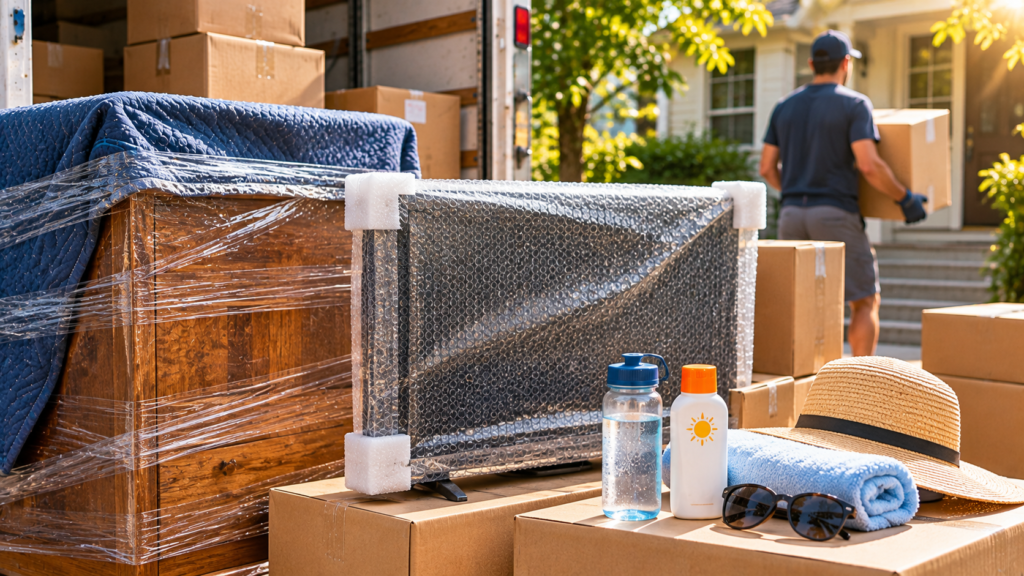
How to Protect Wood Furniture in a Hot, Humid Truck
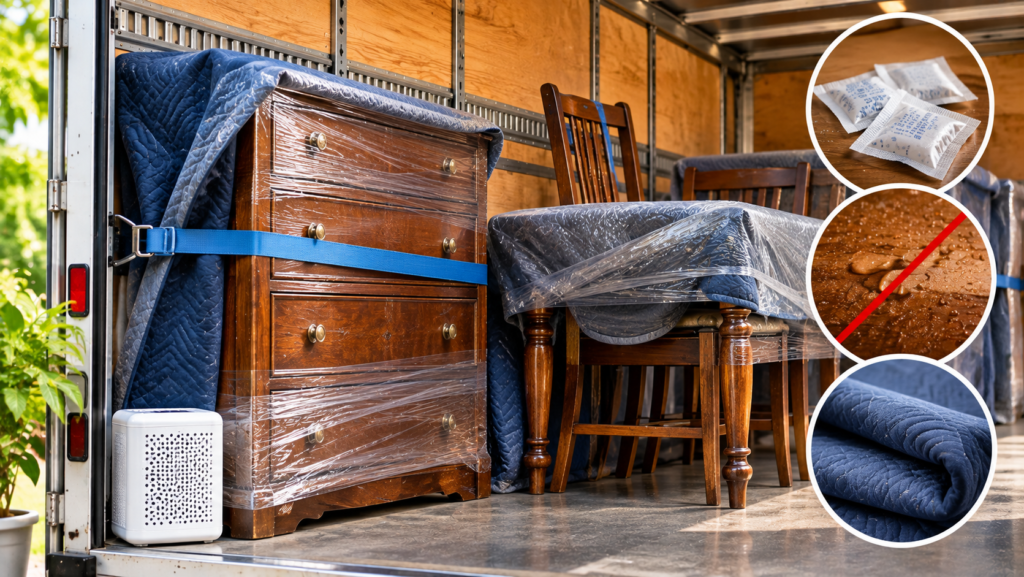
Wrap wood furniture in breathable moving blankets instead of plastic film, and give each piece time to adjust once it is indoors. Purdue’s guide points out that finishes can slow moisture changes in wood but generally do not stop them, so the goal is to keep changes gradual rather than prevent them.
Here is how that looks in practice:
- Use quilted or cotton moving blankets. Hold them in place with straps or moving bands. Plastic wrap pressed against a finish on a humid day traps moisture right where you do not want it.
- Take out loose drawers and shelves. Carry them separately and keep them flat.
- Do not force a stuck drawer. A drawer that sticks after a humid week has probably swollen slightly. It may ease once the room is cool and dry, and prying it open risks cracking the front.
- Unwrap indoors, away from vents. A blast of cold air straight onto a table or dresser dries one side faster than the other. Purdue describes antique tables moved from an unheated space into a heated home splitting at the ends as they dried out too fast. A humid truck followed by a cold room follows the same logic, so let pieces settle slowly.
Leather and Upholstery: Keep Them Breathing
Leather and upholstered pieces need airflow, because trapped moisture is what lets mold take hold. The EPA’s guide to mold and moisture in the home says no mold grows without water or moisture, and that drying damp items within 24 to 48 hours stops mold in most cases.
That guidance is written for leaks and spills, but the timing is a sensible target for a couch that comes off a humid truck feeling clammy. Cover leather and fabric with cotton sheets or breathable blankets rather than plastic, and never leave cushions sealed in a closed truck overnight. When the furniture arrives, remove the covers right away and run the air conditioning or a dehumidifier. The EPA suggests keeping indoor humidity below 60 percent, and ideally between 30 and 50 percent, which a cheap humidity meter can confirm.
Heat-Sensitive Items That Should Ride With You
Electronics belong in your own air-conditioned car, not in the moving truck. Apple’s support guidance says its iPhone and iPad devices are designed for ambient temperatures between 32°F and 95°F. It recommends storing them between -4°F and 113°F, warns against leaving them in a car because parked cars can exceed that range, and notes that very hot conditions can permanently shorten battery life. Other brands set their own limits, so check your manuals. A closed truck body in direct sun can easily get hot enough to matter.
If a device does get hot, Apple advises turning it off, moving it somewhere cooler and out of the sun, and letting it cool before using it again.
Plan to carry these with you:
- Laptops, tablets, phones and external hard drives
- Game consoles and small speakers
- Candles, which can soften and lose their shape
- Vinyl records, which can warp in heat
- Cosmetics and medications, where the label’s storage instructions apply
- Houseplants, which dry out or wilt quickly in a hot cargo area
Keeping the Crew and Yourself Safe
Build water, rest and shade into the schedule before the first box moves. According to OSHA’s summer heat guidance for employers, workers should drink water about every 15 minutes and take frequent breaks in shade or air conditioning. The agency also says new and temporary workers are the most at risk, which matters if your helpers are friends and family who are not used to hard work outdoors.
OSHA’s rule of thumb is to add protective measures whenever the heat index reaches 80°F. For a move, that translates to a few simple rules:
- Put a cooler of water and electrolyte drinks where everyone can reach it, not just in the kitchen.
- Rotate the heaviest jobs, like loading the dresser or the piano bench, so one person is not doing all of them.
- Take breaks indoors in the air conditioning, and make them longer as the day heats up.
- Wear light, breathable clothing and sturdy shoes.
- Watch for confusion, dizziness or fainting. Treat those as emergencies and call 911.
If you would rather not manage all of this yourself, hiring a local crew is one option, since a team based nearby already knows the summer conditions. BC Brothers Moving, a licensed, insured and locally owned company serving Savannah and Chatham County, is one example among the movers in Savannah, GA that handle residential, commercial and long-distance moves. Whoever you hire, ask how they handle heat: start times, water breaks and how they protect wood and leather in the truck.
Common Summer Moving Mistakes
Most summer damage comes from a handful of avoidable choices. Watch for these:
- Wrapping wood and leather tightly in plastic. It feels protective, but it traps moisture on a humid day.
- Loading electronics onto the truck. They belong in your car, where you control the air conditioning.
- Starting at noon. Late starts push the heaviest lifting into the hottest hours.
- Skipping water until someone feels bad. By then, the day is already harder than it needs to be.
- Unpacking everything into a hot, shut-up house. Open boxes later, once the air conditioning has had a few hours to work.
Frequently Asked Questions
What is the best time of day to move in hot weather?
Early morning is best. Heat builds through the afternoon, so work done at sunrise is cooler and safer for everyone. Aim to finish loading before the afternoon peak. If the move runs long, save lighter jobs like small boxes and cleaning for later in the day, and add extra water breaks.
Can a hot moving truck damage furniture?
Yes, although most damage is avoidable. Heat and humidity can swell wood, stress glued joints and encourage mold on leather and fabric. Parking in shade, wrapping pieces in breathable blankets, loading fragile items last and unloading quickly all lower the risk. Short, well-planned moves carry much less risk than long, slow ones.
Should I wrap furniture in plastic during a humid move?
Not directly. Plastic traps moisture against wood and leather, which can help mold take hold on a humid day. Use cotton or quilted moving blankets instead, since they let the surface breathe. If rain is likely, add a loose cover over the blankets only for the short walk between the house and the truck.
Is it safe to leave electronics in a moving truck in summer?
No. Apple says its devices are designed for ambient temperatures up to 95°F and warns against leaving them in a parked car. A closed truck in the sun can get hot enough to cause the same problems. Carry laptops, phones, tablets and hard drives in your own air-conditioned vehicle.
How much water should movers drink on a hot day?
OSHA advises drinking water about every 15 minutes during hot work and taking frequent breaks in shade or air conditioning. Start hydrating before the move begins, and keep cool water within easy reach of everyone helping. Add more breaks as the heat index climbs.
Finish Strong When the Forecast Will Not Cooperate
You cannot control an August afternoon in coastal Georgia, but you can control the schedule, the wrapping and where fragile gear rides. Move early, let wood and leather breathe, carry electronics with you, and treat water breaks as part of the job instead of a delay.
Before moving day, check the heat index, pick up moving blankets, and clear space in your own car for the devices. Turn on the air conditioning at the new place the night before, so the first thing your furniture meets is a cool, steady room.


