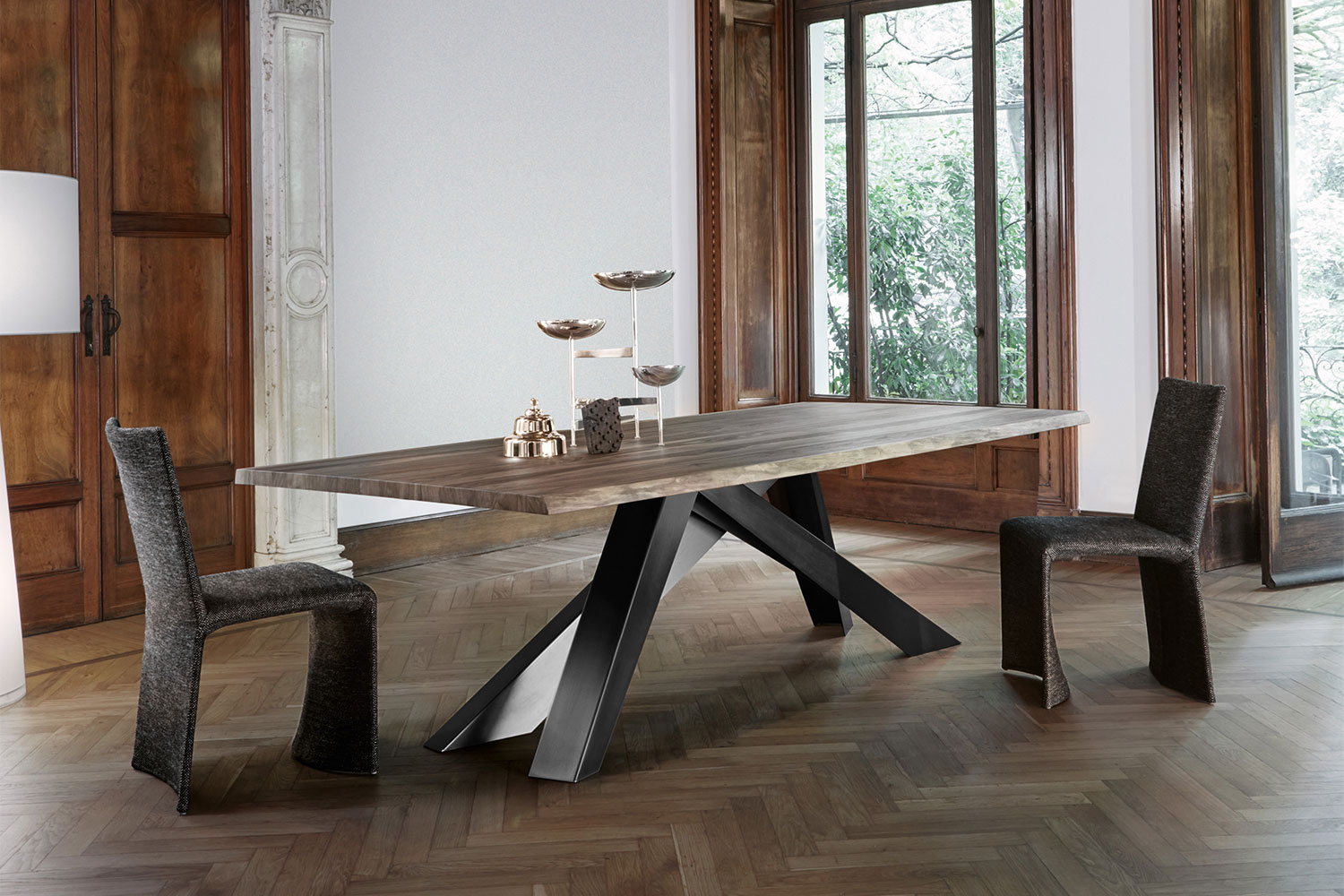
Designer dining tables occupy a special place in the interior industry, symbolizing the transition from mass production to an individual approach. The concept of “bespoke” means creating unique products for a particular client, where every element is carefully considered. Tables are not just functional objects, but true works of art.
Leading furniture houses have turned the creation of exclusive tables into a high craft, combining centuries-old traditions with modern technology. Each piece tells its own story, reflects the owner’s personality, and becomes a family heirloom.
Exclusive tables differ from mass-produced furniture through unique design and impeccable craftsmanship. As a result, such products often become the central element of an interior, around which the whole concept of space is formed.
Table of Contents
Material Selection and Craftsmanship
Bespoke dining tables showcase an exceptional range of premium materials and superior craftsmanship. Exotic woods become the basis for creating unique textures and patterns. Each species has unique characteristics: hardness, color, grain pattern, and workability.
Popular exotic species:
- Zebrano — African hardwood distinguished by striking black striping against a warm golden backdrop
- Macassar Ebony — characterized by its deep, dark timber interlaced with lustrous golden and amber veining
- Rio Rosewood — Brazilian timber renowned for its luxurious chocolate hues and rich coloration
- Bubinga — Cameroonian hardwood featuring wine-red tones complemented by sophisticated grain patterns
- Australian Jarrah — dense hardwood distinguished by its rich burgundy hue and exceptional durability
In addition to traditional species, masters work with reclaimed wood from old buildings with a special patina and history. Such materials are valued for their uniqueness and environmental responsibility.
Inlays of precious metals and stones turn tables into jewelry pieces for the interior. Platinum and gold inlays create luxurious accents, and semi-precious stones — malachite, lapis lazuli, and onyx — add color variety. Mother-of-pearl is used to create shimmering surfaces, which are especially effective under artificial light.
Modern furniture houses pay great attention to ecological aspects. FSC certification guarantees responsible forest management, and using recycled metals and reclaimed wood is becoming an important trend. Some workshops now cultivate their groves of valuable tree species for future artisans.
Design Trends
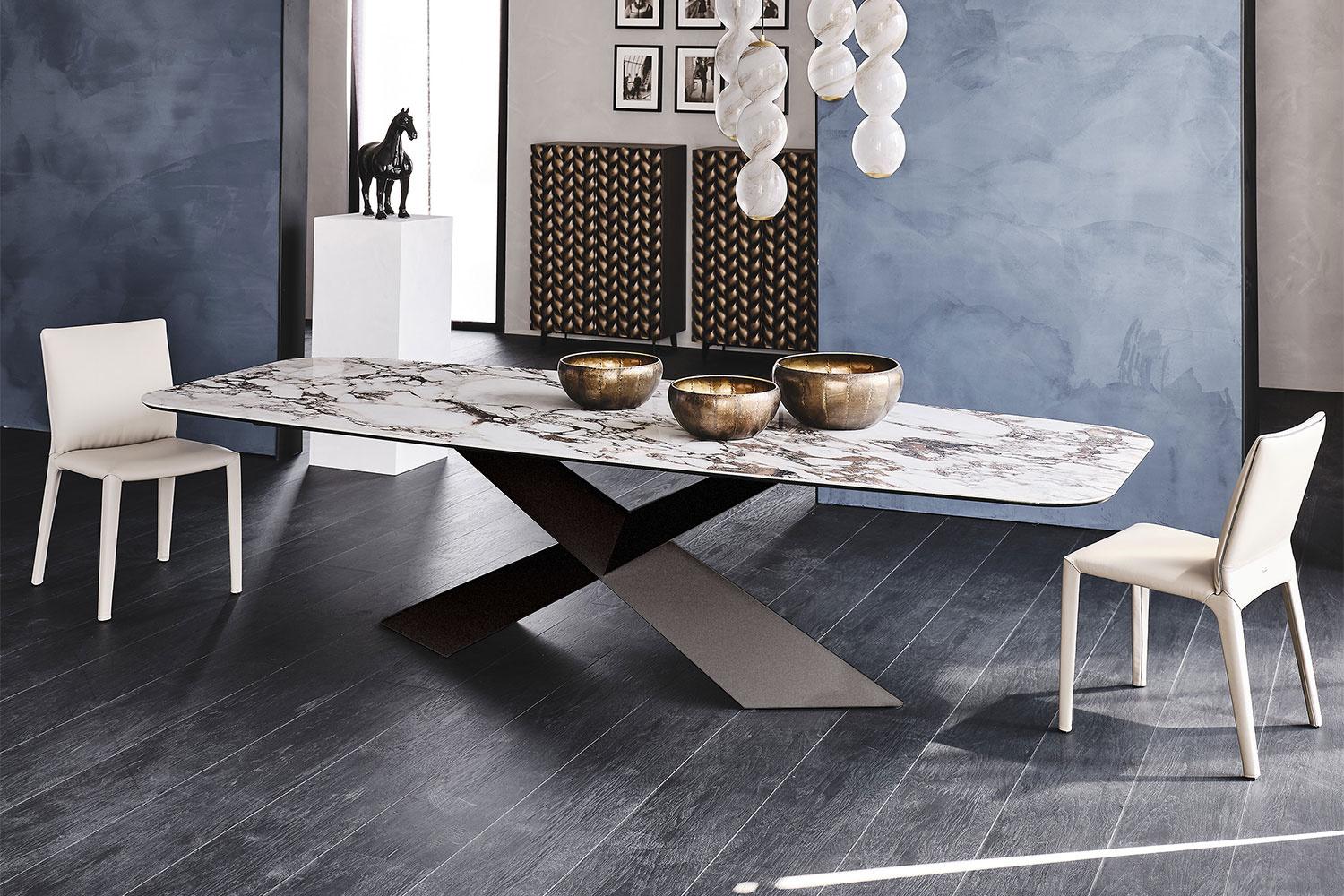
Contemporary trends in designer dining table creation mirror global interior design evolution. Minimalism remains an influential trend, where the emphasis is placed on the purity of lines and expressiveness of the material. Laconic forms characterize such tables.
Conversely, neomaximalism transforms tables into central art objects with decorative carved elements and multilevel constructions. Asian influences are evident in the Japanese art technique of kintsugi, where cracks in the wood are filled with gold.
Technology integrations include:
- Built-in wireless charging.
- Hidden USB-C connectors.
- Touch surfaces.
- Height adjustment.
According to Fortune Business Insights, the luxury furniture market is experiencing steady growth, with an emphasis on sustainable manufacturing and personalization.
Creation Process and Customization
Creating a designer dining table is a complex, multi-stage process that begins long before any tools touch the wood. Designers and artisans carefully study the client’s needs, interior features, and technical requirements for the future product.
Detailed stages of creation:
- Initial consultation — study of needs, client’s lifestyle, and interior features.
- Technical specification — defining dimensions, functions, and basic requirements.
- Conceptual design — creation of initial concepts and ideas.
- 3D modeling — detailed visualization enabling virtual viewing.
- Material selection — selection of wood species, fittings, and decorative elements.
- Prototyping — developing reduced-size models or crafting specific components for testing and refinement.
- Production — step-by-step creation with photo recording of the process.
- Finishing — polishing, coating with protective compounds.
- Quality control — checking of all joints and mechanisms.
- Delivery and installation — transportation and final setup.
The approval stage can take several months, as each detail is worked out individually. Customers have the opportunity to make changes at any stage of the design. Some customers are involved in individual stages of creation, which makes the process even more personalized.
Modern technology allows customers to follow the creation process remotely. Internet cameras in workshops, regular photo reports, and video calls with artisans make the process transparent and engaging for the customer.
According to a report by ResearchAndMarkets, the warranty service for exclusive tables usually lasts an extended period, with the possibility of restoration and modernization. Many furniture houses offer lifetime service, including preventive maintenance, hardware replacement, and refinishing.
Conclusion
The bespoke tables from leading furniture houses are a unique combination of traditional craftsmanship and modern technology. They represent an art, quality, and comfort investment that transcends ordinary furniture. Their value grows over time, turning furniture into a collector’s item and a family legacy.
The industry’s future lies in even more personalization, introducing eco-friendly technologies, and developing smart features. Each new piece becomes increasingly distinctive, reflecting not only the makers’ craftsmanship but also the owner’s personality. Designer furniture remains an important area where human skill and creativity play a key role.


