
You’ve hired more prompters. You’re generating hundreds of assets a week. The campaign calendar is full, and leadership is happy with velocity. But something feels off.
The images don’t feel like they belong to the same brand anymore. One asset looks like a glossy product shot; the next, a flat illustration. The team blames model differences, prompt fatigue, or just bad luck. More likely, you’ve hit the hidden ceiling of generative media scale: consistency drops before anyone has a name for it.
Signal 1: The Same Prompt Produces Four Different Looks Across Models
This is the most common pattern. A team working across models like Banana Pro AI, Seedream, and Grok runs the same object prompt—“minimalist desk lamp, soft warm light, clean background”—and gets back four images that look like they came from different campaigns. One leans cold and clinical. Another is overly stylized. The third introduces texture the brief never asked for.
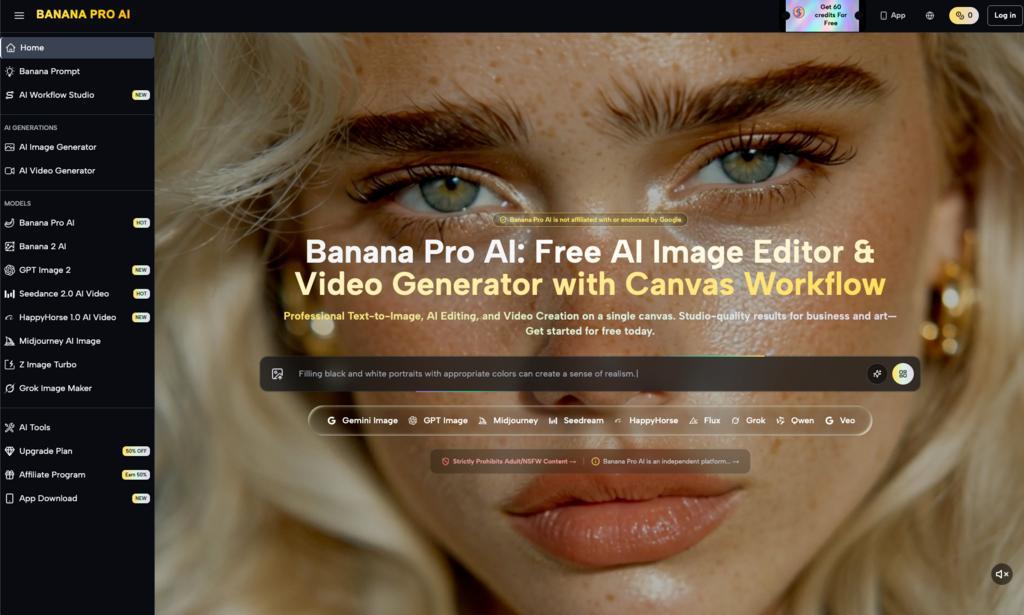
The problem isn’t model quality. It’s the absence of a prompt-layer constraint. When teams switch models without a shared base prompt structure, each model’s default behavior imposes its own style. The fix isn’t to use one model; it’s to define fixed seed parameters, style modifiers, and temperature settings before generation. A tool like AI Image Editor can enforce those constraints across sessions, but only if the team agrees on the base prompt architecture first.
Quick diagnostic: run your most common prompt through three different models and side by side the results. If the visual identity fractures, you’re in this zone.
Signal 2: Asset Reuse Creates Style Gaps That Nobody Catches
An image that works as a standalone social post often breaks when it enters a production pipeline. Tiled into a canvas layout, composited into a video frame, or resized for a banner—the same asset suddenly looks mismatched.
The symptom that usually reveals this is hidden labor: designers spending roughly 20% of their time retouching AI outputs to fit existing brand templates. That retouching is a tax on inconsistency. It means the generation stage didn’t produce assets that could survive reuse.
A practical countermeasure is to insert a reprocessing step before assets enter the library. Run every output through a uniform color grade and resolution check inside the AI Image Editor. This doesn’t require human judgment per asset—it’s a batch operation that normalizes outputs to a single visual baseline. If your team skips this step, inconsistency compounds every time an asset is reused.
Signal 3: Prompt Drift Creeps In When Multiple Authors Edit the Same Brief
Over a two-week sprint, three team members iterating on the same campaign brief produced six visually unrelated outputs. Each person modified the prompt differently—one removed a style modifier, another changed the negative prompt, someone else introduced a model switch without documenting it. By week two, no one could explain why the outputs diverged.
This is prompt drift, and it’s the operational equivalent of version control chaos in code. The difference is that most teams don’t treat prompts like code. They treat them as disposable text fields.
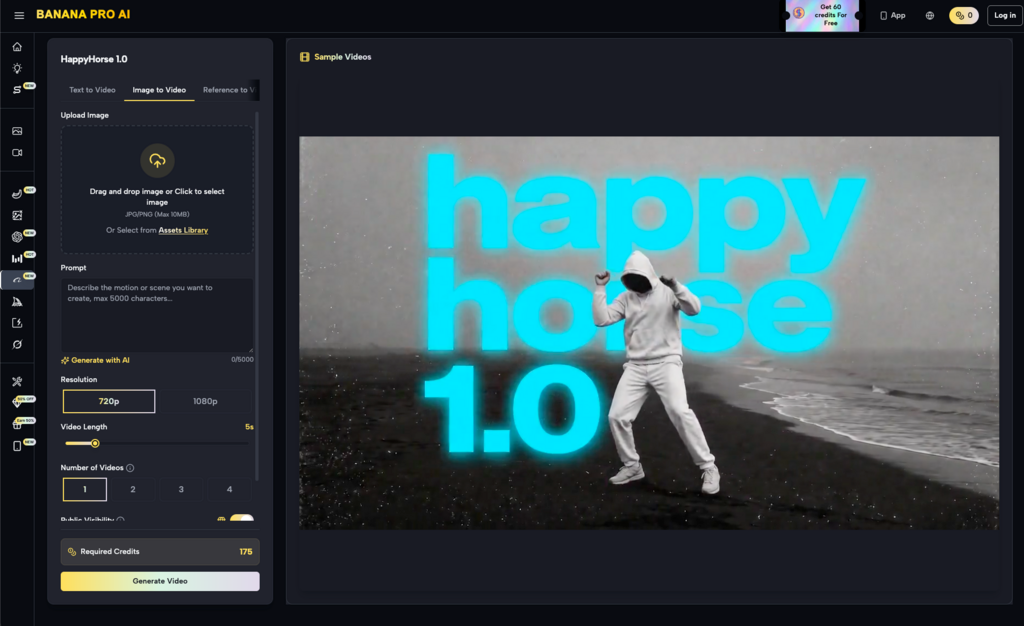
A more disciplined approach: treat every prompt as a revision-able document. Nano Banana’s prompt workflow studio allows teams to store canonical prompt versions with locked style modifiers. That means you can diff what changed between iterations, roll back a drift, and enforce a single source of truth per brief. It sounds administrative, but the alternative is a library of orphaned outputs no one can explain.
Important caveat: no tool can eliminate drift entirely when humans are in the loop. Prompt discipline is a team culture issue first, a tool issue second. If your team isn’t already versioning prompts in a shared system, no interface will solve it for you.
Signal 4: Outputs Look Good in Isolation but Break in Sequence
This signal is harder to catch because individual assets still look fine. The problem appears when you lay out a series: four images for a single article, six frames for a carousel ad, a dozen thumbnails for a video series. Viewed in sequence, they feel disjointed. The visual friction erodes trust even if no single image is bad.
The root cause is usually invisible to the single-asset reviewer. Different negative prompts, mismatched aspect ratios, or inconsistent compositional rules produce outputs that don’t “talk” to each other. The fix is to enforce a shared negative prompt list and a fixed aspect ratio set before any batch generation starts. Every team member should use the same base constraints—not just the same positive prompt.
But here’s where a note of caution is warranted: even with shared constraints, cross-asset consistency is hard to measure. A/B testing a sample of ten outputs per model cannot prove which model is reliably consistent. Sample sizes matter, and most teams test too few examples to draw meaningful conclusions about sequential coherence.
Signal 5: What You Can’t Safely Conclude From Output Data Alone
Teams often confuse generation speed with consistency. A tool that produces forty images per minute gets celebrated, but speed can mask uneven quality when evaluation criteria are vague. Faster generation doesn’t mean more consistent generation—it can just mean faster failure at scale.
The practical limit here is worth stating clearly: no tool today, including Banana AI or any other platform, can guarantee stylistic consistency across every new use case without human oversight of prompt parameters and post-processing steps. The tools can enforce constraints, normalize outputs, and lock canonical prompts. But every new brief introduces new variables—subject matter, lighting conditions, compositional needs—that require human judgment to calibrate. Anyone who tells you otherwise is selling certainty that doesn’t exist yet.
The honest path is to treat consistency as an ongoing diagnostic, not a solved problem. Run the same brief through your pipeline quarterly. Compare the outputs. If drift has increased, look at which signals changed. That iterative calibration, more than any single tool feature, is what makes scaling viable.


