Turning a side hustle into a paid business often begins with landing your first few customers. But getting paid consistently is where things start to feel real. In the early stages, many new business owners rely on informal methods like Venmo requests, text messages, or basic spreadsheets. While these can work temporarily, they tend to become disorganized as your workload increases.
Without a clear system, it’s easy to forget invoices, lose track of payments, or create confusion for your clients. A simple invoicing system helps solve this. Using an invoicing system, you can create structure, improve cash flow, and keep your records organized.

Source: Andrey_Popov/Shutterstock.com
Table of Contents
Why invoicing matters when you start charging clients
Invoicing is more than just requesting payment. It introduces structure and professionalism into your business. When you send a clear invoice, you establish expectations with your client. It outlines what was delivered, how much is owed, and when payment is due. It also creates a record of your work. Each invoice documents your income, which becomes important for tracking performance, managing cash flow, and preparing for taxes.
This is especially important because invoicing is often the first step in treating your side hustle like a real business. It moves you from informal payments to a system that supports consistency and growth.
Common mistakes new business owners make with invoicing
One common issue is forgetting to bill clients on time. When you rely on memory instead of a structured process, invoices can be delayed or missed entirely. This directly impacts how quickly you get paid.
Another challenge is unclear payment expectations. If you don’t define due dates or explain how clients should pay, it can lead to confusion and delays.
Poor record-keeping is also a frequent problem. Losing track of which invoices have been paid and which are still outstanding makes it harder to manage your income. Mixing personal and business transactions can add to this confusion.
These issues may seem minor at first, but they can create ongoing cash flow problems as your business grows.

Source: Pixel-Shot/Shutterstock.com
What a simple invoicing system should include
You don’t need a complex setup to manage invoicing effectively. A simple system with a few core elements is enough to get started.
It should include:
- Professional invoice template: Includes your business name, client details, a clear breakdown of services, total amount due, and payment deadline so clients understand exactly what they’re paying for.
- Payment tracking: A way to mark invoices as paid or outstanding, giving you clear visibility into who owes you money.
- Clear payment options: Instructions on how to pay, ideally with digital payment methods, to make the process faster and more convenient for clients.
- Basic record storage: An organized history of invoices and payments to support financial tracking and simplify tax preparation.
When to move beyond manual invoicing methods
Starting with manual methods is often enough in the beginning. But as your business grows, certain challenges start to appear. Managing multiple clients or handling recurring work increases the complexity of invoicing. What once felt manageable can become time-consuming.
You may also notice that creating and tracking invoices is taking up more of your time each week. This is often a sign that your process isn’t scaling well. Delayed or missed payments can also become more frequent without a structured system.
In these situations, moving to free invoicing software can help automate parts of the process, reduce manual work, and improve consistency without breaking the bank.
How to set up a simple invoicing system
Setting up your system doesn’t need to be complicated. The goal is to create a process you can follow consistently.
Start by choosing your method. You can use a basic template or invoicing software, depending on your needs. If you expect to work with multiple clients, software may save time early on. If you’re unsure how to create an invoice, start with a simple format that includes your business details, services provided, pricing, and clear payment terms.
Next, create a standard invoice template. Include all essential details—services, pricing, and payment terms—and keep the format clean and consistent. Define your payment terms clearly. Decide when payments are due, such as Net 7 or Net 15, and communicate accepted payment methods upfront.
Tracking every invoice is also important. Maintain a record of what’s been sent, what’s been paid, and what’s overdue. This helps you stay organized and avoid missed follow-ups. Send invoices promptly. The sooner you invoice after completing work, or based on an agreed schedule, the sooner you can expect payment.
Finally, follow up on late payments when necessary. A simple, professional reminder is often enough to keep things moving without creating tension.
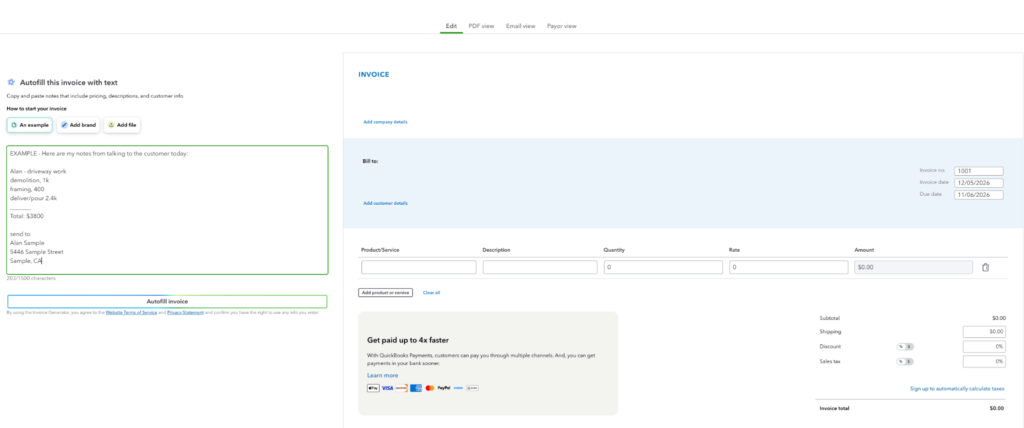
Source: Quickbooks Free Invoice Generator
Final thoughts
Setting up a simple invoicing system is one of the most important steps in turning a side hustle into a real business. It helps you get paid consistently, keeps your finances organized, and builds credibility with your clients.
You don’t need a perfect system to start. By keeping your process simple, you create a foundation that supports steady, confident growth over time.