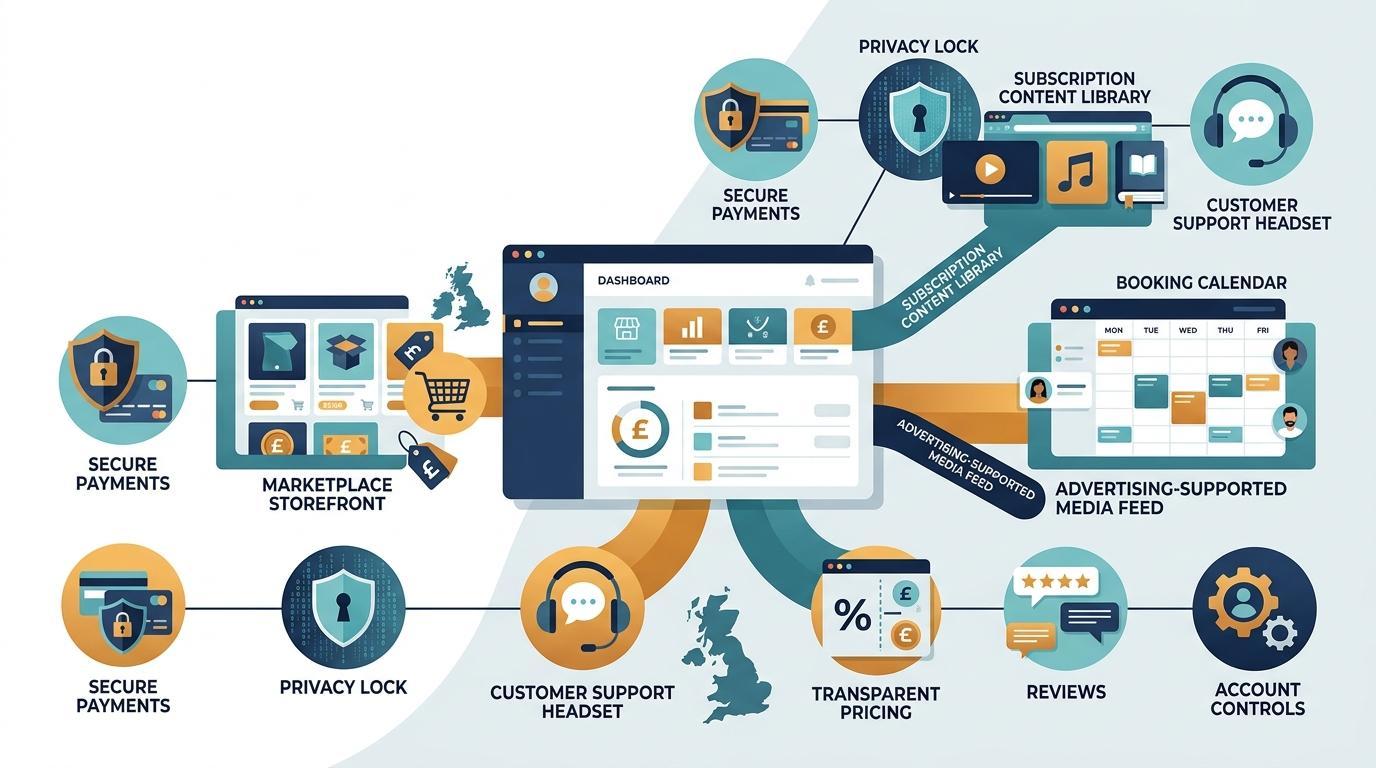
Online platforms are part of everyday life. We use them to buy things, book services, learn a skill, find a tradesperson, watch a programme or join a community. Yet it’s easy to use a platform without really understanding how it works, who pays for it, or what happens to your data along the way.
That knowledge matters whether you’re considering a new business idea or simply deciding where to spend your time and money online. A platform isn’t automatically a business opportunity, and a slick website isn’t automatically trustworthy. A little platform literacy helps you ask better questions before signing up, paying, sharing details or building something yourself.
Table of Contents
Why platform literacy is useful for everyone
At its simplest, a platform is a digital service that connects people, information, products or activities. Some connect buyers with sellers. Others provide a service directly. Some are free to access because advertising funds them, while others charge a recurring fee.
For founders, understanding these differences can prevent a common mistake: building features before proving that anybody wants the service. For users, it makes it easier to spot unclear pricing, confusing terms or weak customer support.
- A business model, which explains how an organisation receives revenue
- A digital service, which explains what the user can do there
- A leisure activity, which is something people choose for enjoyment, not a commercial venture
That last distinction is particularly important. Not every activity involving payments online is a way to build income or create a business.
How online business models actually work
Most online platforms make money through a small number of familiar models. The clever part is usually how they combine these models with a useful customer experience.
Marketplaces bring separate parties together
A marketplace connects buyers and sellers, or customers and service providers. The platform may not make or own the product itself. Instead, it provides the search tools, listings, payment process, messaging and reviews that make a transaction possible.
Think of a site where independent sellers list goods, or where local professionals offer appointments. The operator may receive a fee per sale, a listing fee, a subscription from sellers, or a mixture of these.
The basic marketplace model relies heavily on trust. If buyers can’t tell who they are dealing with, whether reviews are meaningful or how a dispute is handled, they’ll soon look elsewhere.
A marketplace needs to answer practical questions clearly:
- Who is responsible for delivery or carrying out the service?
- What happens if an order is late, damaged or not as described?
- When does the seller receive payment?
- How are complaints and refunds managed?
- Are ratings checked for suspicious behaviour?
Subscription services offer ongoing access
Subscriptions charge at regular intervals, usually in return for continued access to content, software, deliveries or support. They can give a business steadier revenue than one-off sales, but only when people feel the service remains worthwhile.
The key word here is clarity. Users should be able to see:
- the total price and billing frequency
- what is included and what costs extra
- when a trial period ends, if there is one
- how to cancel without hunting through menus
- whether prices can change and how notice will be given
Good subscription services don’t depend on people forgetting they joined. They make account controls straightforward, and they communicate in plain English.
Service platforms sell time, expertise or access
Some platforms help people book a professional, attend a remote session, commission work or manage a task. Revenue can come from booking fees, commission, memberships or payments for premium tools.
Here, the experience hinges on expectations. A customer needs to know what they are receiving, when it will happen, who provides it and what support is available if plans change. A service description that sounds impressive but says very little is rarely a good sign.
Advertising-funded platforms exchange attention for access
Advertising-funded services may not charge the user directly. Instead, businesses pay to show adverts, sponsor material or reach a selected audience.
“Free” doesn’t mean that no value is exchanged. Your attention, usage data and preferences can all shape what you see. That doesn’t make advertising inherently problematic, but it does mean privacy information deserves a proper read.
Validate demand before building too much
A promising idea on paper can fall flat once it meets real people. Founders often feel pressure to launch a polished platform straight away, complete with every feature imaginable. I find a smaller test is usually more revealing.
Start with the problem, not the technology. What awkward task are you helping someone complete? How do they deal with it now? Would they genuinely switch?
A practical early validation process might look like this:
- Speak to potential users. Ask about their current habits and frustrations, rather than asking whether they like your idea.
- Describe one clear offer. Avoid trying to serve everyone at once.
- Test the journey. A simple landing page, prototype or manual service can show whether people understand the offer.
- Measure useful signals. Enquiries, repeat use, completed bookings and constructive feedback matter more than flattering comments.
- Revise the weak points. If people hesitate at the same step, the design or explanation probably needs work.
Trust should be designed in from the beginning. Clear contact details, honest product descriptions, accessible terms and a visible complaints route are not dull extras. They’re the bits that reassure people when they’re deciding whether to proceed.
Digital capabilities that keep a platform running
A platform is more than a website. Sustainable operations depend on a handful of behind-the-scenes skills, many of which deserve attention before launch.
Payments need care and clarity
Payment flows should be secure, easy to understand and properly recorded. Customers need confirmation of what they have paid, what the payment covers and how to seek help if something appears wrong.
Avoid storing payment details yourself unless you have a strong reason and suitable specialist arrangements. Established payment providers can reduce technical burden, but they don’t remove your responsibility to explain charges and handle customer queries well.
Data should be treated with respect
If you collect names, contact details, addresses or behavioural information, you have responsibilities. The UK’s data protection framework expects organisations to have a lawful reason for using personal data, to keep it secure and to tell people what is happening.
The Information Commissioner’s Office provides guidance for organisations and the public. Even a small platform should have an understandable privacy notice covering what data it collects, why it is needed, who it is shared with and how long it is kept.
Support is part of the product
A friendly support process can rescue an imperfect experience. A hidden contact form or a reply days later can make a minor problem feel much bigger.
Set realistic response times, keep records of issues, and give staff a clear route for escalating complicated cases. If you’re a one-person operation, say so. People tend to be reasonable when expectations are honest.
Reputation is earned in small moments
Reviews, ratings and recommendations carry real weight online. Don’t attempt to manufacture them or bury criticism. Respond calmly, investigate fairly and fix recurring problems. Reputation is built less by grand promises and more by doing ordinary things reliably.
How to assess an online opportunity safely
Before joining, paying for or partnering with an online platform, take a moment to look beyond the headline offer.
A sensible checklist includes:
- Transparency: Is the operator identifiable, with terms, contact details and a clear explanation of the service?
- Costs: Are all fees, renewals, delivery charges and cancellation rules visible before payment?
- Privacy: Can you find a privacy notice that explains data use in plain language?
- Controls: Can you update details, manage notifications, cancel a subscription or close an account without unnecessary barriers?
- Expectations: Does the platform make claims that seem vague, exaggerated or difficult to verify?
Consumer protections matter, and the Competition and Markets Authority works to promote competition and protect consumers in the UK. Still, a careful read before committing is often the simplest safeguard.
Commercial platforms and adult leisure services are not the same thing
It’s worth drawing a firm line between platforms that enable commercial activity and platforms designed for adult leisure.
A marketplace, booking service or subscription tool may help a person buy, sell or manage a service. An adult leisure platform, by contrast, exists for entertainment. It should not be treated as a business model, side income, investment or route to financial return.
This distinction is useful because the checks are different. With a commercial platform, you might assess customer demand, transaction fees and operational needs. With an adult leisure service, the focus should be on eligibility, licensing, terms, spending controls, account security and whether the activity remains enjoyable.
UK adult leisure example: online bingo basics and responsible participation
Online bingo is a paid leisure activity for adults. It involves choosing a game format and purchasing entry in line with the platform’s rules. It is not a method of making money, and outcomes should never be assumed or planned around.
Before taking part, check that the service is properly authorised for the UK, read its terms, and understand how account verification and payment controls work. The Gambling Commission is the UK regulator and publishes information about licensed gambling and consumer protection.
Set a fixed entertainment budget before you begin, use available account limits where appropriate, and keep payment details secure. It’s also sensible to take a break or stop altogether if play is no longer enjoyable.
Educational resource: For a basic walkthrough of rules, game formats and getting started, see how to play bingo online Jackpotjoy.
The wider lesson applies to any platform: understand what the service is for, know what you’re agreeing to, and keep your expectations grounded. That’s not complicated, but it makes the internet a far easier place to navigate with confidence.


