
Devastating vision loss can result from damage to the optic nerve, which is not, or cannot be naturally repaired. Regaining sight has long been thought to be impossible, regardless of the cause: glaucoma, trauma, or optic neuritis.
The issue at hand is substantial. Over 3.3 million people currently have vision loss as a result of diseases of the optic nerve. In addition, glaucoma, which currently affects 76 million people, is expected to afflict 111 million people by 2040.
The progression can be slowed with conventional treatment. But undoing harm? Many people still think that’s out of their price range.
However, regenerative medicine is advancing, with optic nerve regeneration and optic nerve atrophy stem cell treatment using ethical, adult-derived cells.
Table of Contents
Challenges in Optic Nerve Regeneration
Optic nerve regeneration is part of the central nervous system (CNS), which has minimal capacity for self-repair.
After injury, several biological roadblocks stand in the way: scar tissue, growth-inhibiting proteins, and low regenerative activity in retinal ganglion cells (RGCs).
RGCs aren’t all the same. They fall into three main categories, each with distinct roles in how we see:
- W-ganglion cells: Small, fast, ~40%; vast visual fields, detect motion via rods.
- X-ganglion cells: Medium, ~55%; handle fine detail and color with steady signaling.

Because of this, the regeneration of optic nerve fibers isn’t just complex; it requires a complete rethinking of how we support healing in the CNS.
Stem Cells and Their Role in Nerve Repair
Adipose or bone marrow tissue from patients, or ethically procured tissues like the placenta and umbilical cord, are the sources of adult multipotent mesenchymal stromal cells (MSCs).
Why MSCs?
- They secrete anti-inflammatory and regenerative factors.
- They help regulate immune responses to reduce further damage.
- They activate the body’s repair mechanisms.
- They carry no risk of tumor formation, unlike embryonic or pluripotent cells.
MSCs help existing cells survive and recover by restoring balance rather than “replacing” damaged cells.
According to research, MSCs move the immune cells into a healing mode, eliminating inflammation, protecting nerves, and supporting repair.
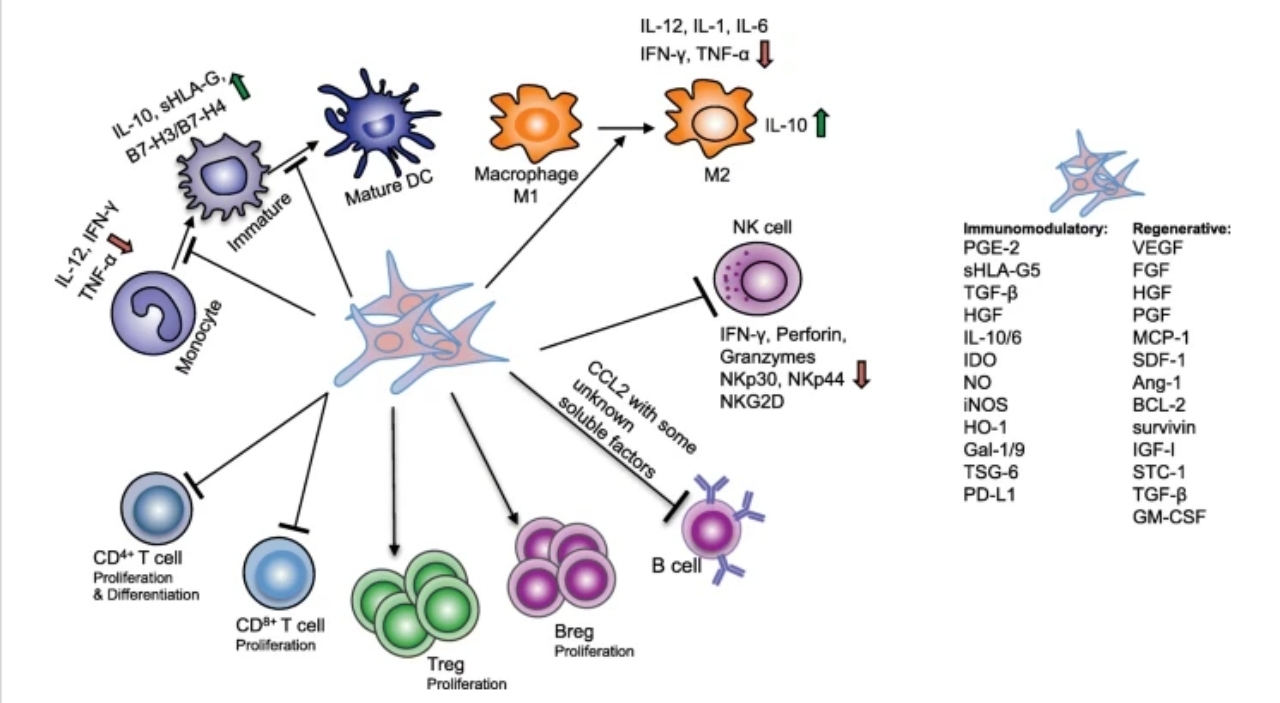
MSCs help the immune system switch from “attack” mode to “healing” mode, protecting tissues and supporting repair. (Source: BMC)
Key Biological Mechanisms Behind Regeneration
Several interconnected mechanisms drive the therapeutic effect of MSCs:
1. Neuroprotection
MSCs release neurotrophic factors such as BDNF and CNTF that help prevent retinal ganglion cell death, preserving what function remains.
2. Axon Growth Support
MSCs produce a more receptive environment for axonal regeneration by altering the extracellular matrix and suppressing inhibitory signals.
3. Modulation of the immune system
Stem cells assist in changing the immune system from a pro-inflammatory to a controlled, tissue-protective state in order to lessen chronic inflammation, which can cause nerve damage.
4. Stimulation of Angiogenesis and Tissue Repair
MSCs promote new blood vessel growth and improve nutrient delivery, which supports recovery at the cellular level.
Alongside whole-cell therapy, we use exosomes, cell-free vesicles carrying active molecules, to support lasting benefits and move easily in the body.
Delivery Methods for Cell Therapy
The method of delivering MSCs is tailored to each patient’s needs. Common approaches include:
- Intravenous infusion for systemic impact and immune regulation
- Retrobulbar injection near the eye socket for localized delivery
- Intrathecal injections into the spinal canal are being utilized for specific neurological disorders
- Subcutaneous and topical applications, depending on treatment goals
Donor-derived MSCs are often used for less invasiveness and consistent quality, though a patient’s cells may be suitable in some cases.
Evidence from Preclinical and Clinical Studies
Stem cell-based therapies have demonstrated some effectiveness in using animal models of optic nerve damage to enhance the survival of retinal ganglion cells (RGCs) and partially recover their function.
Patient reports show that vision and visual field improvements occur in patients with glaucoma and optic nerve atrophy. Patients receive a complete evaluation before treatment, while therapy plans are customized to their health status and disease stage, and individual response.
Potential Benefits and Limitations
Stem cell therapy for the optic nerve shows promise but comes with benefits and limitations.
Potential benefits may include:
- Slowing or halting the progression of vision loss
- Improvement in visual function
- Reduced inflammation and optic nerve stress
- Better quality of life and reduced need for surgical intervention
Limitations to keep in mind:
- Results vary and are not guaranteed
- Multiple rounds of treatment may be needed
- It’s not a cure, but a way to support symptom management and stabilization
The therapies aim to help patients preserve vision for longer and delay potential disability.
Final Thought
The advancement of optic nerve regeneration research continues to explore cell therapy as one of multiple potential therapeutic methods. Swiss Medica clinics use adult-derived MSCs together with exosomes and supportive treatments as part of their comprehensive therapeutic approach. Stem cell therapy for the optic nerve functions as a management tool to protect vision and life quality through scientific monitoring of damage.
Have questions about optic nerve regeneration? Share your thoughts or experiences with us.


