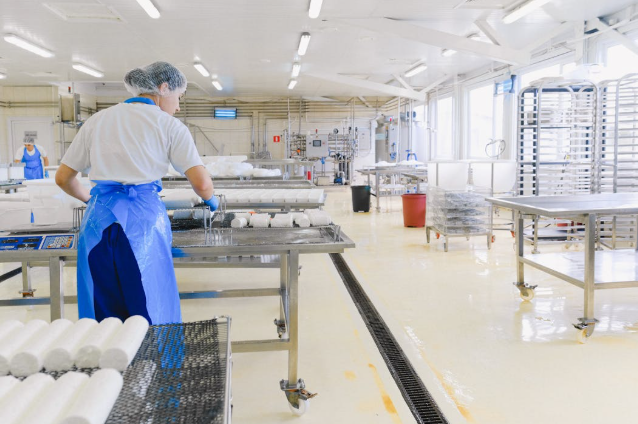
Most food facilities don’t fail inspections because they lack policies. They struggle because daily operations drift away from those policies over time. By the time it’s noticed, it affects product quality, slows production, or raises red flags during an audit.
Safety, compliance, and efficiency need to function together on the floor—not as separate priorities. When processes are practical and consistently followed, operations stay stable and teams don’t have to scramble when something goes wrong.
Table of Contents
Cleaning Systems That Hold Up During Busy Production
Cleaning plans often fail during peak production because they weren’t designed with real workloads in mind. Tasks get delayed, rushed, or skipped when time is tight.
Build cleaning into the production schedule instead of treating it as a separate activity. Assign clear ownership for each area so responsibility is never unclear. Tasks should be simple enough to complete properly even during busy shifts.
Verification matters just as much as execution. Supervisors should check results regularly instead of assuming work was done correctly.
When cleaning fits naturally into the workflow, it becomes part of the process instead of something that gets pushed aside.
Managing Environmental Conditions Before They Cause Issues
Environmental conditions often create the perfect setup for problems long before they’re visible. Small shifts in humidity, airflow, or temperature can attract pests and support their growth, especially in areas where food particles or moisture are present. Storage zones, drains, wall gaps, and equipment bases are common trouble spots.
Watch for early signs like droppings, webbing, or unexplained product damage. These signals usually point to deeper issues in the environment. Fix structural gaps, improve airflow, and address moisture sources quickly.
When infestations spread beyond routine control, facilities may turn to professional fumigation services to eliminate pests at all life stages and restore safe operating conditions.
Turning SOPs Into Actions People Actually Follow
Most food facilities have SOPs, but the useful ones focus on real risk points in daily operations. Key SOPs should cover receiving and inspection (checking temperature, packaging, and labeling), storage and handling (FIFO, proper placement, separation), cleaning and sanitation (clear steps, chemicals, and verification), equipment use and maintenance (startup checks and issue reporting), process controls (time and temperature limits), employee hygiene, and environmental monitoring.
Problems start when SOPs don’t match how work actually happens. If employees skip steps, the process needs fixing. A good SOP should be easy to follow during a busy shift and clearly explain what to do when something goes wrong. Walk the floor, observe real work, and adjust procedures so they reflect reality.
Training That Reflects Real Problems on the Floor
Training should focus on situations employees face during real shifts, not just rules from a manual. Start with handling deviations—what to do when temperatures go out of range, when a product sits too long, or when a batch doesn’t meet specs. Employees need clear actions, not guesses.
Include storage and handling training, showing correct placement, labeling, and what improper storage looks like in your facility. Use real examples from your floor.
Add cleaning and sanitation training that walks through actual equipment, including where buildup happens and how to verify cleaning.
Cover equipment awareness, teaching staff how to spot early signs of issues like leaks, residue, or unusual performance.
Finally, train on incident reporting so employees know when and how to escalate problems immediately instead of ignoring them.
Keeping Equipment Reliable and Easy to Inspect
Equipment problems rarely start as major failures. They begin with small issues like worn seals, buildup in hard-to-reach areas, or slight performance changes. If these go unnoticed, they can affect both safety and output.
Set a maintenance schedule that aligns with actual usage, not just calendar dates. Equipment that runs constantly needs more frequent checks. Make inspection points easy to access so staff can check them quickly during shifts.
Train employees to notice early warning signs, such as unusual noise, inconsistent output, or visible residue. Reporting these early prevents larger disruptions later.
Reliable equipment supports steady production and helps maintain consistent conditions across the facility.
Tracking the Right Data Without Slowing Operations Down
Many facilities collect data that no one reviews until there’s a problem. Logs get completed, but they don’t guide decisions. That creates a false sense of control.
Focus on a few key indicators that directly affect product safety, such as temperature stability, moisture levels, and storage conditions. Set clear limits and define what action should be taken when those limits are exceeded.
Review data regularly, not just during audits. Look for patterns, such as recurring temperature shifts or repeated deviations in the same area. These trends often point to deeper issues.
Simple systems work best. Whether digital or paper-based, data should be easy to record and easy to review. The goal is quick action, not complicated tracking.
Staying Audit-Ready Through Daily Discipline
Facilities that treat audits as special events often struggle to keep up. Last-minute preparation leads to rushed corrections and incomplete documentation.
Stay ready by keeping records accurate and up to date during normal operations. Batch records, cleaning logs, and maintenance checks should be completed in real time. Supervisors should review them while work is still in progress.
Walk the facility regularly with a critical eye. Check labeling, storage practices, and employee behavior without prior notice. If something doesn’t match your standards, fix it immediately.
When daily practices stay consistent, audits become routine. There’s no need for extra preparation because the system already reflects what inspectors expect to see.
Maintaining safety, compliance, and efficiency comes down to how well daily operations hold up under real conditions. Systems need to match the pace of production and be simple enough for teams to follow without hesitation.
Facilities that perform well focus on consistency. They adjust processes based on what actually happens on the floor, respond quickly to small issues, and keep responsibilities clear. This approach keeps operations stable and reduces surprises during inspections.
When systems are practical and teams are aligned, production runs smoothly, risks stay controlled, and the facility operates with confidence every day.


