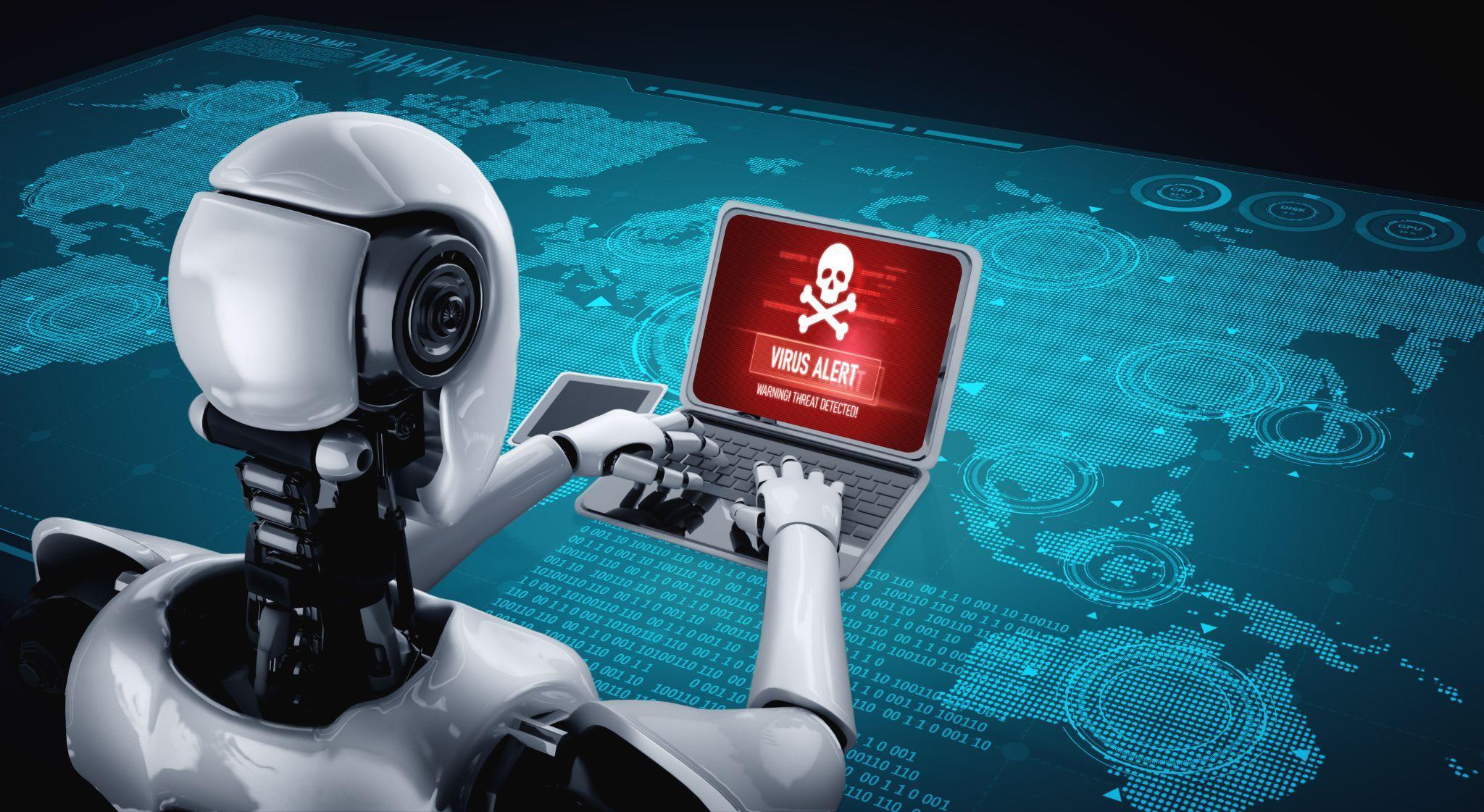
Organizations today operate in an increasingly complex digital landscape where cyber threats continue to evolve in both scale and sophistication. The increase in the use of cloud computing, hybrid work, connecting devices, and applications that are important for business processes has contributed to an increasing attack surface, making it increasingly difficult for security teams to identify and mitigate threats through traditional security measures.
As a result, to stay ahead of such a developing threat landscape, companies are resorting to more intelligent and automated security approaches. The adoption of AI cybersecurity solutions for enterprises will allow them to process large amounts of security information, detect any malicious activities, and increase the speed of their response to incidents. The development of artificial intelligence makes it an increasingly important element of enterprise cybersecurity.
Table of Contents
How AI Helps Enterprises Stay Ahead of Cyber Threats
Detects Threats Before They Escalate
Continuous monitoring by AI is done on the behavior of users, network activity, events on the endpoints, and system log files in order to spot any abnormal behavior that could be indicative of a possible cyberattack. As opposed to conventional rule-based security applications, the machine learning algorithms have the ability to detect abnormalities that change over time. Early detection allows companies to contain an attack before spreading throughout the critical infrastructure.
Correlation of the data from several sources of cybersecurity gives much more context about any suspicious activity. This allows security professionals to determine what represents a real threat and which actions should be taken.
Accelerates Incident Detection and Response
Security teams in organizations regularly deal with thousands of security alerts daily. Using AI in such cases allows for the prioritization of security incidents that pose a higher risk, automation of repetitive investigations, and speeding up the process of responding to security incidents.
Using automated processes in security operations also decreases the workloads of security teams because many routine activities are taken care of by AI. The use of AI also allows correlation of security events, recommends actions, and supports containment of the threat before it spreads further.
Improves Threat Intelligence
AI gathers information from various security sources and recognizes the connections among events and novel methods of attacks. That way, businesses can obtain useful threat intelligence that would help them make informed security decisions. Constant analysis will also enable security specialists to predict threats before they develop into significant incidents.
Through the analysis of vast amounts of threat data in real time, AI detects attack patterns that might remain hidden through manual analysis. Moreover, AI enhances the process of threat prioritization through analyzing the probability and potential impact of each threat scenario. As AI systems continue to evolve, businesses can also contribute to better AI performance by providing relevant data used to train AI models, helping them learn from new patterns, behaviors, and emerging cybersecurity threats.
Effective threat intelligence allows businesses to improve their cybersecurity strategy as a whole.
Strengthens Identity and Access Security
Security breaches through compromised user identities have always been among the leading causes for security breaches. The use of artificial intelligence will enhance identity security by analyzing user behavior and detecting any anomalies during logins or usage of privileged accounts. This way, it will enable an organization to improve its authentication controls and minimize security threats.
Suspicious login attempts, abnormal access patterns, and privilege misuse can be identified much earlier. This strengthens identity security while supporting Zero Trust security strategies across the enterprise.
Supports Smarter Security Operations
Security Operations Centres (SOCs) benefit significantly from AI-powered automation. AI-driven automation can offer huge benefits to Security Operations Centers (SOC). Through automation and minimization of the number of manual investigations, AI makes it possible for analysts to concentrate on those incidents which need human attention. AI makes it possible to increase the level of efficiency and strengthen the organization’s security position.
AI also facilitates cooperation among security specialists through the unification of alerts from various security solutions into one central interface. The automated correlation and analysis of alerts help to increase the level of investigation accuracy while minimizing the number of alerts which can be duplicates.
Key Considerations When Implementing AI in Cybersecurity
The proper implementation of AI involves not only intelligent security technologies but also the development of a strategy that will facilitate technology deployment and management.
Issues to address include:
- Quality security data
- Compatibility with existing security systems
- Human involvement in decisions
- Improvement in AI models over time
- Compliance with privacy and other laws
- Experienced cybersecurity specialists
- Scalability in security architecture
It is also necessary for companies to note that the use of AI should be seen as complementary to security personnel who have experience and not as a replacement.
Preparing for an AI-Driven Security Future
In light of the ever-changing cyber attacks, businesses will need to ensure that they come up with intelligent, scalable and attack response security policies. The incorporation of artificial intelligence technology with strong security management practices will allow organizations to achieve this while securing vital resources of the business.
To enhance your security management, organisations should look into AI cybersecurity solutions for enterprises that will offer comprehensive coverage from the network, cloud computing, end point, applications and users’ perspective. Advanced enterprise cybersecurity solutions will help your business achieve increased visibility and faster responses to threats.


