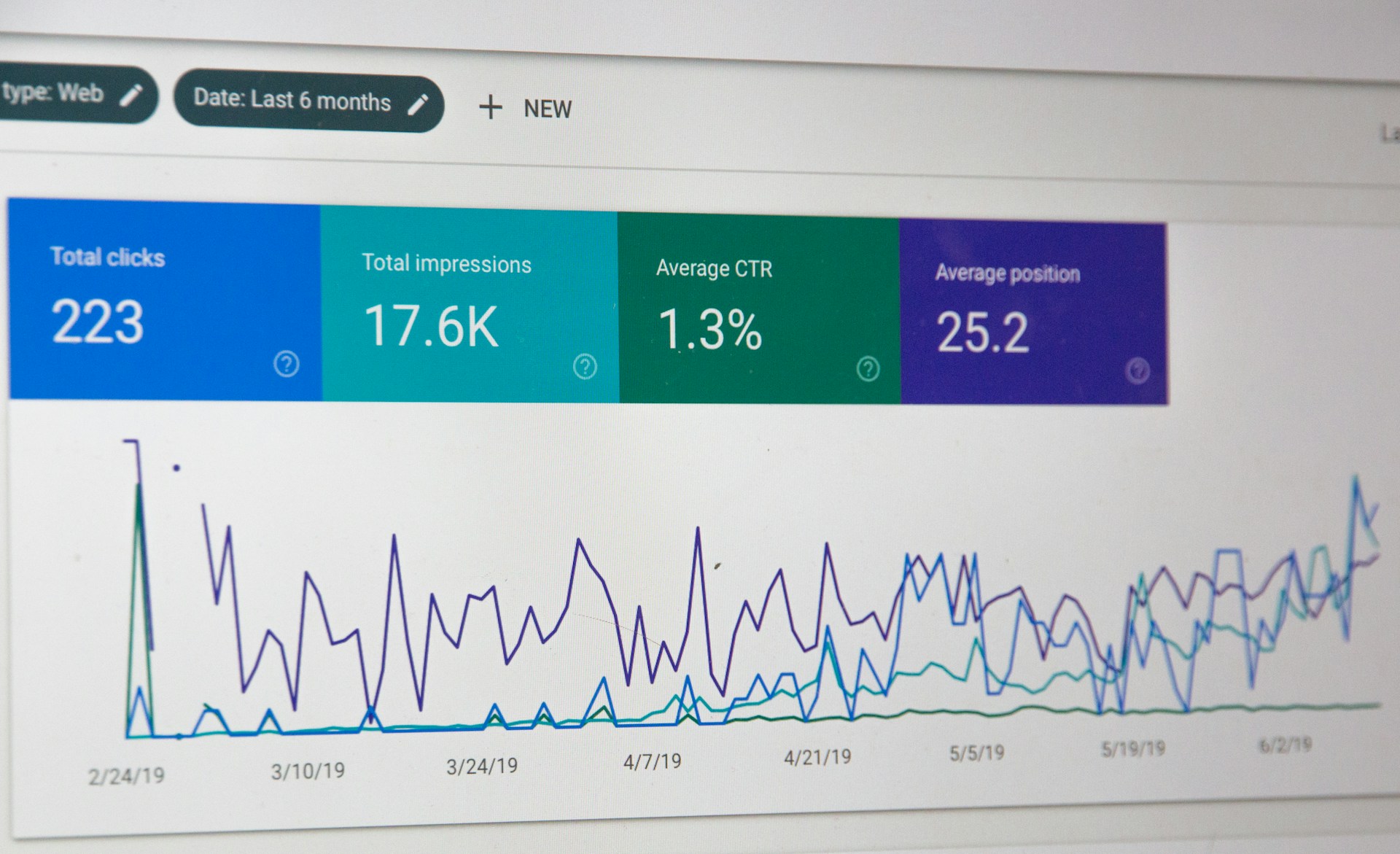
Website traffic is essential, but traffic numbers don’t make your business grow. You need to convert traffic to leads, subscribers, or customers. If visitors come to your website but don’t do anything there, then it means that you miss out on your opportunities although you work hard at SEO, paid advertising, and content marketing.
Table of Contents
How a Conversion Rate Optimization Agency Improves Traffic Value
A conversion rate optimization agency analyzes the ways people use your website and obstacles that impede conversion. The agency links traffic generation and user experience in order to help companies extract more value from their current traffic.
Let’s say a software company gets 10,000 visitors per month and 200 leads. Its conversion rate is 2%. If website optimizations bring up the conversion rate to 3%, the company gets 300 leads with the same amount of traffic. It is an extra 100 leads without any need for additional visitors.
The agency analyzes traffic sources, user paths, and conversion information in order to find obstacles such as confusing navigation, slow loading time, and poor messaging. The agency prioritizes changes based on their business impact.
The aim here is not to attract more visitors at all costs. The aim is to make more qualified visitors take necessary steps.
Using Website Analytics to Identify Conversion Barriers
Web analytics show where visitors come from, where they go on the website, and where they exit. Numbers don’t usually tell us why people do certain things.
Examine traffic sources, landing page performance, visitor paths, conversion rates, and how visitors interact based on the device they use. Analyze organic search, paid campaigns, referrals, and direct traffic to see which sources bring in interested visitors.
If an SEO landing page gets 2,000 visitors monthly but only 20 inquiries, the page has a 1% conversion rate. Analyzing search intent, title relevance, site layout, and form design will help you identify necessary changes.
Aligning Landing Pages With Search Intent
One would expect a landing page to talk about the purpose of their visit. However, when the page misses this intention, people tend to abandon the offer.
Conversion rate optimization professionals examine the page elements including the headline and call to action against the intentions of the visitors as per the search query and ads.
For instance, a person seeking enterprise SEO services expects detailed information concerning technical skills, reports, implementation process, and benefits in the long-run. However, a general description of the digital marketing services offered can miss the mark.
A well-designed page makes clear what is in it right from the start. This means use an informative headline, describe the key advantage, give proof of major statements, and outline the next step.
Make the site design compact with essential information on the front end. Mobile sites require checking for tiny buttons, cluttered text, and complicated forms.
Simplifying Website Navigation and Forms
The website navigation and forms should provide a way for visitors to get where they want to go on the website. Complex menus, vague labels, and long forms complicate things unnecessarily.
Examine how visitors navigate between the service pages, prices, contact forms, and checkout. Make paths to crucial pages easier to follow.
Forms also require simplification. Each extra field makes it harder for visitors to fill out forms and provide more personal information. Fields may be necessary for qualification purposes, but some are not useful at all.
Possible steps involve getting rid of redundant fields, using descriptive labels, giving useful error messages, and making sure buttons are easily clickable on mobile devices. Make sure you let visitors know what happens after submitting a form.
Simplified forms may result in an increased number of submissions but lower quality leads. Track both metrics carefully.
Validating Website Improvements Through A/B Testing
An A/B test tests two different pages/elements to establish which is more effective against a set target/goal. It assists in helping groups to eliminate opinions in favor of data.
For example, the heading on a landing page could be: “Improve your marketing efficiency”. In another version, a particular advantage might be emphasized with the headline “Attract More Qualified Leads via Your Website.” This is how you measure which of these headlines converts better for the same type of visitors.
Develop a theory/hypothesis, decide on a key metric, and gather enough information before making any decision. Do not make changes to other unrelated elements at once.
|
Method |
Main purpose |
Example metric |
|
A/B testing |
Compare page elements |
Conversion rate |
|
Heatmap analysis |
Identify interaction patterns |
Click distribution |
|
User testing |
Understand usability problems |
Task completion |
|
Form analysis |
Locate submission barriers |
Completion rate |
|
Page speed analysis |
Identify loading issues |
Page performance |
Not every test produces a positive result. A failed hypothesis still provides useful information when the team documents findings and applies them to future decisions.
The Nielsen Norman Group’s guide to A/B testing explains how to compare design variations, measure results, and avoid common testing mistakes.
Improving Page Speed and Mobile Usability
Users hate slow pages when visiting websites over mobile networks and using old machines.
In the documentation of Google’s Core Web Vitals, three important factors for gauging user experience can be identified: loading time, interactivity, and visual stability. All three elements will aid webmasters to gauge page performance.
In a CRO analysis, one must look into issues such as page images and scripts, long load time, layout changes, and delayed interactions. It is necessary to give precedence to issues on crucial landing and conversion pages.
It is necessary to test the mobile webpages for cramped text, complex menu navigation, and form filling processes. The user should be able to read text, interact, and fill forms without unnecessary efforts.
Measuring Results and Maintaining Continuous Optimization
CRO demands continuous measurement due to the evolving expectations of the target audience, traffic generation, and business objectives.
Firstly, you should establish what actions are significant for your company. For example, an ecommerce website will measure sales and purchase conversions while a B2B website may measure leads, demo requests, and scheduled meetings.
Conversion rate should be measured along with auxiliary metrics like engagement rate, forms abandonment, leads quality, and revenue per visit. Do not use any single metric as the total indicator of success.
An increase in the number of demo requests will have little value when most of the leads are unqualified.
The landing page needs regular review, comparison of traffic sources, and prioritization of tasks based on their impact and ease of realization. For each change, its idea, and the results need to be documented.
Conversion rate optimization is supported by a specialized agency providing information on research, testing, analysis, and implementation. The findings are used as a basis for future campaigns and enhancing traffic performance.
The team uses CRO insights to make connections between them and acquisition plans. If the campaign attracts the visitors who do not require an offer from the landing page, the problem cannot be solved by just changing the button. The keyword, advertisement, target audience, offer, and page need to be checked and be consistent to provide motivation to the visitors.
Prior to the changes, the baseline for each critical page should be established. The current performance of the page in terms of traffic, conversion rates, lead quality, and devices should be recorded. This allows separating actual changes and changes in visitors’ behavior. Additionally, this provides a benchmark for evaluation of the work done.
Frequently Asked Questions
What does a conversion rate optimization agency do?
The role of a conversion rate optimization agency is to examine the performance of websites, study the behavior of website visitors, find out what stops conversions, and implement solutions.
How does CRO help increase website traffic?
CRO does not directly generate more website traffic. Instead, it helps businesses convert more of their existing visitors into leads and customers. By improving conversion rates, businesses can get more value from traffic generated through SEO, paid advertising, and content marketing.
How long does conversion rate optimization take?
Timeframe will vary depending on website traffic, complexity of implementation, and the number of tests that need to be done. Initial research and usability fixes can take up to several weeks. Successful testing and improvements usually take several months.
Which metrics should businesses track for CRO?
Monitor conversion rate, number of qualified leads, form completions, abandoned carts, and revenue per visitor where applicable. Secondary metrics like page speed, engagement, and drop-off points in the user journey provide context for performance changes. Pick metrics that support your business objectives.