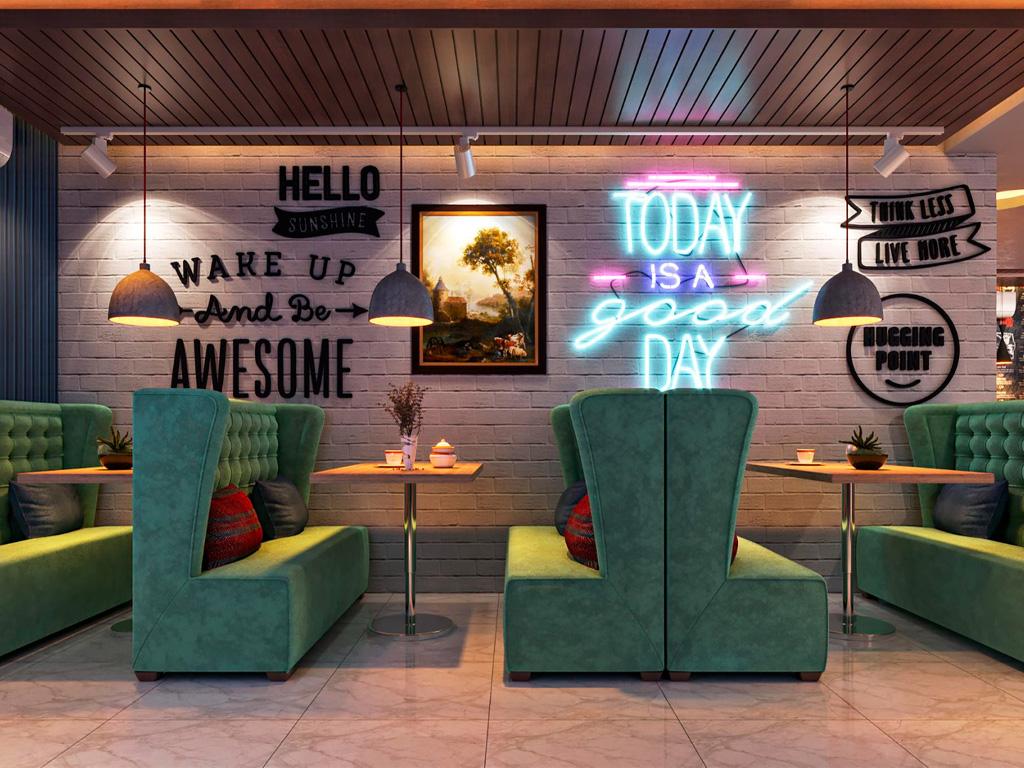
Atmosphere is the first thing a new café or bar owner trims from the budget, and the last thing they should. Equipment gets funded. The menu gets obsessed over. Furniture earns its own line item. The feel of the room, though? That’s the part people assume will sort itself out once the espresso machine is paid off. It won’t, and the hospitality numbers make that case better than any designer could.
Diners in well-designed spaces spend roughly 12 to 20 percent more per visit. They are far more likely to recommend the place, according to design analysis published by Northwest Interiors in early 2026. Same food, same prices, different room. For an owner counting every dollar before opening day, the gap between a forgettable space and a memorable one is one of the cheapest levers available, and one of the most overlooked.
This is not a decorating pep talk. It is an argument that the café and bar atmosphere is an operating asset, with measurable effects on dwell time, average check size, and the likelihood that a first-timer becomes a regular. Here is what owners tend to underestimate, and where small, deliberate choices earn their keep.
Table of Contents
Atmosphere Is a Revenue Line, Not a Decor Line
Think of the room the way you think of your menu: as something that changes customer behavior. In hospitality, the term for the time a guest stays is dwell time, and it directly correlates with spend. Softer lighting and slower music reliably make people linger, and lingering customers order another round or a second course without anyone pushing them to.
There is real science under this, not just intuition. Music tempo alone shifts table turnover, slower tracks lengthen visits, and raise spending, an effect that holds across very different restaurant types. So the question for a new owner is not “Does my café look nice?” It is “is my room quietly encouraging people to stay and spend, or quietly rushing them out.” Those are different rooms, and most owners never decide which one they are building.
The trap is treating the atmosphere as a finishing touch you bolt on at the end. By then, your lighting is wherever the contractor put the outlets, your acoustics are whatever the bare walls gave you, and your seating fights the vibe you wanted. An atmosphere designed after the fact is the one you are stuck with.
Lighting Does More Heavy Lifting Than Your Menu Font
If you fix one thing first, fix the light. Lighting shapes mood, appetite, and how long people stay, and it is forgiving of small budgets because the gear is cheap relative to its impact.
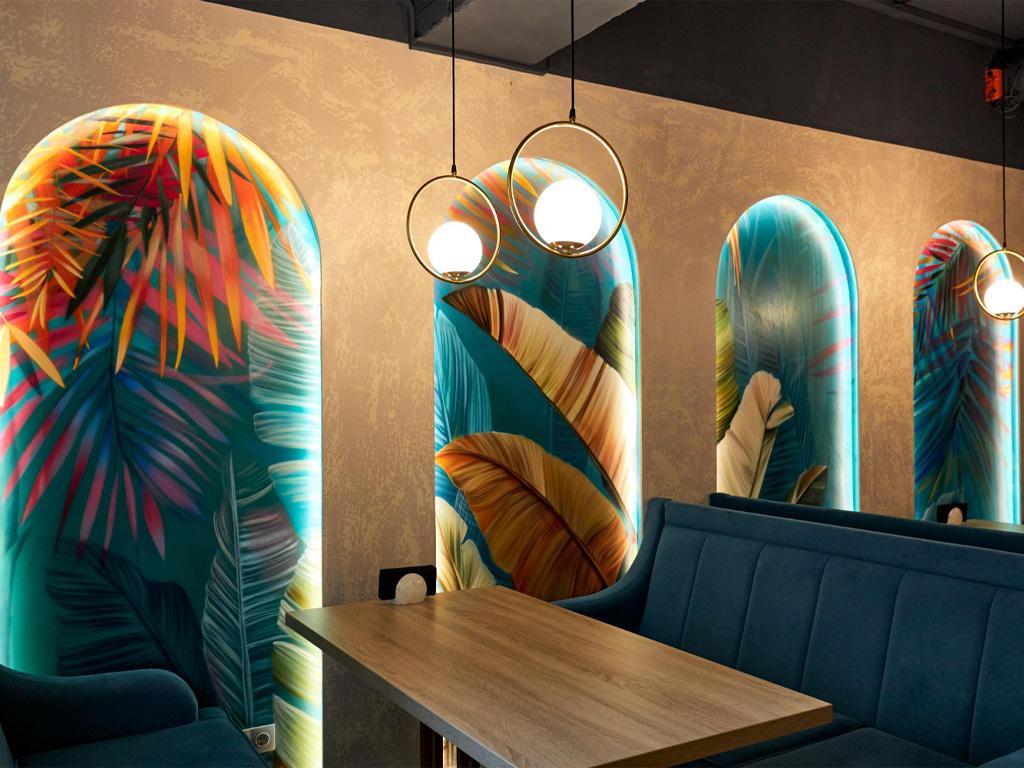
The basic rule: dim, warm light invites people to relax and stay, while bright, cool light moves them along. That is why a fast-casual lunch spot runs bright, and a wine bar runs low and golden; they want opposite things from the same hour.
Fine-dining rooms often sit in the 150–300 lux range to hold that intimate feel (lux is just a measure of how much light lands on a surface; you do not need a meter, you need to notice when a room feels like an interrogation). TCP Lighting frames the same trade-off: dim ambient light promotes lingering, brighter light suits quick turnover.
Color temperature is the other dial worth knowing. Warm light (think 2200–2700K, the candle-to-soft-white range) flatters skin, food, and wood, and quietly signals “slow down.” Cooler light reads as clinical and energetic. Get this one decision right, and the room does emotional work before a single drink is poured.
Atmosphere Is a Brand Signature, Not Background Noise
Customers remember experiences that hit several senses at once: sight, sound, smell, which is exactly why a strong room sticks in memory long after the latte is gone. That memory is your cheapest marketing. A regular who can picture your space is a regular who tells their friends where to meet.
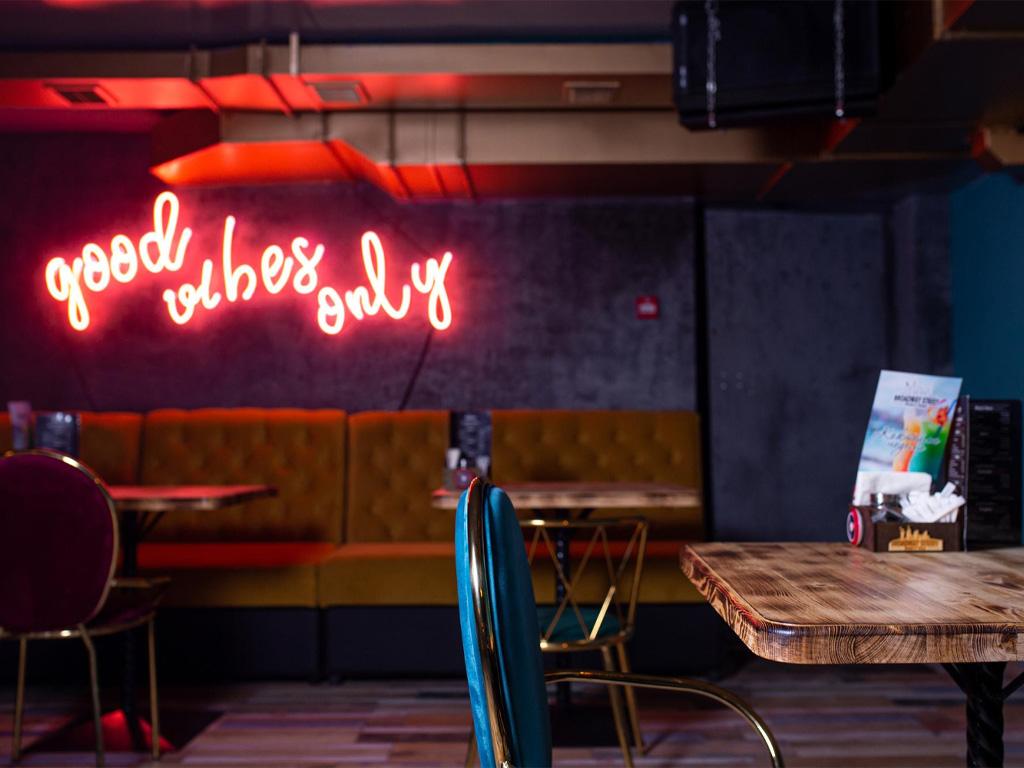
This is where a deliberate visual identity inside the room pays off. A signature wall, a recognizable color story, a piece of signage, people instinctively photograph these, and they turn your space into something shareable. And shared photos are free reach: every customer who posts your corner is doing local marketing you did not pay for.
Custom signage is one of the more cost-effective ways to give a small space that signature without a full build-out. A custom neon sign (a logo, a short phrase, even a simple shape) works as both decor and a photo anchor, runs on energy-efficient LED rather than fragile glass, and mounts flat to a wall so it eats no floor space. That last part matters when every square foot seats a paying customer.
It is not a magic fix, and a clumsy sign reads as a gimmick. But used with restraint, a single well-placed piece can become the thing people associate with your room. Treated as a one-time branding asset rather than an ongoing ad cost, it is the kind of fixed investment that keeps working long after the launch budget is spent.
Sound and Scent: The Senses Owners Forget Until It’s Too Late
Acoustics first. A beautiful café with hard floors, bare walls, and a high ceiling can sound like a train station at full capacity. Bare surfaces bounce sound; soft ones absorb it. Soft seating, fabric panels, a rug, or even a planted corner can pull a room back from “I have to shout” to “I want to stay.” Slower background music layered into a sound-absorbing room is one of the most reliable ways to stretch dwell time without saying a word.
Scent is the quiet one. The smell of fresh bread or good coffee raises the perceived quality of everything else you serve, often before a guest is consciously aware of it. You do not need a fragrance machine; you do not need to bury your best natural smells under cleaning chemicals or a fryer running on stale oil. The most memorable rooms tend to win out in the senses that people never explicitly notice.
Match the Room to Your Business Model, Not a Pinterest Board
Here is what most new owners get wrong: they copy a look they admire instead of designing for what their business actually needs. A high-volume grab-and-go café and a destination cocktail bar want opposite atmospheres, and borrowing the wrong one quietly costs you money.
If your model depends on turnover coffee at the morning rush, a lunch counter you want brighter light, firmer seating, and an energetic pace that keeps tables moving.
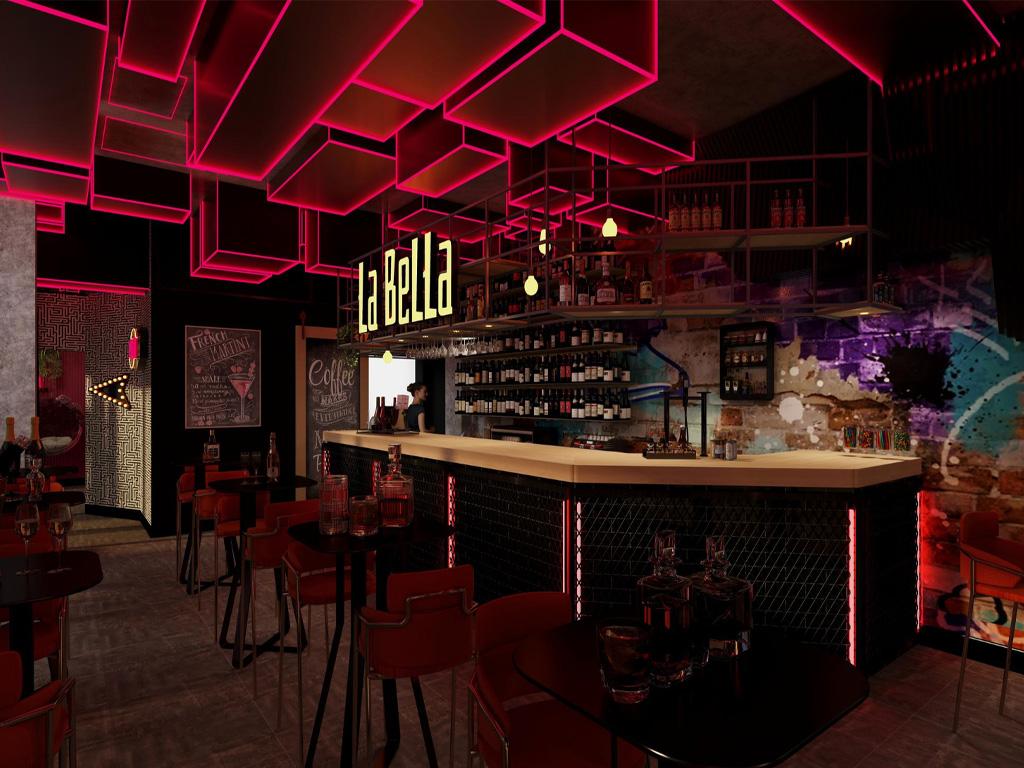
If your model depends on dwell time and higher spend per head at a wine bar, a dessert café, or a date-night spot, you want warmth, softer light, comfortable seating, and music that keeps people there.
The same “cozy” room that grows a cocktail bar’s check average will strangle a café that needs to flip its seats four times before noon.
So before you buy a single light fixture, answer one question: Does this business make money by moving people through quickly, or by keeping them happily in place? Your atmosphere should argue for whichever one pays your rent.
The Affordable Competitive Edge You’re Probably Skipping
New owners obsess over the menu and the machine because those feel like the business. The room feels like decoration. But the room is where customers decide how long to stay, how much to order, and whether to come back, and those decisions move your numbers more than a new latte flavor ever will.
You don’t need a designer’s budget to act on this. Get the lighting warm and dimmable, soften the acoustics, protect your natural scents, and give the space one memorable visual signature. Then match the whole thing to how your business actually earns. Do that, and the atmosphere stops being the line item you cut first and becomes the edge your better-funded competitor forgot to buy.


