Retirement advice often makes money sound like one big puzzle. You have savings, investments, pensions, Social Security, bills, travel plans, healthcare costs, and the occasional expense you never saw coming. How do you fit it all together without constantly worrying that you will run out?
Well, it’s actually quite simple. You need to assign different jobs for your income.
Some of it needs to pay for your life today. Some of it needs to keep growing for the years ahead.
And some should be set aside for the things that make retirement feel rewarding, whether that means travel, helping your family, or just having more freedom.
Table of Contents
Start With the Money You Can Count On
This can include your pension, Social Security, any rentals that you may have, part-time work, or other reliable payments. Then compare that income with what you expect to spend each month.
You should make two lists.
- Your essential costs: housing, food, utilities, insurance, healthcare, transportation, and debt payments.
- Flexible costs: travel, hobbies, dining out, gifts, and larger purchases.
This small exercise tells you something important. If your basic income covers your basic bills, your investments may not need to carry as much of the load.
That can make a big difference.
Instead of selling investments every time a bill arrives, you can allow more of your portfolio to stay invested for longer.
The numbers also show why this matters. In the 2026 EBRI/Greenwald Retirement Confidence Survey, only 58% of U.S. workers said that they felt confident that they will have enough money to keep up with inflation and the cost of living in retirement.
Give Your Investments a Clear Job
Once you know how much income you already have, you can look at your investments differently.
Your portfolio does not have to do everything at once. Money you may need soon should generally be treated differently from money you will not touch for many years.
Think in time periods.
Money for the next few years may need more stability. Money you probably will not use for a decade or longer has more time to ride through market ups and downs.
This is where people sometimes make retirement planning harder than it needs to be. They look at their entire investment portfolio as one giant pile of money.
Try splitting it into smaller sections instead.
You might think of it as:
Money for now → Money for later → Money for your goals
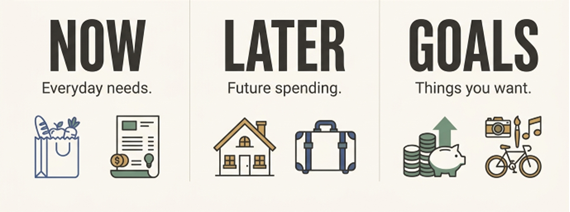
Your “money for now” helps you cover near-term spending. Your “money for later” supports expenses several years down the road. Your long-term investments give your savings a chance to grow over a longer period.
Do Not Forget the Goals That Come After Retirement
Retirement planning can become too focused on survival.
- Can I pay my bills?
- Can I afford healthcare?
- Will my savings last?
Those questions are very important. But it’s also important that you enjoy your retirement as much as possible.
Maybe you want to take a big trip every year. Maybe you want to help your children buy their first home.
Maybe you have always wanted to renovate your kitchen, buy a small place near the coast, or spend more time on a hobby.
Put those goals into the plan.
It is easier to save money when you know what it is for.
You can even create separate savings buckets for larger goals. That way, a vacation does not feel like it is competing with your basic retirement income.
Build a Withdrawal Plan Before You Need One
A common mistake people make is waiting until retirement to decide how to take money out of investments.
You want a plan before the first withdrawal.
Think about which sources you will use first, which accounts can remain invested longer, and how much you actually need each year.
The goal is not simply to withdraw the same amount every year. Your spending may change.
You might spend more during your first years of retirement because you are traveling and staying active. Later, your spending could drop. Then healthcare or long-term care costs could push it up again.
Retirement is not a perfectly straight line.
Your withdrawal plan should have some room to change with it.
Keep Your Investment Risk Connected to Your Timeline
You do not have to choose between being extremely cautious and taking huge risks.
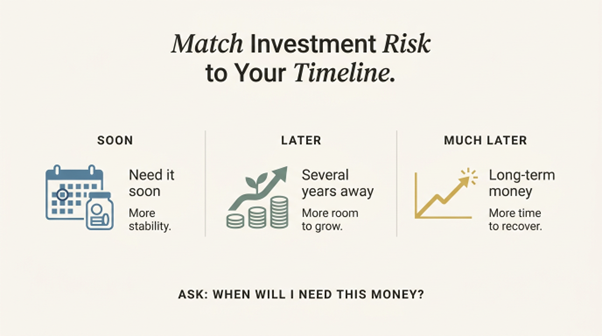
Instead, ask a better question. When will I need this money?
Money that you need soon has less time to recover from a market drop. Money intended for much later has more time.
That simple distinction can help you decide how much stability and growth you need across your accounts.
It also helps you avoid making emotional decisions when markets move faster. Seeing your portfolio fall is never pleasant, but a temporary market decline means something very different for money you need next month than money you may not touch for 15 years.
Review the Plan
Your retirement plan should change when your circumstances change.
A yearly review can be enough for many people, with extra checks after major events like selling a home, retiring earlier than expected, receiving an inheritance, taking on major debt, or changing your spending.
Look at:
- your monthly income and expenses
- your investment mix
- your withdrawal amount
- your short-term cash needs
- your larger goals for the next five to ten years
Then ask one simple question. Does my money still match the life I want to live?
That question helps bring the whole plan together.