Expertise is often associated with certainty. After decades in a profession, people are expected to recognize what they are looking at immediately and provide an answer without hesitation. Coin collecting teaches almost the opposite lesson. The more coins someone examines, the more they understand how much they can miss by making a quick judgment.
American Rare Coin Collectors Association has decades of experience examining U.S. coins and collections through events held across the country. Its professionals encounter everything from carefully cataloged collections to loose coins that families have stored for generations. That exposure has taught the organization that expertise is not simply knowing more answers. It is knowing when to slow down, look again, compare information, and research something before reaching a conclusion.
“Experience teaches you what deserves a second look,” the Association explains. “The goal isn’t to prove how quickly you can identify something. It’s to make sure you understand what is actually in front of you.”
Table of Contents
Similar Coins Can Carry Different Information
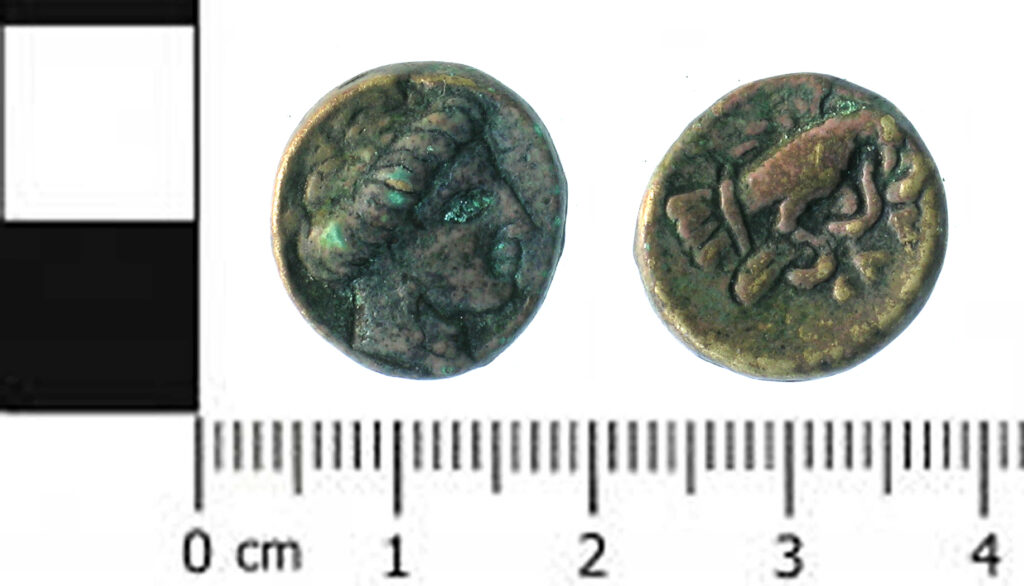
To someone unfamiliar with coin collecting, two coins of the same denomination and general design may appear nearly identical. An experienced collector sees a much longer list of questions.
What is the date? Where was it minted? What condition is it in? Are there differences in the design? Does anything about the lettering, surface, strike, or other features require closer examination?
Even a mint mark is more complicated than it seems at first. The U.S. Mint explains that mint marks identify the facility where a coin was produced, and the system has changed repeatedly throughout American history. For example, no mint marks appeared on circulating U.S. coins from 1965 through 1967, while the placement and use of other mint marks have changed over time.
“A date by itself doesn’t tell you everything, and neither does a mint mark,” the Association advises. “You want to look at the entire coin and understand how those details relate to one another.”
Condition Requires Judgment, Too
Condition adds another layer of complexity.
The American Numismatic Association notes that U.S. coins are commonly graded on a 70-point scale, ranging from Poor-1 through Mint State-70. Between those endpoints are numerous grades describing different levels of preservation and wear.
Knowing that scale exists is considerably easier than applying it well.
An experienced examiner looks at wear, surfaces, design details, and other characteristics before forming an opinion about condition. That requires practice, comparison, and familiarity with how different types of coins normally appear.
Experience can therefore make someone less willing to make declarations based on a photograph or a few seconds of observation.
“Sometimes people expect expertise to mean instant answers,” the Association says. “In our experience, expertise often means knowing when you don’t have enough information yet.”
Unusual Does Not Automatically Mean Rare
Another lesson professionals learn is that something looking unusual does not necessarily make it significant.
Coins spend years moving through pockets, cash drawers, vending machines, jars, and collections. They can become scratched, discolored, worn, damaged, or altered after leaving the Mint. An unfamiliar appearance can understandably attract attention, but you still need to determine the cause.
The reverse is also true. Something worth examining closely may not look dramatic at all.
This is where pattern recognition becomes useful. After examining large numbers of coins, professionals develop an understanding of what they normally expect to see. When something falls outside that pattern, the appropriate response is not necessarily excitement. It is curiosity.
“You don’t want to begin with the conclusion that you’ve found something unusual,” the Association explains. “You begin by asking why it looks different.”
That distinction protects collectors from allowing enthusiasm to replace careful examination.
Good Experts Are Comfortable With Research
Some people mistakenly think that needing to consult reference material signals a lack of expertise. In numismatics, reference materials are part of responsible collecting.
In fact, the American Numismatic Association emphasizes education and reference materials as collecting fundamentals, including the traditional advice to “buy the book before the coin.”
The field covers more than two centuries of U.S. coinage, multiple mints, changing compositions, numerous denominations, design changes, varieties, and different production methods. The U.S. Mint itself identifies separate parts of a coin, including the obverse, reverse, edge, rim, inscriptions, mint mark, relief, and field. Each provides information that may matter when examining a piece.
Experienced professionals know there is no reason to rely on memory when something can be verified.
“Looking something up isn’t a weakness,” the Association says. “If a coin gives you a reason to stop, research is part of doing the job correctly.”
Collections Should Be Examined Individually
The same cautious approach applies to entire collections.
One collection might arrive in professionally labeled holders with detailed records. Another might be stored in envelopes and coffee cans. Neither presentation tells an expert everything about what is inside.
American Rare Coin Collectors Association recommends avoiding assumptions based on organization, appearance, or the collector’s level of knowledge.
A casual collector can own an interesting coin. A sophisticated collector can have hundreds of ordinary pieces. Someone who insists they never collected coins may have spent 40 years putting aside silver whenever they encountered it.
That unpredictability is one reason individual attention matters.
“Collections are built by people, and people don’t all collect the same way,” the Association explains. “You have to examine the collection that came through the door, not the collection you expected to see.”
Certainty Should Come After Observation
For newer collectors, the lesson is not that identifying coins is impossibly complicated. It is that good habits matter more than quick answers.
Start with the information visible on the coin. Check the date and mint mark. Examine both sides and the edge. Compare the piece with reliable references. Avoid cleaning or altering it. If something does not make sense, resist the urge to immediately label it rare or insignificant.
Most importantly, be willing to change your first impression when new information appears.
Those habits become more important, not less important, as knowledge grows.
After decades of examining coins, experts certainly become faster at recognizing familiar pieces and patterns. But experience also exposes them to enough exceptions to understand the danger of overconfidence.
That may be one of the most useful lessons coin collecting offers. Real expertise is not demonstrated by having an immediate answer for everything. Sometimes it shows up in recognizing when a coin deserves another look.
As American Rare Coin Collectors Association puts it, “The longer you work with coins, the more respect you develop for the details. Experience doesn’t teach you to assume you know the answer. It teaches you to make sure.”


