Delegation used to mean a stack of tickets. A writer took the claim. A designer took the frame. An editor took the motion. Someone with a license took the music. Founders hated the wait. Agencies billed the wait. AI video did not delete that stack. It deleted the excuse for handing the next person a blank.
The new leak is the opposite of the old one. Teams now assign “the video” to whoever opened a generator first. Role-based handoffs were slow. Capability-based handoffs are only faster if someone still owns the still, and someone else still owns the clock. Those are two jobs. Do not rank an image model and a video model as two AI video apps, and do not give both tickets to the same empty chat.
The linear path had too many rooms. One tab is too few.
The old sequence was real: concept, script, design, production, edit. Each step waited on the last. A small team can now sit with a kit and move through more of that chain without booking a studio day. That is the part worth keeping. A founder can test a poster on Tuesday and a twenty-second take on Wednesday without a four-person approval chain for every crop.
What is not true is that the chain collapsed into a single capability called “prompt.” A designer who can hold a label through four crops is not automatically a director who can write seconds. A motion person who can hold a scene is not automatically the person who should invent the key art. Cross-functional is useful. Unowned is how Tuesday’s bottle is not Monday’s bottle.
Smaller teams can carry more of the workflow. They still need two named owners, even if both names are the founder on different afternoons.
Delegate the still as its own ticket
Individual ownership got bigger. That is the useful shift. The designer — or the founder wearing that hat — should leave the room with a frame that can take a new headline, a new crop, a new colour bar, without growing a second product. Autonomy here means they can try the crop without escalating a meeting. Alignment means the object still matches the listing you already paid to photograph.
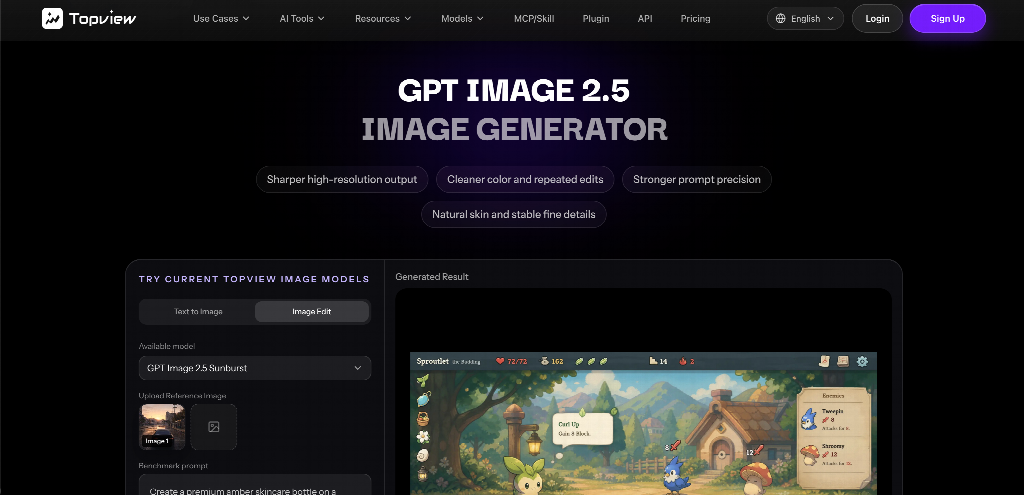
People searching GPT Image 2.5 free are usually looking for that still job, not a movie. GPT Image 2.5 is OpenAI’s image model, reached through a hosted workspace: sharper high-resolution output, cleaner colour through repeated edits, a tighter hold on counts, materials, camera, and layout, more stable skin, fabric, labels, and product geometry. Use it for posters, campaign frames, and the JPEG that will later move. Read the type. Generated headlines still invent characters.
Eligible trials run on credits you can see before you generate. That is not unlimited free. If edit four wrecks a label you already approved, the folder is messy. Do not hide it by sending the file to motion. Do not call a talking portrait a product shot. Leadership’s job at this stage is to protect the still, not to skip it because video feels faster.
Delegate the clock only after the frame is honest
Faster workflows need faster assignment. They do not need a five-second sticker called a campaign. Once the still is approved, the next ticket is length, ratio, and what must not appear. That is a different skill. Write the seconds. Name the crop. Attach the frame the last owner signed.
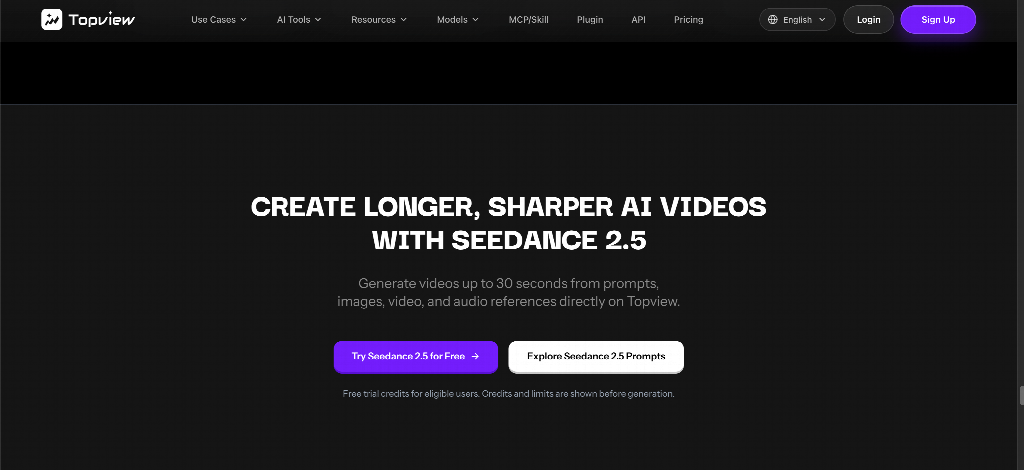
People searching Seedance 2.5 free are looking for that clock. Seedance 2.5 is a multimodal model for about four to thirty seconds from text plus image, video, and audio references, with timing you can write in seconds. Hosted export is typically 1080p-class, not a 4K poster. Eligible trials, again, are credits — not an all-you-can-render floor.
“0–4s the approved still; 4–12s a slow push on the claim from the brief; 12–20s hold for a caption I will type — no extra hands, no new room.” If second eighteen grows jewellery, the kit was wrong. Send it back to the still owner. Do not hire a second contractor to “make it cinematic.”
Tiny tweaks can stay with the person on the clock: a slower push, a longer hold, a 9:16 recrop of the same object. A new object cannot. Generated faces are not reviews. Music you do not own is still a legal ticket. Credits are studio time. Preview is not optional because the generate was cheap.
Leadership assigns kits, not a generator tab
Leaders used to parcel job titles. Now they parcel kits. Who has the packshot. Who can write seconds. Who will watch the file before it ships. Cross-functional roles work when those answers are named in the same note. They fail when “AI video” is one Slack line and three people assume someone else attached the JPEG.
Delegation is continuous. The still comes back when the offer changes. The clock comes back when the ratio changes. That is not a factory line, and it is not a single infinite prompt. Keep the two jobs separate so the team can move without fragmenting the object.
Approvals should shrink for routine crops. They should not shrink for a new room, a new pair of hands, or a slogan nobody read. Strategy still sits with the person who has to say the line in public. Software replaced the week of waiting for a first motion test. It did not replace watching the object.
AI video changed how creative work gets delegated. It let a small team carry more of the chain in one week. It did not let you fire the still. Assign the image generator when the poster still has to take type. Assign the video generator when the take has to last. Post the file both owners watched.