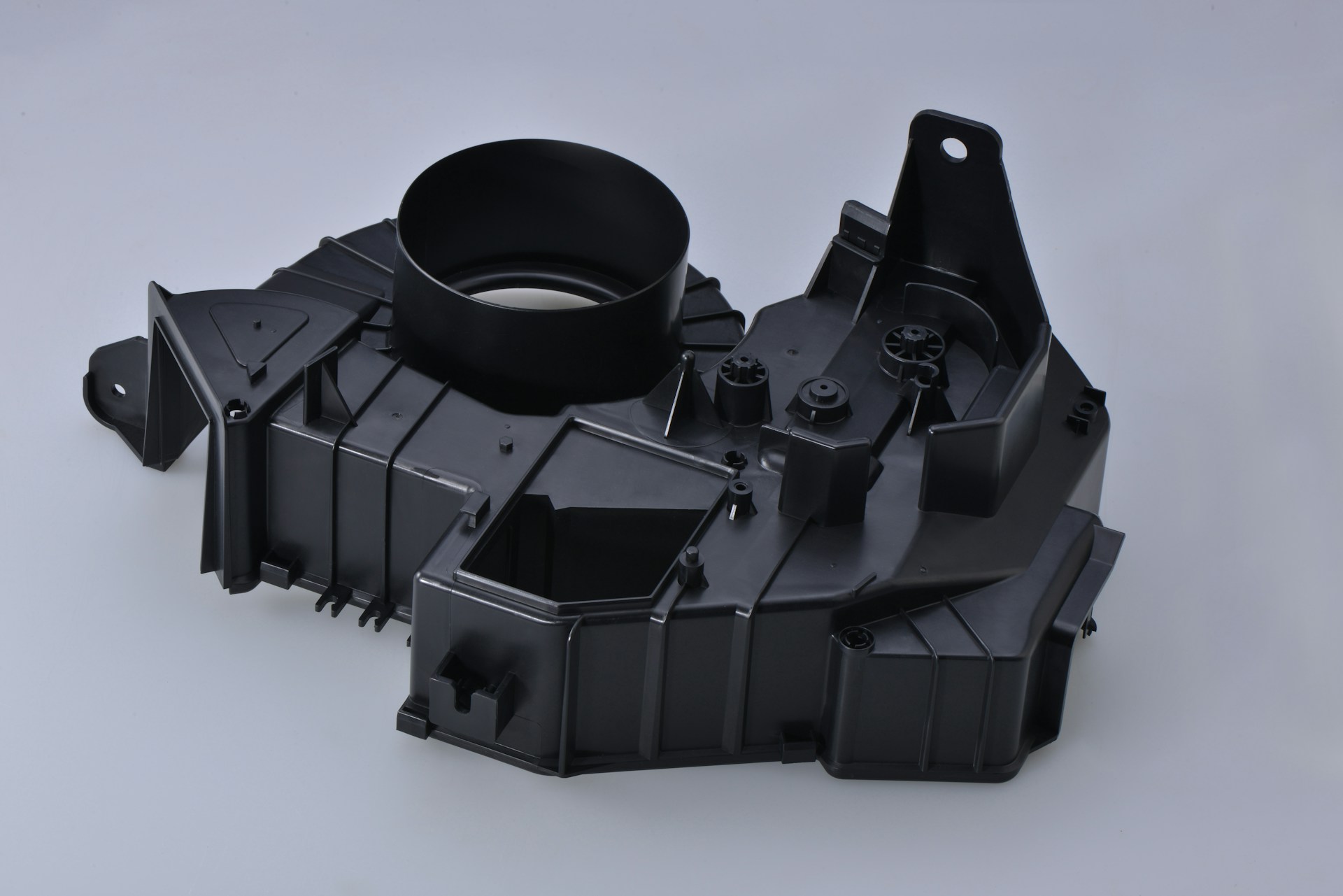
A founder does not need the lowest theoretical unit cost. The business needs a manufacturing route that can produce sellable units without consuming the cash and calendar required to learn from the market. That makes the first-production decision different from a mature product’s sourcing decision.
Vacuum forming and low-volume injection molding can both produce plastic components, but they place risk in different locations. Vacuum forming can suit shell-like parts with secondary trimming. Injection molding can integrate more three-dimensional features but requires a closed mold and a more mature product definition. The right answer depends on what the next batch must prove.
Table of Contents
Define the Business Question Behind the Part
Before comparing quotes, decide what the first production run is meant to accomplish. It may validate willingness to pay, support a pilot customer, test assembly time, expose field failures, or supply a limited launch while demand develops.
Write down the decision that will follow the batch. If the result will determine whether to change the product’s dimensions, committing to complex tooling may be premature. If the product has completed testing and the next question is repeatable assembly, a more production-like molded part may provide better evidence.
The batch size is only one input. Also consider:
- Confidence in demand
- Stability of external and internal geometry
- Number of product variants
- Required material and finish
- Integrated bosses, ribs, snaps, or seals
- Secondary trimming and assembly labor
- Cash tied up in tools and inventory
- Cost and time of the next likely design change
When Vacuum Forming Fits the Launch
Vacuum forming creates a part by heating thermoplastic sheet, drawing it over a tool, cooling it, and trimming the result. It is naturally suited to shell-like forms such as covers, trays, panels, liners, and certain housings. The process should be evaluated with the trimming and assembly route, not as an isolated forming step.
Founders reviewing vacuum-forming fundamentals should check draft, depth, corner radii, undercuts, material distribution, and how the part will be located for trimming. A visually acceptable shell can still create assembly problems if holes and edges do not align with mating components.
The business benefit can be a lower level of commitment while a product is still evolving. That flexibility is valuable only when the formed part actually represents the product that customers will use. If extensive manual cutting, reinforcement, or cosmetic finishing is required, the first-production economics may be less attractive than the tool quote suggests.
When Low-Volume Injection Molding Fits
Injection molding fills a closed cavity and can integrate complex geometry into a repeatable part. Bosses, ribs, snaps, textures, and other features can reduce later assembly, provided the design follows molding requirements and the tool supports them.
A low-volume injection molding approach can be useful when a founder needs production-representative materials and geometry without planning around a very large initial order. It still requires disciplined DFM, tooling, sampling, and approval. “Low volume” does not remove the cost of late design changes.
This route is strongest when integrated features matter to function, the design is reasonably stable, and the first units need to resemble the intended production configuration. It is weaker when the team expects major geometry changes immediately after customer feedback.
Compare Cash Exposure, Not Just Piece Price
Build a simple cash model for each route. Include engineering and DFM, tooling, fixtures, samples, inspection, trimming, secondary operations, assembly labor, finishing, packaging, expected scrap, and inventory. Separate one-time commitments from costs that scale with quantity.
Then add a change scenario. What happens if the outer profile changes, a mounting feature moves, or a new variant is introduced? Estimate the cost and schedule impact for the tool, fixtures, inspection, and existing inventory.
Do Not Use Forecasts as Tooling Facts
Avoid ordering a large batch solely to reach a lower quoted piece price. Unsold inventory consumes cash and makes redesign emotionally difficult. A smaller batch with a higher unit cost can be rational if it buys reliable learning and preserves the ability to change.
At the same time, do not remain indefinitely in a labor-intensive route after the product stabilizes. Define the evidence that will trigger a new process or more durable tool: repeat orders, stable geometry, predictable assembly time, verified material performance, or a volume threshold supported by actual demand.
Validate the First Units Against the Business Goal
An inspection report confirms dimensions; it does not confirm that the batch answers the business question. Create two linked acceptance plans.
The manufacturing plan should cover critical dimensions, material, appearance, assembly interfaces, and process-specific risks. For vacuum forming, these may include trim location and thickness distribution. For injection molding, they may include filling, warp, sink, ejection, and dimensional conditioning.
Conclusion
Vacuum forming can preserve flexibility for shell-like components, while low-volume injection molding can deliver more integrated, production-representative parts. Choose the process that answers the next business question without creating an unaffordable commitment. Before ordering, compare full cash exposure and define the evidence that will trigger the next manufacturing stage.
FAQ
Is vacuum forming always cheaper for a first run?
No. Tooling may be less complex, but trimming, fixtures, finishing, assembly, material, and geometry can change total cost.
Does low-volume injection molding use real production materials?
It can use many production-relevant thermoplastics, subject to the material, tool, process, and supplier. Confirm the exact grade and validation needs.
How stable should a design be before injection tooling?
Critical geometry, material, assembly, and functional requirements should be stable enough that the likely learning value exceeds the cost of a major tool change.
Can a vacuum-formed part later become injection molded?
Yes, but it normally requires redesign. The processes have different wall, draft, feature, tooling, and assembly considerations.
What should a founder ask for with first samples?
Request the sample configuration, material identity, tool revision, process-specific inspection, known deviations, and a clear list of open issues.