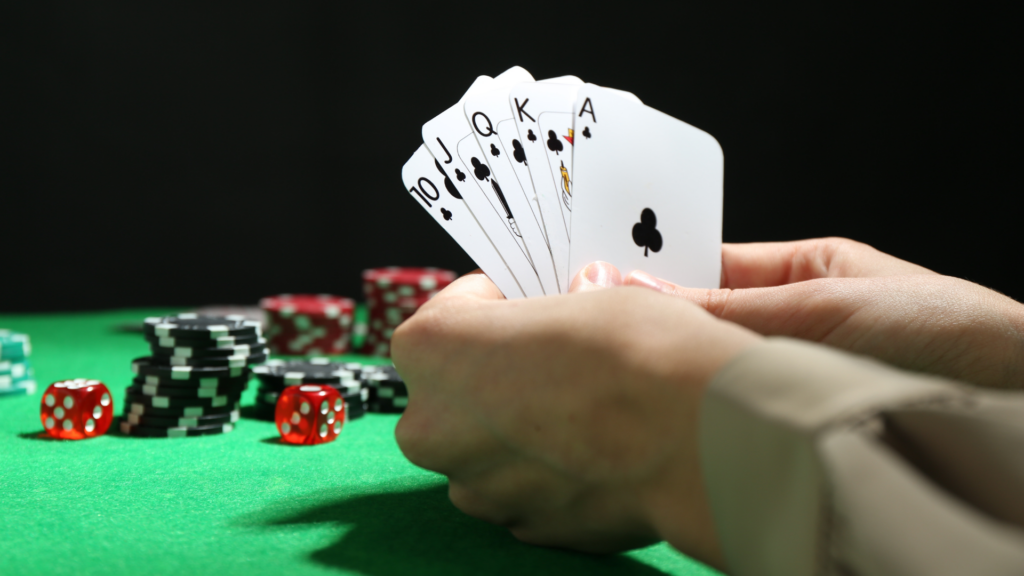
If you play poker regularly, chances are that you’ve heard of card shuffling. It’s a technique used to rearrange poker cards before a hand begins, making it difficult to predict which cards will be dealt. But while this is easy to understand with physical cards, things can be a bit more complex in online gaming. That’s why we’ve created this guide to help you understand how popular poker sites shuffle cards to ensure maximum randomness.
Table of Contents
Math Behind Online Poker Shuffling: Understanding the RNG
Like most casino games, online Poker is a game of chance. This means RNG (Random Number Generator) is in the thick of things. This system ensures that every card dealt is random and that players don’t get an advantage by predicting the next card. An RNG system can produce millions of results per second, making it almost impossible to predict poker outcomes.
So, how exactly do RNG systems work in poker sites? To understand this topic, we must go back to the earliest computers, which used a series of physical, hand-modulated switches. These computers could perform different tasks depending on whether the switch was on or off.
As computers progressed, these switches became electronic, allowing the computers to process billions of switches. They ran on the modern binary system of ones and zeros, meaning that every task on your computer is broken down into ones and zeros. This adds infinite randomness when selecting a number on your computer.
Based on this understanding, poker sites use pseudo-random number generators that select a number from a predetermined range of digits. These systems are called fake random number generators. They shuffle through millions of numbers and stop when it’s time to deal a brand-new card on the table.
Are RNG Poker Systems Truly Random?
As mentioned earlier, the RNG system generates billions of results per second. This makes it almost impossible for any average Joe on the virtual poker table to predict the next card. The algorithm is basically linked to your computer’s system time.
However, pseudo RNG systems have their own design flaws. Anyone who can access the algorithm or find the seed number can accurately predict the identical random digit. The seed number is the initial digit used by the system’s internal clock.
Due to this weakness, most experts consider pseudo-RNGs more suitable for non-critical tasks, such as video games and demo plays. Remember that the basic concept of true card shuffling randomness is that it should not be predictable by computers.
How Poker Sites Create Unpredictable Poker Shuffling
Real money poker sites use more than one computer algorithm to create true randomness. According to Lee Jones, a Head of Poker Communications in the industry, using any software to generate random numbers is fundamentally flawed. He says poker sites must use two individual sources of random numbers, including a Hardware RNG (HRNG).
Here’s how it works: the hardware system shoots beams of light through a special mirror. If the light bounces off the mirror, it’s a 1, and if it goes through, it’s a 0. After that, the system takes a different source of player input, whether it’s mouse clicks or time delays, and combines them with the hardware output. This creates a constant stream of ones and zeros.
Next, the system will reach into the stream to pick a random number that’s between 1 and 52. For instance, the system can pull out number 20, place it on the virtual table, and so on. This type of shuffle happens before any card is dealt, just like in a live game.
Overall, the HRNG generates the seed number, which the pseudo-RNG system uses to produce unpredictable outcomes. This system is more secure and transparent because no one can predict the seed number, even if they access the computer algorithm.
Note that there are two types of online shuffling. The first one is the single shuffle, which is similar to the physical hand shuffling. Some sites use continuous shuffles, which adds a layer of security to the game. This means the system will continuously shuffle the deck after dealing each card.
Playing 100% Random Online Poker
Despite constant reassurances from operators, online players still complain about rigged or unfair results. The primary reason behind the doubt could be “selective memory.” For instance, most players expect to win if they get Kings compared to, let’s say, 9s.
To allay these fears, poker sites invest heavily in third-party verification. These operators partner with companies like eCOGRA and Cigital to analyze their RNG systems and ensure 100% randomness. The auditing firms analyze billions of results to identify any discrepancies.
In addition, iGaming regulatory bodies often send their auditors to test and confirm that the RNG results are consistent. It’s therefore critical to play real-money poker on certified and regulated sites.


