Large construction firms carry more insurance exposure than almost any other industry, yet many still treat coverage as an afterthought until a claim hits. Insurance for large construction firms goes far beyond a general liability policy. After reviewing dozens of providers across carrier strength, coverage depth, and real project experience, the full scope becomes clear fast. This guide breaks down five providers worth serious consideration for firms managing multi-party liability, mega-project limits, and wrap-up programs.
Table of Contents
The shortlist methodology
Publicly available information formed the backbone of this evaluation, drawing from review platforms, carrier ratings, official company websites, industry directories, and case study documentation. Only providers with a demonstrated track record in construction-specific insurance made the final cut.
→ See the full research breakdown
- Affordable Contractors Insurance – Best for small to mid-sized contractors seeking fast, compliant coverage
- Hiscox – Best for small business and niche market property and casualty insurance
- Markel – Best for complex and hard-to-place construction insurance risks
- Zurich – Best for commercial property-casualty insurance for construction and large enterprises
- AmTrust Insurance – Best for small commercial construction businesses and workers’ compensation insurance
Why Insurance For Large Construction Firms Is More Than a Line Item
Construction is one of the few industries where a single project can expose a firm to liability from a dozen different directions at once. Managing complex multi-party liability across general contractors, subcontractors, and owners isn’t just an administrative headache. It’s a financial exposure that grows with every additional tier added to the project.
Securing adequate limits for mega-projects with values exceeding $500M requires carriers who actually understand total insurable project value at scale. Generic coverage structures often leave dangerous gaps at exactly the moments firms need protection most.
The right insurance program directly affects your Experience Modification Rate over time. A well-structured policy with clear claims protocols keeps frequency and severity ratios in check. And when renewals come around, those numbers determine what you pay next cycle.
Quick-Look Comparison: 5 Best Insurance Providers For Large Construction Firms
Note: All data in this table is sourced from review platforms and the official websites of the listed companies.
| Company Name | Years Operating | Headquartered In |
| Affordable Contractors Insurance | Est. 2011 | United States |
| Hiscox | Est. 1901 | Pembroke, Bermuda |
| Markel | Est. 1930 | Glen Allen, Virginia |
| Zurich | Est. 1872 | Schaumburg, Illinois |
| AmTrust Insurance | Est. 1998 | New York City |
- Affordable Contractors Insurance – Best for Contractors Who Need Fast, Compliant Coverage
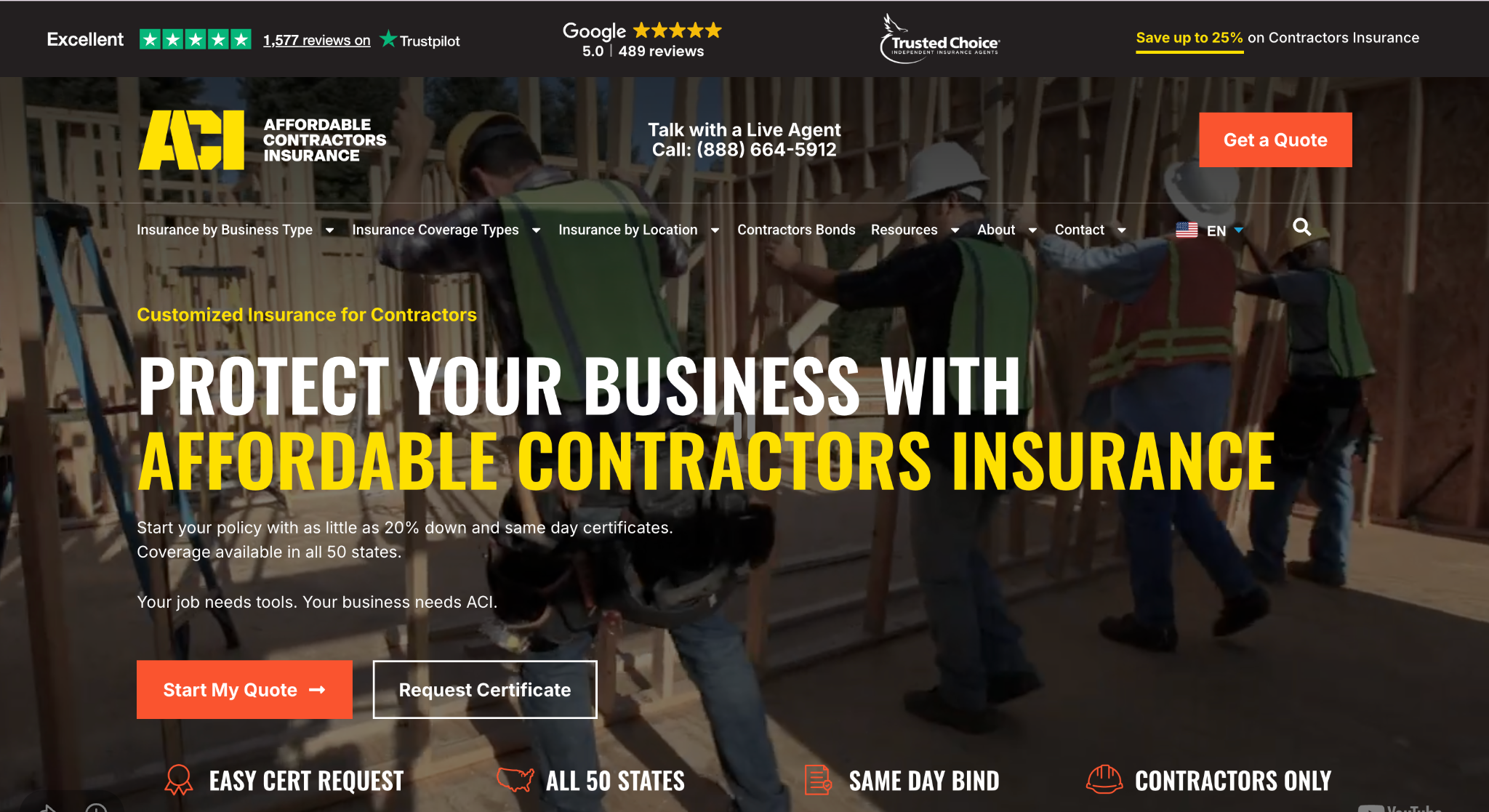
What Is Affordable Contractors Insurance’s Main Business?
Affordable Contractors Insurance is a U.S.-based brokerage built around the needs of contractors and construction businesses. They cover general liability, workers’ compensation, commercial auto, builder’s risk, tools and equipment, umbrella liability, and professional liability. Their focus sits squarely on small to mid-sized trade professionals, including roofers, electricians, plumbers, HVAC contractors, and remodelers who need policies that actually reflect how their businesses operate on the ground.
Where Does Affordable Contractors Insurance Win for Insurance For Large Construction Firms?
Contractors frequently get held up on job sites because their certificates of insurance aren’t ready. Affordable Contractors Insurance addresses that directly with same-day policy binding and fast COI issuance. That kind of speed is rare in this space, and it matters enormously when project timelines and contractual insurance compliance deadlines don’t wait.
Real-World User Take:
From what the reviews show, contractors consistently point to how straightforward the process feels compared to dealing with general insurers who don’t understand trade-specific risks. The feedback pattern around accessibility and turnaround time is consistent enough to stand out. Users also appreciate the payment flexibility, which removes one more friction point for smaller firms managing cash flow.
- Hiscox – Best for Small Business and Niche Market Property and Casualty Insurance
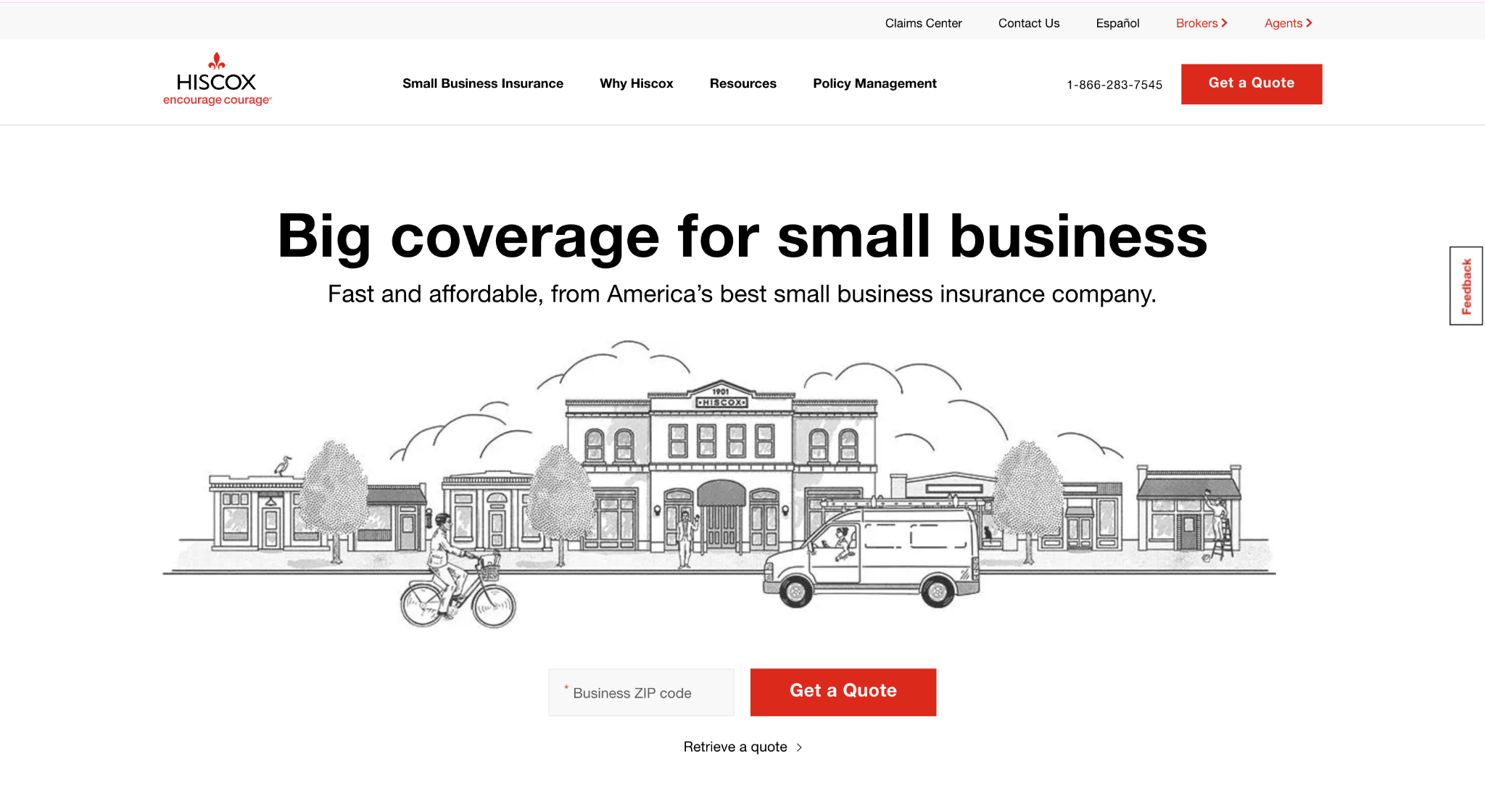
What Is Hiscox’s Main Business?
Hiscox is an Anglo-Bermudan insurer with roots going back to 1901, serving over 600,000 small business customers across niche market segments. They cover general liability, professional liability, cybersecurity, and specialized risks that most standard carriers won’t touch. Construction-adjacent industries like architecture, engineering, and artisan subcontracting sit within their wheelhouse, and their coverage pricing starts at competitive rates (think $45 per month on the median end for qualifying business types).
Where Does Hiscox Win for Insurance For Large Construction Firms?
Firms working across design-build structures often struggle to find a carrier that understands both professional liability and general liability without treating them as two separate, unrelated products. Hiscox has built coverage models for that overlap. Their FTSE 100 listing and A (Excellent) AM Best rating mean the financial stability conversation is already settled before a proposal even hits the table.
Real-World User Take:
From what the data shows, Hiscox earns consistent recognition for customer service quality and claims responsiveness across small business segments. Being named “Insurer of the Year” six times in eight years at the Insurance Times Awards tells you something real about sustained performance, not just a one-year spike. Users in construction-adjacent trades tend to call out the policy clarity as a particular strength.
- Markel – Best for Complex and Hard-to-Place Construction Insurance Risks
What Is Markel’s Main Business?
Markel Group Inc. is a diversified holding company operating through Markel Specialty, Markel International, and Markel Global Reinsurance. With 22,900 employees across 76 offices in 18 countries, they handle complex, hard-to-place risks across construction, healthcare, energy, and transportation. What separates them from standard market carriers is their genuine appetite for the deals others decline. That matters a lot for construction firms dealing with high-hazard classes like demolition, underground work, or residential wrap-ups.
Where Does Markel Win for Insurance For Large Construction Firms?
Construction projects that fall outside standard risk appetite (think brownfield developments, environmental exposure, or multi-tier subcontractor arrangements) need a carrier that won’t flinch at the underwriting table. That’s exactly where Markel’s specialty focus earns its place. Honest market feedback confirms their broker relationships are some of the strongest in commercial lines, which means faster access and better terms on difficult placements.
Real-World User Take:
Achieving Feefo Platinum Trusted Service status for six consecutive years isn’t a marketing badge. It’s a data point about consistency. From what the reviews show, brokers and clients alike note that Markel’s underwriters actually engage with complex submissions rather than just declining them. That approach builds trust quickly with risk managers who are tired of receiving flat rejections on difficult risks.
- Zurich – Best for Commercial Property-Casualty Insurance for Construction and Large Enterprises
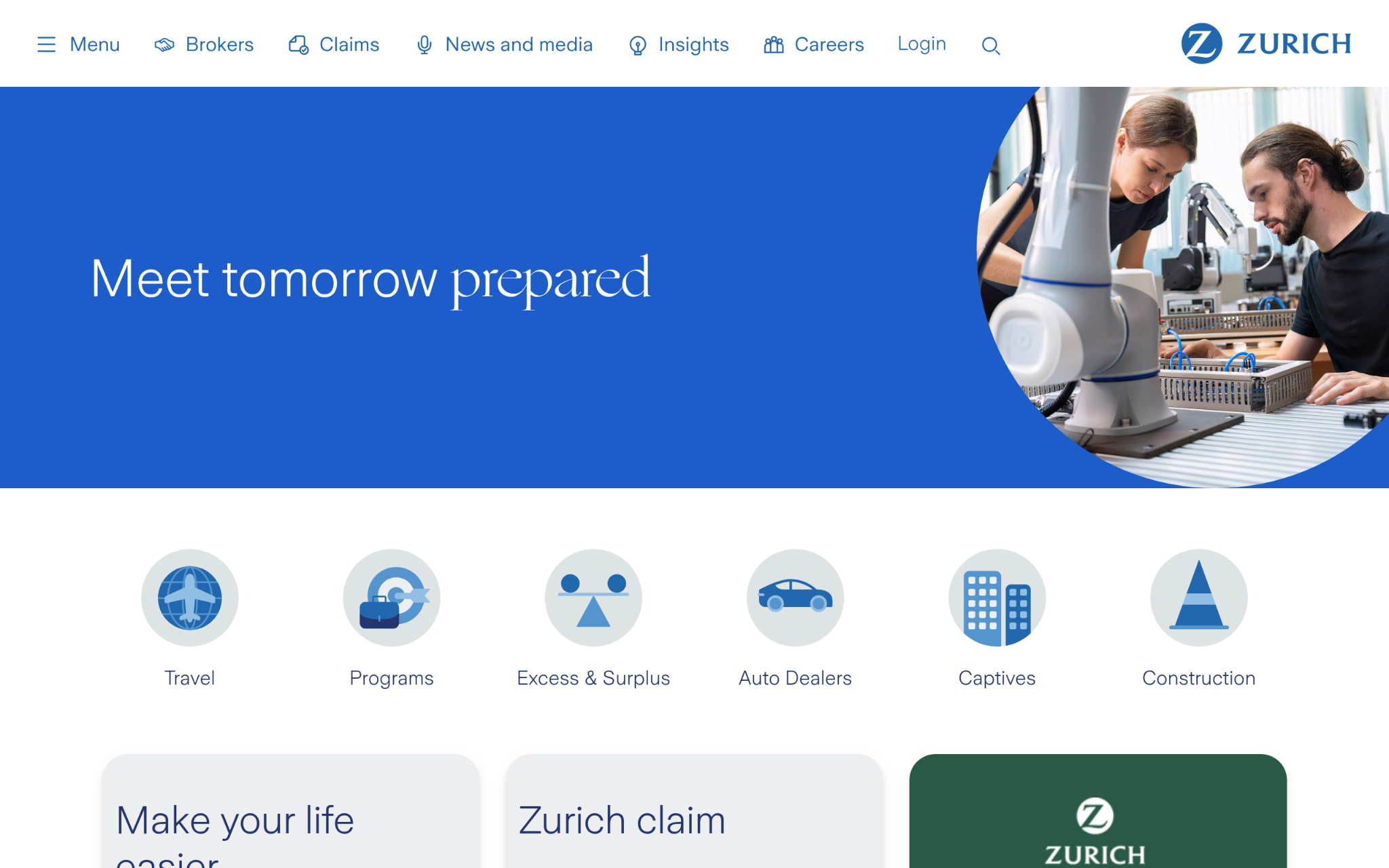
What Is Zurich’s Main Business?
Zurich North America has been operating since 1872 and expanded into North American markets in 1912, building over 150 years of claims service experience along the way. They serve 90% of the Fortune 500 and have underwritten coverage for landmark infrastructure projects including the Hoover Dam, Madison Square Garden, and the Confederation Bridge. Their specialty sits in custom commercial property-casualty programs for large enterprises, which puts them squarely in the conversation for any firm managing major project exposure and contract volume.
Where Does Zurich Win for Insurance For Large Construction Firms?
Large general contractors managing total insurable project values in the hundreds of millions need a carrier whose claims infrastructure can actually handle the weight. Zurich’s Transactional Net Promoter Score of 82 (against an industry average of 36) signals that their claims service performs well under real pressure. That kind of demonstrated performance on claims handling is what separates a name-brand carrier from a genuinely reliable one.
Real-World User Take:
Zurich’s Fortune 500 client retention speaks louder than any individual review. Clients managing long-term construction programs tend to stay because switching carriers mid-program creates OCIP/CCIP enrollment headaches nobody wants. Users consistently point to the depth of their claims team as the reason for staying at renewal.
- AmTrust Insurance – Best for Small Commercial Construction Businesses and Workers’ Compensation
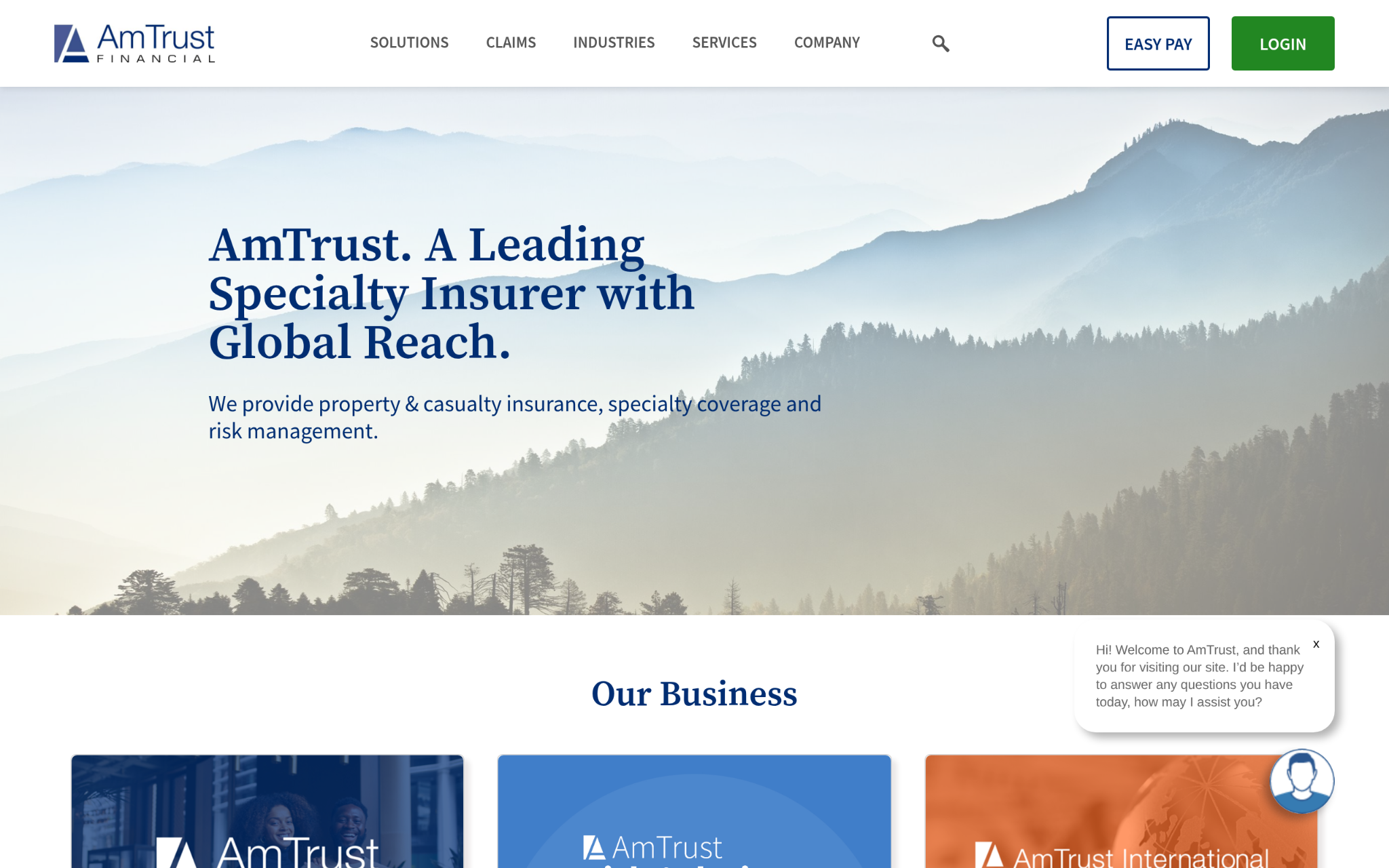
What Is AmTrust Insurance’s Main Business?
AmTrust Financial Services is a multinational property and casualty insurer and the third-largest workers’ compensation provider in the United States. With over 500,000 small commercial policies in force, they focus on workers’ compensation, general liability, business owners policies, cyber liability, and employment practices liability. Their AmTrust Genius platform applies AI-assisted underwriting to improve speed and accuracy on small commercial placements, which is a real differentiator in a segment where underwriting turnaround often drags.
Where Does AmTrust Win for Insurance For Large Construction Firms?
Workers’ compensation costs are one of the biggest cost-of-risk variables for construction firms, particularly those still working to improve their Experience Modification Rate. AmTrust’s scale and focus in that line give them pricing power and claims management depth that generalist carriers often can’t match. Their 5-Star Claims Excellence Award from Insurance Business America in 2025 confirms the service quality isn’t just marketing copy.
Real-World User Take:
Honestly, the feedback around AmTrust tends to center on their workers’ comp processing and the digital experience through their platform. Users in small to mid-sized construction businesses note that the AI-assisted underwriting removes a lot of the back-and-forth that slows down policy binding. The AM Best A- (Excellent) rating gives finance teams the comfort they need before recommending any carrier to a board.
How the Top Contenders Were Selected
Establishing Your Data Collection Process
The initial list was built by pulling candidate companies from multiple channels at once: industry-specific insurance directories, contractor association resources, professional review platforms, and verified case study databases. Priority was given to providers whose published materials showed clear experience in construction-related coverage lines rather than general commercial insurance with a construction checkbox. The goal was a broad starting pool before any filtering began, so no strong candidate would get missed in the first pass.
Elimination Round: Initial Screening
Once the longlist was assembled, options with incomplete or unverifiable information were removed. Review patterns were analyzed to distinguish genuine service feedback from surface-level ratings inflated by low review volume. Providers without documented experience in construction-specific coverage, or those whose online presence couldn’t be cross-referenced across at least two independent sources, didn’t advance. This step narrowed the field considerably.
How to Verify Each Pick
Each remaining candidate was checked for consistency between what their official website claimed and what appeared in third-party review platforms and industry commentary. Where a company described specialized construction skills, that claim was tested against actual coverage programs, listed industries served, and documented project or client references. Discrepancies between marketing language and verifiable service detail were flagged and weighted negatively.
Awards, Mentions, and Industry Voice
Industry recognition was treated as a supporting signal rather than a main qualifier. Awards from credible insurance industry bodies, such as Insurance Times Awards and AM Best ratings, were noted and factored in alongside carrier financial strength ratings and market standing signals. Mentions in industry publications and broker community feedback added texture to what the formal recognition confirmed.
Evidence That Matters for Insurance For Large Construction Firms
The final selection criteria leaned heavily on construction-specific evidence: dedicated construction insurance service pages, verified reviews from contractors and project owners, documented coverage of construction-relevant lines (workers’ comp, builder’s risk, general liability, professional liability for design-build), and any case studies reflecting real project outcomes. Providers who could demonstrate relevance to the actual challenges large construction firms face, managing EMR, coordinating multi-party liability, and meeting wrap-up program requirements earned their place on the final list.
Decision Factors When Picking Insurance For Large Construction Firms
Choosing the right coverage partner for a large construction firm comes down to more than premium cost. The factors below reflect what actually separates a program that holds up from one that creates problems at the worst possible time.
- Industry/Domain Experience: Prioritize carriers and brokers who work specifically in construction. They’ll understand OSHA standards, state contractor licensing requirements, and AIA contract insurance provisions without needing them explained.
- Features and Service Offerings: Look for providers who can bundle general liability, workers’ compensation, builder’s risk, and professional liability under a single program structure. Gaps between policies create claims disputes.
- Pricing Structure: Cost matters, but so does payment flexibility and the ability to adjust limits as project values shift mid-year. Rigid structures don’t fit construction’s variable contract volume.
- Results Measurement: Ask how a carrier tracks claims frequency and severity ratios over time. Providers who share that data help firms manage their Experience Modification Rate proactively.
- Industry Knowledge and Compliance: Your provider should be current on wrap-up program administration, subcontractor insurance compliance rates, and any state-level changes affecting contractor licensing and coverage requirements.
The Takeaway
Finding the right fit among insurance for large construction firms means looking beyond name recognition to actual construction experience and claims depth. The five providers covered here each bring something specific to the table, whether that’s speed of placement, specialty risk appetite, or workers’ comp expertise. As project values rise and multi-party liability grows more complex, firms that invest in purpose-fit coverage programs will carry stronger EMR records and better renewal outcomes in the future.