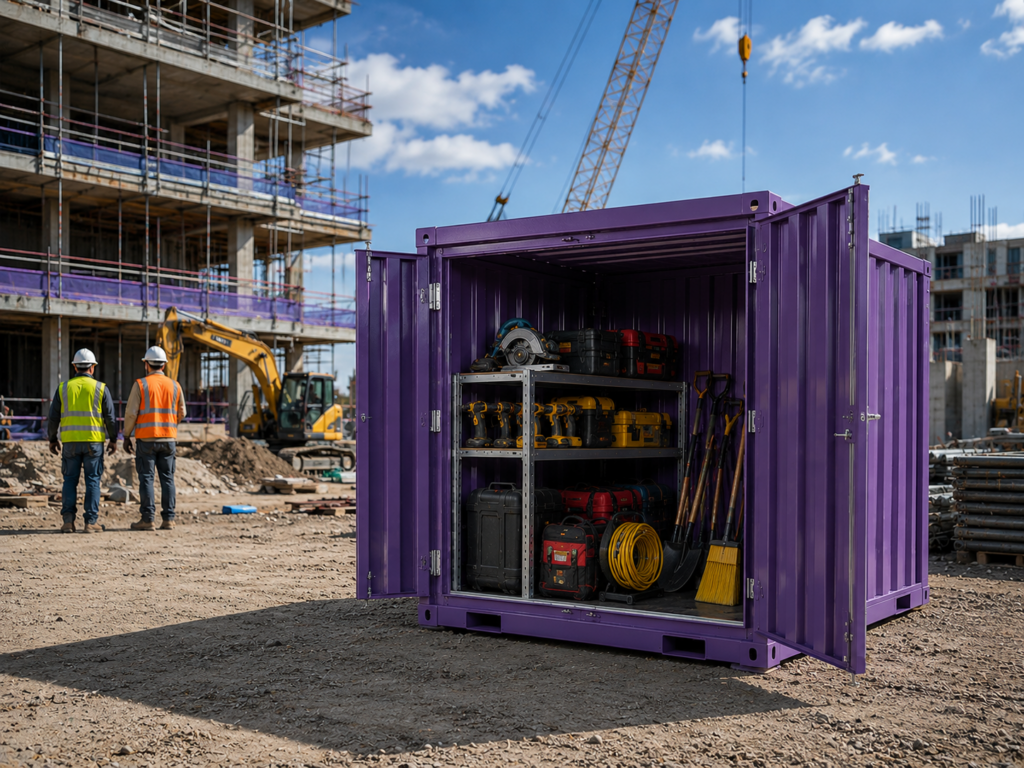
See how enclosed storage can help protect materials from exposure, reduce waste, and support more predictable construction schedules.
Weather can create expensive problems on a construction site long before it causes a full project delay. Rain, snow, heat, humidity, wind, and mud can damage materials, make supplies harder to use, and force crews to spend time sorting through items that should have been ready for installation.
For construction project managers, material protection is a cost-control issue. When storage is planned early, teams can reduce avoidable waste, keep materials easier to access, and support a cleaner workflow across the site.
Table of Contents
Weather Exposure Turns Good Materials Into Project Waste
Many construction materials are vulnerable before they are installed. Boxed fixtures, packaged hardware, fasteners, adhesives, lumber, insulation, electrical components, safety supplies, and hand tools can all be affected by moisture, dirt, or extreme temperatures.
The damage is not always obvious at first. A box may look intact while the contents inside have been exposed to moisture. Labels may become unreadable. Hardware may be misplaced after crews move materials several times to keep them dry. Adhesives, sealants, and coatings may also become less reliable when stored outside their recommended conditions.
This is where storage planning becomes practical. Instead of reacting to weather after materials are already exposed, project managers can create a protected staging area before deliveries begin. Project managers looking to reduce preventable material damage can review Storage Containers as one resource when planning protected storage for active jobsites.
Enclosed Storage Helps Crews Prepare Before Conditions Change
Weather can shift quickly, especially on open jobsites. A dry morning can turn into heavy rain by the afternoon, and high winds can move loose materials before crews have time to respond. Severe weather planning guidance for construction sites commonly recommends evaluating site-specific risks and securing materials and equipment before weather events arrive.
Enclosed storage gives crews a defined place to move vulnerable items before conditions change. Instead of depending only on tarps, pallets, or open staging areas, teams can place sensitive materials in a container where they are protected from direct exposure.
This also helps with readiness. When crews know where weather-sensitive materials belong, they can act faster during daily closeout or before a storm. That can reduce rushed decisions, unnecessary handling, and the chance that important items are left exposed overnight.
Protected Storage Can Improve Inventory Control
Weather damage and inventory confusion often happen together. When materials are moved repeatedly to avoid rain, mud, or equipment traffic, it becomes harder to track what is actually on-site. Crews may assume items are missing, supervisors may reorder materials too early, and deliveries may pile up in areas that were never intended for storage.
A storage container can create a more reliable inventory point. Materials can be grouped by trade, phase, delivery date, or installation priority. High-use items can be positioned near the entrance, while weather-sensitive supplies can be kept in labeled zones.
The goal is not simply to put materials behind a door. The goal is to make the space useful for daily project coordination. When storage is organized, supervisors can check stock more easily, crews can find what they need faster, and purchasing decisions can be based on clearer information.
Material Storage Also Affects Site Safety
Weather-damaged or poorly stored materials can become safety concerns. Wet packaging can break down, loose items can shift, and stacked materials can become unstable if they are not secured properly. OSHA’s construction storage standard states that materials stored in tiers must be stacked, racked, blocked, interlocked, or otherwise secured to prevent sliding, falling, or collapse.
That requirement matters on active jobsites where crews, delivery drivers, and equipment operators are constantly moving through shared spaces. Materials left in walkways or staged without structure can create trip hazards, block access, or interfere with equipment routes.
A storage container helps project managers assign a specific place for materials that do not need to remain in the active work zone. This supports better housekeeping and gives crews a clearer routine for where items should be returned at the end of the day.
Placement Matters as Much as Protection
A storage container is most effective when it is placed with daily workflow in mind. If it is too far from the active work area, crews may avoid using it. If it is placed in the wrong location, it can block deliveries, equipment access, parking, or emergency routes.
Before delivery, project managers should think through how materials will move across the site. Where will trucks unload? Which crews need daily access? What areas need to stay clear for equipment? Are there drainage concerns after heavy rain? Is the container location practical during winter conditions?
Answering these questions early helps storage support the project instead of becoming another obstacle. It also helps teams respond better when weather changes, because the storage area is already part of the site logistics plan.
Storage Supports More Predictable Scheduling
Weather delays are not always avoidable, but material-related delays often can be reduced. When materials are protected, organized, and easier to locate, crews are less likely to lose time waiting for replacements or sorting through damaged supplies.
This can be especially important during phased construction, when one trade’s delay affects the next. If materials are ready when crews arrive, the project has a better chance of staying on schedule. If materials are damaged or missing, supervisors may need to revise the day’s plan, shift labor, or wait for new deliveries.
Protected storage gives project managers one more way to reduce uncertainty. It does not control the weather, but it does help control how prepared the site is when weather becomes a factor.
Additional Resources
For teams comparing options for a construction site storage container, this resource may be useful during early project planning.
Project managers may also want to review OSHA’s material storage requirements and severe weather preparation guidance when building a broader jobsite protection plan.
Conclusion
Weather-damaged materials can quietly increase construction costs through waste, reorders, lost time, and site disruption. A practical storage plan helps reduce those risks by giving crews a protected, organized place to keep tools and materials before they are needed.
For construction project managers, storage containers can support better material protection, cleaner inventory control, safer work areas, and more predictable daily workflow.


