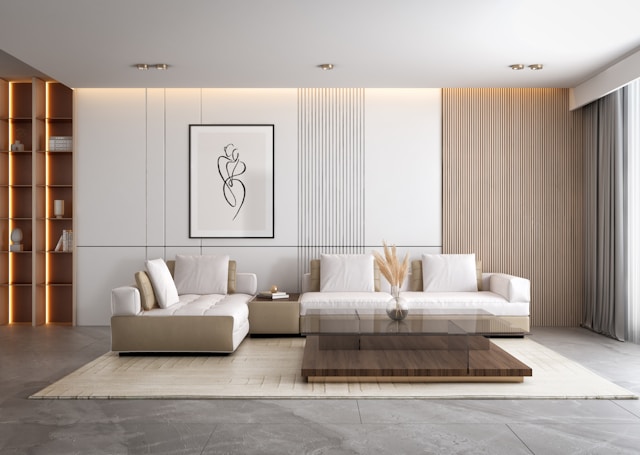
Modern interior design is increasingly shaped by the seamless integration of systems like HVAC, lighting, audio, and smart home infrastructure into the architectural fabric itself, and this shift is a core part of interior design technology. Instead of visible devices and exposed hardware, technology is concealed within walls, ceilings, and furnishings to create cleaner, more minimal living spaces where comfort and functionality operate quietly in the background. For homeowners planning updates, an ai interior design app can be a practical way to visualize how these modern features and layouts might come together before making permanent changes. This evolution is also central to modern smart home interior design, where hidden technology defines spatial experience.
Table of Contents
Hidden Technology In Modern Interior Design Technology
Technology for interior design is now defined by “ambient intelligence without visual interruption,” where technology is treated as infrastructure rather than decoration. Instead of designing rooms around devices, designers embed systems into walls, ceilings, floors, and millwork, making technology feel like part of the building’s behavior—temperature, light, and sound—rather than separate objects competing for attention. This approach is a key direction in interior design technology and modern smart home interior design.
Modern interior design hides technology to eliminate visual hierarchy between devices and architecture. Hidden technology is treated as an invisible utility layer embedded into spatial systems rather than standalone objects, prioritizing spatial purity where walls, ceilings, and materials define the experience while systems operate silently behind them. This approach is driven by minimalism, emotional comfort, and longevity, reducing visual clutter, extending design lifespan, and making environments feel less mechanically driven and more atmospheric and timeless. Smart home integration plays a central role in enabling this shift.
HVAC Concealment In Technology For Interior Design Systems
Modern HVAC systems are concealed through architectural integration rather than exposed hardware, with climate zoning controlled digitally rather than mechanically visible, forming a key layer of technology for interior design and interior design technology systems.
HVAC systems are integrated through architectural concealment and distributed airflow design. Air is delivered through a concealed air duct network and released via linear slot diffusers hidden in ceiling joints, hidden wall slots, baseboards, or joinery-integrated vents, while ducted mini-split systems are concealed above ceilings, within soffits, or cabinetry voids. Mechanical equipment is relocated to remote ceilings and service zones, and airflow paths are coordinated with ceiling geometry and lighting grids, often requiring early collaboration between the interior designer, architect, and HVAC company so climate control can function as part of the building envelope. Airflow becomes “felt, not seen,” so the room appears still while its environment is actively managed through hidden technology within modern smart home interior design systems.
Electrical Hidden Technology In Modern Home Design
Electrical systems are a key part of interior design technology, with the visual goal of uninterrupted surfaces rather than visible outlets and switches dominating walls.
Electrical systems are concealed through recessed infrastructure and decentralized distribution, with electrical wiring routed through wall cavities, slab conduits, or raised floors. Outlets are flush-mounted or paint-matched, while switches are recessed, magnetically attached, or integrated into panels. Increasingly, power is also embedded directly into furniture, such as charging built into desks or kitchen islands. Centralized power distribution hubs manage loads remotely, reducing visible endpoints and eliminating surface-level wiring exposure and visible rewiring. This represents hidden technology applied through technology for interior design principles.
Lighting In Modern Smart Home Interior Design For Seamless Spaces
Lighting is one of the most transformative elements of interior design technology, where instead of fixtures acting as focal points, lighting becomes architectural layering within modern smart home interior design.
Lighting is embedded into architectural elements so the source is not visually identifiable. Cove lighting hidden in ceiling recesses, recessed downlights with trimless finishes, LED strips embedded into joinery, stairs, and wall seams, and wall-washing techniques that erase the source of light entirely create indirect illumination that reflects off surfaces rather than emitting from visible fixtures. Light is layered across ceilings, walls, and built-ins to produce uniform ambient brightness, with smart control systems adjusting intensity, color temperature, and scenes automatically, so the light feels natural and spatial rather than “installed.” This is a defining application of smart home integration in hidden technology systems.
Invisible Smart Home Integration In Connected Systems
Connectivity systems are centralized in concealed network hubs or hidden tech cabinets and distributed through in-wall Wi-Fi access points embedded into ceilings, walls, or service panels, forming part of interior design technology and smart home integration frameworks.
Structured cabling runs through dedicated conduits alongside electrical systems within the building fabric, while wireless mesh systems reduce or eliminate the need for visible routers in living spaces. All hardware is placed in ventilated but non-visible service zones, ensuring always-on connectivity without “tech objects” in the room. This hidden technology approach supports modern smart home interior design by maintaining both performance and visual purity.
Audio Design In Modern Smart Home Interior Design Environments
Audio-visual systems are designed to disappear entirely or blend into architectural surfaces, making entertainment spatial rather than object-based within modern smart home interior design and interior design technology systems.
Audio systems are integrated into walls and ceilings using in-wall and in-ceiling speakers with paintable grills, while subwoofers are hidden within cabinetry, floors, or wall cavities. Televisions are recessed into walls, concealed behind sliding panels, disguised as artwork panels, or replaced by projection systems in media-focused spaces. Some systems also use vibration-based wall audio, turning entire surfaces into sound emitters, with acoustic tuning allowing multiple hidden technology components to function as a distributed sound field rather than visible point sources.
Kitchen And Bathroom Solutions Using Interior Design Technology
These spaces are the most technologically dense, yet the cleanest visually when done well, with an emphasis on hygiene, minimalism, and intuitive automation driven by technology for interior design and smart home integration principles.
In kitchens, appliances are concealed behind cabinetry panels, with appliance garages hiding mixers, coffee machines, and toasters, while worktops integrate induction cooktops that disappear into stone surfaces when inactive. Water systems use sensor-based or touchless controls embedded into fixtures, alongside voice-controlled lighting.
In bathrooms, plumbing is concealed behind walls, with wall-mounted cistern toilets and steam, ventilation, heating, and water temperature control systems embedded into ceilings or wall structures. Mirrors integrate lighting and digital displays, while heated floors are controlled invisibly via app or wall panel, reinforcing hidden technology throughout modern smart home interior design systems.
User Control In Smart Home Integration With Minimal Interfaces
Modern smart homes rely on layered control abstraction rather than walls filled with switches and remotes. Primary interaction is reduced to a small number of elegant wall-mounted keypads with programmable scenes, while mobile applications provide deeper configuration for lighting, security, AC, and other connected systems. Most functions are driven by automation rules based on occupancy, time, presence, and environmental conditions, reducing the need for manual input altogether within interior design technology frameworks.
The goal of modern smart home interior design is somewhat paradoxical: the more advanced the system becomes, the less the user needs to interact with it. Over time, many homes shift toward predictive behavior where lighting, climate, and audio adjust automatically based on learned habits, often without any explicit control at all. This represents the highest level of smart home integration combined with hidden technology principles.


