Table of Contents
How Conversation Intelligence Is Shaping Modern Business
Key Takeaways
- Conversation intelligence transforms unstructured conversations into actionable insights for business growth.
- It significantly enhances customer experience, sales effectiveness, and operational productivity.
- Implementing conversation intelligence helps organizations stand out and stay competitive in their industries.
Table of Contents
- What Is Conversation Intelligence?
- Enhancing Customer Experience
- Boosting Sales Performance
- Improving Operational Efficiency
- Gaining Competitive Advantage
- Conclusion
In today’s ever-evolving business landscape, the way companies interact with their customers holds more value than ever before. Harnessing actionable insights from these interactions is now feasible with the rise of conversation intelligence, a technology that helps organizations transform how they understand and optimize customer conversations. Businesses leveraging these insights see significant improvements in efficiency, customer satisfaction, and overall growth. As competition intensifies across industries, the ability to turn conversations into valuable data is fast becoming a differentiator for forward-thinking companies.
AI-driven solutions empower teams to uncover patterns, trends, and opportunities buried within countless hours of communications. From sales calls to support chats, these tools streamline workflows, allow for real-time customer sentiment analysis, and guide decision-makers with data-backed recommendations. By automatically analyzing and structuring conversational data, conversation intelligence sets a new standard for customer engagement and operational excellence.
The benefits extend well beyond surface-level improvements. As organizations take a closer look at how they handle customer feedback, support issues, or field sales conversations, they discover new opportunities to personalize outreach and preemptively solve problems. The transition from reactive to proactive business management unlocks new levels of loyalty, profitability, and agility.
Fostering a deeper understanding of customers is no longer a luxury reserved for market leaders or tech giants. Even small- to mid-sized businesses now have access to affordable and scalable tools that enable smarter, more responsive interactions. The result is an environment where companies can anticipate needs rather than simply respond to them. For a broader perspective on the impact of artificial intelligence on customer experience, this article by Harvard Business Review offers valuable insights.
What Is Conversation Intelligence?
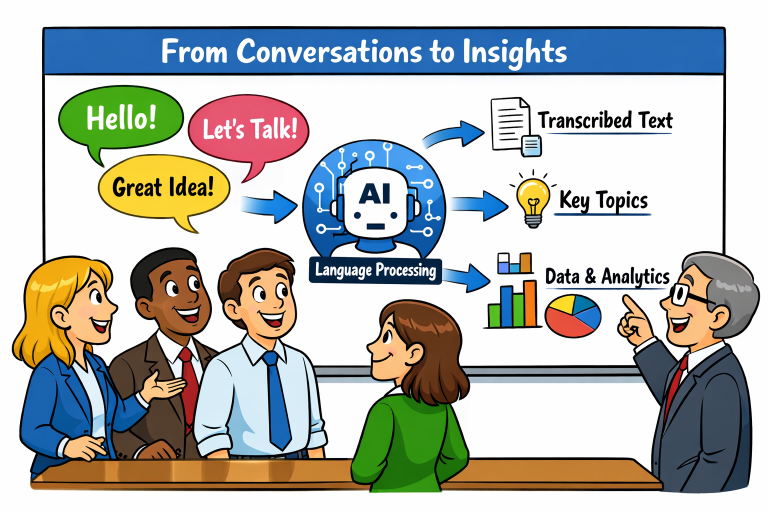
Conversation intelligence uses advanced AI technologies to record, transcribe, and analyze business communications from channels such as phone calls, web conferences, and chat platforms. Using tools based on natural language processing and machine learning, these solutions listen for keywords, track sentiment, and flag emerging trends. The technology turns what was once unstructured, difficult-to-search audio or text into structured data that is easy to analyze and act on.
This approach gives organizations constant feedback about customer needs and behaviors. Managers can quickly identify emerging issues, coaches can offer targeted feedback to their teams, and leaders can track how changes to products or services are being received in real time. The result is a seamless cycle of learning and improvement that can be integrated directly into business processes.
Enhancing Customer Experience
Customer experience is the battleground on which brands are built or broken. Conversation intelligence offers organizations the ability to spot roadblocks that lead to dissatisfaction before they escalate. Through sentiment analysis and intent recognition, companies can adapt their strategies and communication styles. For example, if customers express frustration about hold times or unclear policies, business leaders can take immediate action to address these core issues.
This technology also makes personalization easier. By understanding tone and context throughout entire conversations, teams can tailor responses, recommend relevant products, and ensure a seamless customer journey across all touchpoints. According to Gartner, organizations that actively listen and respond to customer conversations see higher rates of retention and loyalty, creating a virtuous cycle of engagement and growth.
Boosting Sales Performance
For sales teams, conversation intelligence reveals which pitches and messaging approaches are most effective, allowing managers to replicate success across the organization. By analyzing thousands of sales calls, businesses can pinpoint what top performers do differently. If insights show that successful reps discuss pricing early or focus on a particular product feature, those behaviors can become best practices for the entire team.
This data-driven methodology enhances coaching, shortens training time, and gives sales leaders concrete proof of what works. As a result, teams become more agile, responsive, and, ultimately, successful. The technology also enables real-time feedback and the ability to fine-tune approaches even during high-stakes negotiations, leading to more closed deals and long-term partnerships.
Improving Operational Efficiency
Manual note-taking, transcription, and post-call summaries have long been an administrative burden for customer-facing teams. Conversation intelligence platforms automate these processes, freeing staff to focus on relationship building and problem-solving. Repetitive follow-ups and reminders can also be automated, ensuring timely and consistent communication with clients or prospects.
Enhanced productivity does not just benefit frontline employees. Managers gain valuable time that would otherwise be spent sifting through data or logging calls. Instead, they can focus on strategic planning, resource allocation, and continuous improvement initiatives, which further drive business outcomes.
Gaining Competitive Advantage
By surfacing hidden trends and detecting customer pain points faster than the competition, businesses equipped with conversation intelligence make quicker, better-informed decisions. For example, if multiple customers express confusion about a newly launched feature, product teams can immediately refine documentation or improve onboarding materials. This level of responsiveness helps companies avoid larger issues and keeps customer satisfaction high.
Internally, knowledge from conversation analytics can guide marketing campaigns, inform product development, and highlight emerging market opportunities that may not be apparent through traditional research. This positions organizations to seize opportunities early and respond proactively to threats, giving them an edge in crowded markets.
Conclusion
The rapid adoption of conversation intelligence is transforming not only how companies understand their customers but also how they operate, compete, and grow. These AI-powered tools offer immediate, actionable insights that enable better decision-making, drive operational efficiency, and build stronger, more personalized customer relationships. As the landscape quickly evolves, organizations that invest in these technologies will find themselves better positioned to deliver value, exceed customer expectations, and secure a lasting competitive advantage in the marketplace.