Have you ever wondered if that new electric car in the showroom will really save you as much money as the salesperson claims? Friends often ask me this when they’re thinking about switching to an EV.
While we all know that electricity is cheaper than petrol, the real “math” happens when you decide where to plug in. Is it really worth spending thousands on a home setup, or can you just rely on the growing number of chargers at the mall? Let’s dive into the true cost of keeping your EV running in India today.
Table of Contents
Home Charging: The Cost-Effective Choice
If you are looking for the absolute cheapest way to move from point A to point B, I have some good news for you: your home is your best friend. In 2026, home EV charging cost in India feels almost like “stealing” compared to the price of petrol.
When you charge at home, you pay the same electricity rates as you do for your lights and AC. In most Indian states, this is between ₹6 and ₹10 per unit (kWh). Many owners now use special EV tariffs. For example, Delhi and Maharashtra offer separate meters for EVs, with rates as low as ₹4.50 per unit.
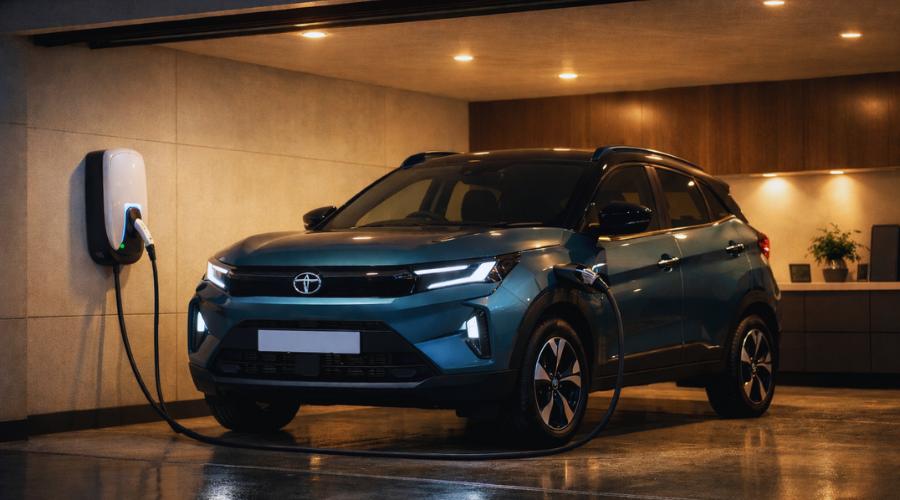
Let’s say you own a popular car like the Tata Nexon EV 45. To fill it up from empty at home, you’d spend roughly ₹200 to ₹400. That full “tank” will provide approximately 350 km of real-world driving. When I do the math, that’s just about ₹1 per kilometer. Compare that to a petrol car, where you’d likely spend ₹7 or ₹8 for every single kilometer you drive. You can see why I call this the cost-effective king!
The only catch is the initial setup. You’ll need to install a wall-mounted charger, which typically costs between ₹35,000 and ₹70,000, depending on the brand and the extent of wiring required for your home. But if you’re like me and you plan to keep your car for at least five years, this one-time cost pays for itself very quickly.
Public Charging: Convenience at a Premium
Now, let’s talk about the other side of the coin. You’re on a road trip, or maybe you live in an apartment where you can’t install your own charger. You pull into a public fast-charging station. It’s quick, it’s modern, but it’s also expensive.
According to the automotive news today, public charging stations, especially the DC fast chargers you see on highways, aren’t just selling you electricity; they are selling you speed. These stations must pay for commercial land, expensive equipment, and heavy-duty electrical connections. Because of this, they charge you a “convenience fee.”
In 2026, I expect public charging rates across India to range from ₹18 to ₹24 per unit. Some premium ultra-fast chargers might even nudge up a bit. If we take that same Nexon EV 45, a full charge at a public station could cost you ₹800 to ₹1,000.
While public charging is still cheaper than petrol, it costs more than twice as much as charging at home. I suggest thinking of public charging like eating at a restaurant. It’s convenient when you’re out, but using it every day will add up. You pay extra for the speed, getting back on the road in 40 minutes instead of waiting 8 hours at home.
The True Cost Analysis
So, what is the “True Cost” of driving an EV in India? As per the automotive news today, it really depends on your lifestyle and where you choose to plug in. I’ve spent some time crunching the numbers to see how it looks for a typical driver covering about 1,500 km a month. If you charge almost all your vehicles at home, your monthly “fuel” bill will be very low, around ₹1,350. To put that in perspective, that’s about the cost of one nice family dinner! Compared to a petrol car, which would cost you roughly ₹12,000 for the same distance, you are saving over ₹10,000 every single month. That’s more than ₹1.2 lakh staying in your pocket every year just by switching your fuel source.
Now, if you don’t have a home charger and rely entirely on public fast stations, the math changes a bit. Your monthly cost would jump to about ₹4,050. While that is significantly higher than at-home charging, it is still much cheaper than petrol. You’d still be saving around ₹8,000 a month compared to a traditional car.
This is why I always tell people that even though public charging feels expensive in the moment, it’s still a win for your wallet in the long run. The “True Cost” isn’t just about the money, though; it’s about the balance. Most owners I know charge 90% at home and pay the higher public rates only on weekend trips. This mix gives you the best of both worlds: extreme daily savings and the freedom to travel wherever you want.
In my opinion, the best way to enjoy an EV is to invest in that home setup. It turns your car into something like your smartphone; you plug it in at night, and you never have to think about a “fuel station” again unless you’re heading out of the city. When you look at the big picture, including lower maintenance and massive fuel savings, the home EV charging cost in India starts to look like the smartest financial move you can make in 2026.
Summing Up
Ultimately, making the switch to an EV in 2026 is one of the smartest financial moves you can make, provided you have a plan. While public stations offer great convenience for those long highway stretches, your home remains the true engine of your savings. By charging overnight, you can reduce your fuel bills by nearly 90% compared to petrol. It’s about more than just money; it’s about waking up every day ready to go.


