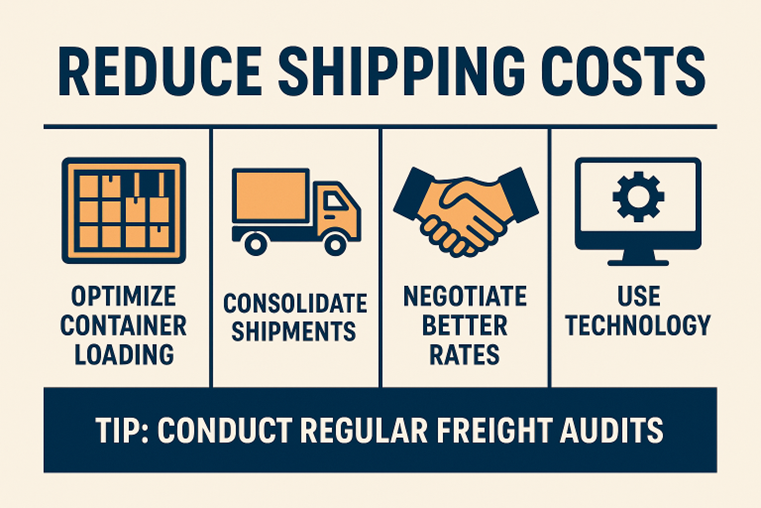
Freight rates keep shifting, and many B2B companies now feel constant pressure to reduce shipping costs without hurting reliability. In practice, even minor inefficiencies in container loading or routing can drain budgets faster than expected. What follows is a concise, practical guide grounded in real operational experience.
Table of Contents
Why freight spending grows faster than expected
Budgets rarely explode because of one dramatic mistake. The real damage comes from small, repeated inefficiencies. A half-empty truck here, a poorly arranged load there, or an accessorial fee that slips through unnoticed. All of them make it harder to reduce shipping costs.
A major culprit is inconsistent loading of a shipping container. When you pay for space, every unused corner costs money. This is why more companies now rely on a container loading calculator to eliminate guesswork.
Tip: For teams that want a clear, practical walkthrough of efficient load planning, aio-technical.com offers a useful guide.
Understand what really drives your freight bill
Before you can reduce shipping costs, you need clarity on why the bill looks the way it does.
1. Density matters more than weight
Light products with large packaging often become unexpectedly expensive. Better container loading and a container loading calculator help you position items in a way that uses space efficiently.
2. Routing decisions accumulate quietly
A route that adds only twenty extra kilometers per trip can result in several unnecessary truckloads per year. Optimizing routes works hand in hand with smart loading a shipping container.
3. Accessorials erode profit
Detention fees, liftgates, or hazmat charges often appear after delivery. Better communication between warehouse teams and carriers reduces surprises and helps you reduce shipping costs without renegotiating rates.
Container optimization: where savings get real
Improving the loading of a shipping container usually brings faster gains than chasing rate reductions. The math is simple. If a 40-foot container costing 4000 dollars runs at 85 percent utilization, you lose about 600 dollars per load. Repeated across a few dozen shipments, the waste becomes significant.
What top performers do:
- Combine SKUs that complement each other in size and density to improve container loading.
- Use software instead of intuition, because manual planning often misses 5 to 10 percent of usable space.
- Test small packaging adjustments that unlock an extra row or layer inside a container.
Effective optimization is less about squeezing harder and more about engineering the layout intelligently.
Let technology take over repetitive work
Automation has become essential for companies serious about reducing costs.
- A TMS compares rates, highlights consolidation opportunities, and helps reduce shipping costs across lanes.
- A container loading calculator evaluates stacking strength and stability, improving container loading accuracy.
- Audit tools identify billing errors and improve carrier compliance over time.
Technology frees planners to focus on exceptions, seasonality, and customer priorities instead of manual calculations.
Partnerships that sharpen your cost structure
Tech alone is not enough. Collaboration with carriers, 3PLs, and packaging suppliers provides leverage you cannot create internally.
- 3PL consolidation hubs combine fragmented shipments into optimized loads, improving the loading of a shipping container.
- Shared forecasts with carriers reduce volatility surcharges.
- Packaging suppliers can redesign cartons or pallets to improve container loading efficiency.
The biggest savings usually appear where collaboration and data meet.
Common Container Loading Errors and Their Cost Impact
| Issue | Description | Typical Impact on Container Loading |
| Poor SKU arrangement | Bulky or irregular items placed first without planning | 5–12% unused volume |
| Inaccurate dimensions from suppliers | Box sizes differ from declared measurements | Misaligned rows, wasted cubic meters |
| Over-reliance on manual planning | Loaders estimate placement intuitively | 5–10% avoidable space loss |
| No use of container loading calculator | Missing automated simulations and weight checks | Unstable or inefficient item stacking |
| Inconsistent pallet standards | Different pallet heights or footprints | Difficulty creating clean layers |
Final notes: what smart logistics teams do differently
Companies that consistently reduce shipping costs treat container loading as a strategic function. They rely on data instead of assumptions, adjust packaging and routing proactively, and improve processes continuously. When loading a shipping container becomes disciplined and repeatable, the entire supply chain becomes more predictable and resilient.


