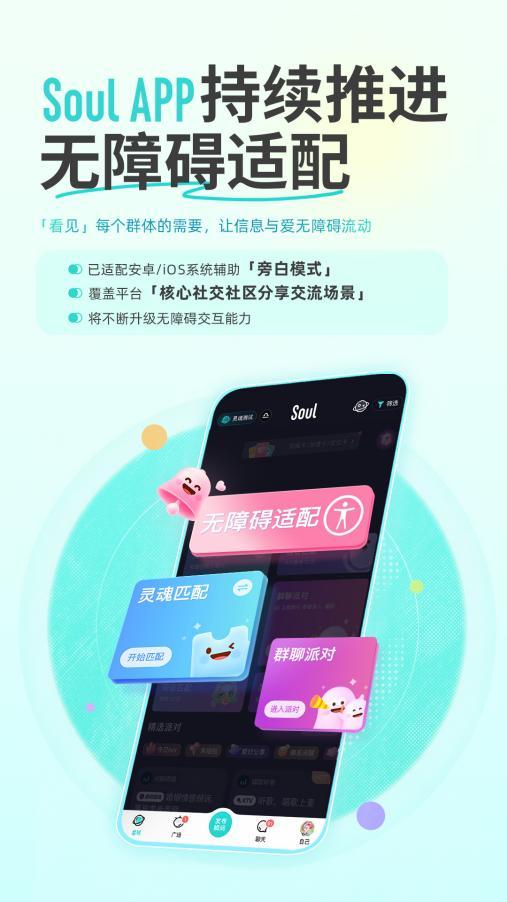
When people build or use digital products, it is easy to think exclusively about the average user. But what if the person on the other end of the screen can’t see what the designer/other user sees, or interprets the interface in a completely different way? If accessibility isn’t a part of design thinking from the very beginning, some users do get left out, and the CEO of Soul, Zhang Lu, was having none of that.
Soul App, which is an exceptionally popular social networking platform in China, recently launched a one-of-a-kind initiative called “Visible Accessibility”. The core idea behind the endeavor was trying to afford inclusivity to all, including those with visual impairments. What makes this initiative from Soul Zhang Lu unique is the fact that it is more than just a compliance protocol for the platform.
Think of it as a reminder for users and designers that cajoles them to accept that inclusion in the digital space isn’t optional — it’s essential. The move was meant to ensure dignity, independence, and equal opportunity for every user. It is also meant to serve as a cue for designers, developers, business leaders, and even digital consumers to consider how their decisions impact others’ ability to connect and thrive online.
The name “Visible Accessibility” did not come about by chance. Soul Zhang Lu wanted to send out a clear message that just like the ramps and elevators meant to aid visually disabled individuals in the physical space, digital accessibility is also vital. More so, because in China alone, over 85 million people are living with disabilities.
Of these individuals, more than 28 million are visually impaired, a figure that points to the inarguable need for accessible technology. For someone who is blind or has low vision, something as routine as logging into an app, chatting with friends, or reading a post requires thoughtful design.
Without accessibility features like screen reader compatibility, these actions can become frustrating or even impossible. That’s the reality Soul Zhang Lu recognized — and wanted to change. Hence, Soul’s work in this direction is about more than just adding features.
The initiative calls for a mindset shift that accessibility isn’t a burden or a side project. It’s an opportunity to innovate and expand reach while doing the right thing. Soul Zhang Lu’s team figured out that, like tactile paths for the visually impaired in urban infrastructure, digital blind paths are required to create intuitive online spaces where every user can move independently, safely, and confidently.
Of course, Soul’s engineers are employing this concept on the platform. But, Soul Zhang Lu wanted to make all designers out there think about how their products interact with assistive technologies. The idea was to get designers to consider questions such as:
- Is the navigation logical for a non-visual user?
- Are the buttons clearly labeled?
- Do the notifications provide meaningful feedback?
As far as Soul is concerned, the platform has approached this challenge by building a cross-functional team — pooling the creative juices and the technical know-how of developers, UX researchers, and product managers. Soul’s team did not want a quick fix for individual pain points. The aim was to establish a long-term framework that evolves with the app itself.
Soul Zhang Lu realized that tangible results could only be achieved by allowing the product to be shaped by those it most impacts. To this end, the team was encouraged to have ongoing conversations with visually impaired users and to treat accessibility as a user-centric design process, not just a checklist.
The most significant takeaway from Soul’s “Visible Accessibility” initiative is that if designers and creators want to know how well an app works with a screen reader, it is imperative to ask someone who relies on it. Similarly, to understand if the navigation is intuitive, it’s crucial to observe how someone with a disability uses it.
To understand how users felt about the inclusivity initiative, Soul’s team created communication groups specifically for visually impaired users and collected real-time feedback on everything from content browsing to chat features. This data wasn’t just stored, it was used to shape future development cycles. The result was not just an inclusive platform but also the creation of community trust.
One of the biggest pitfalls that designers and developers face is that in a bid to create a seamless experience, they end up creating a separate experience. Soul Zhang Lu’s team showed that it makes no sense to build special features that isolate users when the goal all along should be to integrate them into the main user flow.
Soul App avoided this mistake by ensuring all core community features like Soul Square, Partyroom, personal profiles, and messaging were accessible in their default design. In other words, users with visual impairments were offered access to the same platform, in the same way, with the same richness of interaction.
Simply put, Soul’s team has shown that instead of asking if accessibility features have been added to a digital product/service, what developers and designers should be asking is if all users can share the same experience, regardless of ability.
In fact, Soul Zhang Lu’s efforts were meant to create the realization that everybody, regardless of their role, can contribute towards improving accessibility in a digital ecosystem. For instance:
- Developers can learn the accessibility APIs of their platform and test with real assistive tools.
- Designers can incorporate inclusive design principles from the start instead of trying to retrofit after launch.
- Project managers or executives can allocate resources and timelines for accessibility work, making it a priority, not a bonus.
- Users can provide feedback when they encounter barriers, and support apps that value inclusivity.
Soul Zhang Lu wanted people to understand that the ripple effect of a team’s or even an individual’s decisions can extend far beyond a single feature or product because each person has both the responsibility and ability to make the digital world better for everyone.


