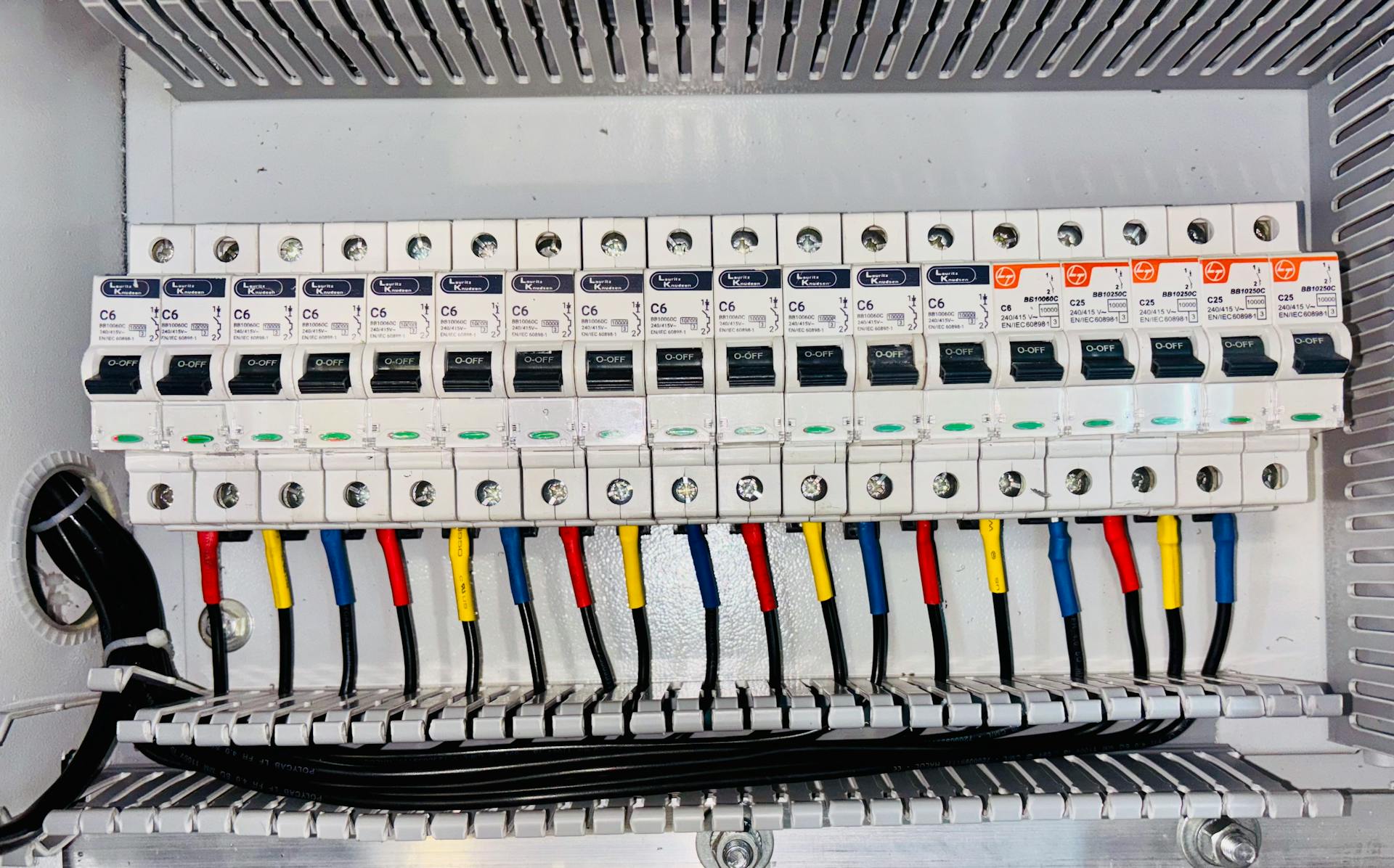
Ask anyone who is overseeing an electrical installation, and they will tell you how important it is to ensure the highest standards of efficiency and safety from such a project.
But if you’re working on an electrical installation yourself – whether in a domestic, commercial, or public setting – you won’t be able to achieve the above unless you are able to carry out vital calculations with the utmost precision.
This brings us onto the matter of determining the right size of wire or cable for a particular application. The size of the cable that you select for your project will have big implications for how well it handles electrical loads. It will also be vital for guarding against such risks as energy loss, overheating, and/or even fire.
Introducing Cross-Sectional Area (CSA), And Why It Matters
Wherever you see “cable size” being mentioned, this will be a reference to the given cable or wire’s cross-sectional area, or “CSA”.
The CSA of a cable can be defined as the area of the cable’s conductor, when viewed from the end. It is basically the area of the conducting material within the cable.
Normally measured in square millimetres, or mm2, cable sizes are standardised in the UK, in accordance with the BS 7671 regulations. So, a responsible and knowledgeable electrician in the UK will know that, for example, lighting circuits require cables with a CSA of 1.5mm2, while for the installation of an electric shower, a 10mm2 cable will be needed.
If the cable chosen is too small for the particular application, this will hamper the wire’s efficiency, and can also bring excessive voltage drop and the risk of fire. Selecting a cable that is significantly bigger than the electrical installation requires, though, will push up the costs higher than they need to be.
So, What Are the Steps Involved in Carrying Out A CSA Calculation?
The aforementioned potential consequences of choosing the wrong size of cable, underscore the importance of always performing the most accurate CSA calculation, every time. There is, though, an issue here: it isn’t possible to directly measure the cross-sectional area of a cable or wire.
If, then, you want to know how to calculate the cross-sectional area of a cable for electrical installations, one possibility is to simply use a CSA calculator, which you should be able to find online quickly enough. It’ll basically be just a process of inputting the given wire’s number of strands, along with the diameter of a strand in millimetres, before hitting the “calculate” button.
Presuming you want to know how to do the manual calculation, though, here is a formula to go with:
A = n d² π / 4
= 0.7854 n d²
This equation uses A to refer to the cross-sectional area. Meanwhile, n is the number of strands that the wire has, and d is the diameter of a single strand.
A Few More Things to Know About…
Of course, simply performing this CSA calculation isn’t the start and end of your journey when it comes to cable sizing. Part of the reason why knowing the CSA of a given wire is so vital, is because it allows for the wire’s current-carrying capacity to be determined.
By referring to the tables from relevant standards – such as the aforementioned BS 7671 regulations – you will be able to find the CSA that matches or exceeds the minimum required current-carrying capacity.
That, in turn, will put you well on the road to getting the rest of your electrical installation right – with the best possible results for the end user.